



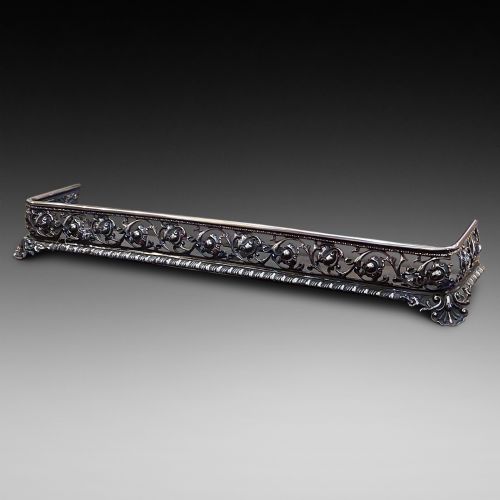
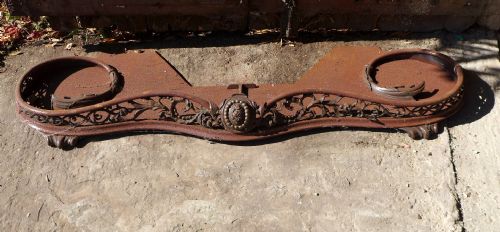
Decorative Hearth Curb
A decorative hearth curb frames the fireplace with metalwork that keeps coals in place while anchoring the room.
Decorative Hearth Curb
A decorative hearth curb acts as a functional boundary for the fireplace, catching stray embers and defining the grate area. When you browse for a decorative hearth curb on this page, you encounter sturdy barriers built to protect the floor from ash and heat.
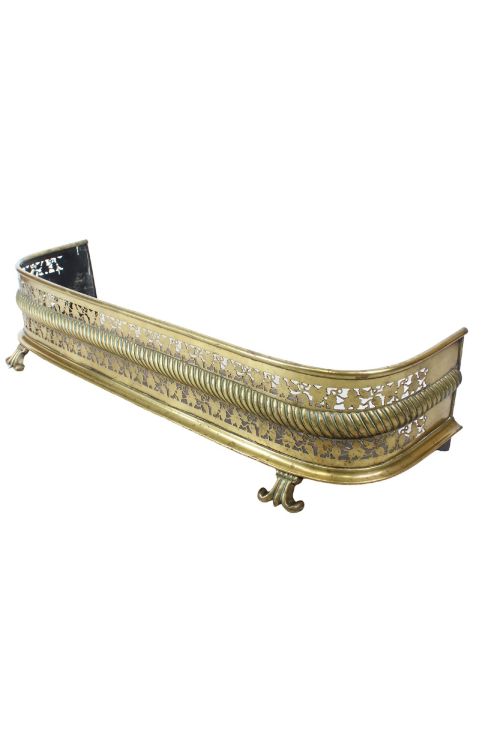
The selections span the Victorian era, the 19th Century, and 1800, bringing period weight to a modern room. Most examples follow Victorian taste, using pierced brass, steel, and iron to frame the hearth.
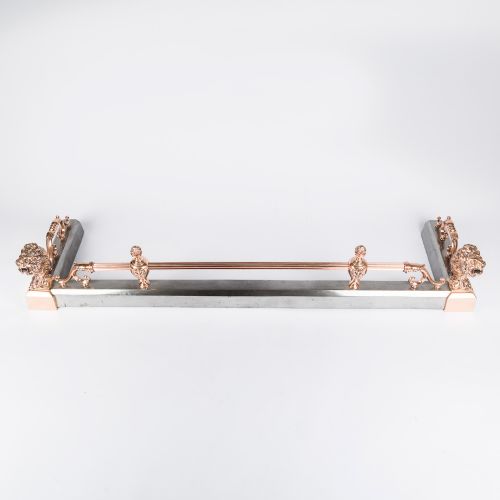
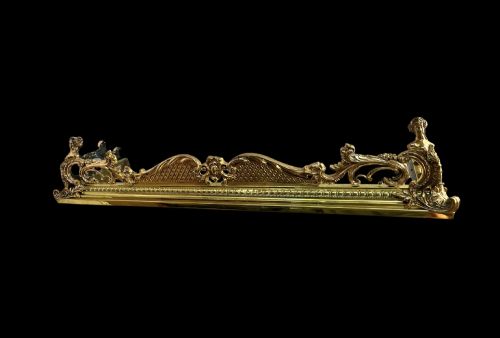
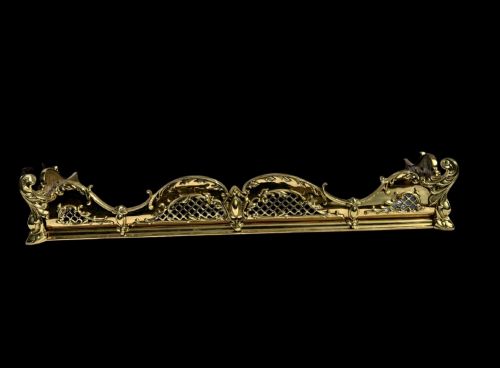
Makers shaped these frames in styles ranging from Rococo Revival and Gothic touches to flowing Art Nouveau lines. You find both slender steel fronts and heavy brass surrounds designed to anchor the fireplace.
Every decorative hearth curb serves as both a physical barrier and a focal point for the room. The inventory brings together fireplace fenders and kerbs that span over a century of domestic metalwork.
How they were made
Smiths worked sheet brass, cast iron, steel, and copper into rigid frames through piercing, riveting, and joining. Pierced brass panels required careful hand-sawing or punching to create openwork patterns that let light through.
Makers combined contrasting metals, such as steel bodies with polished brass mounts or bronze details, to create visual depth. Certain pieces employ polychrome finishes to add colour directly onto the metal surface.
Foundries cast heavy iron and bronze components for durability, while smiths hammered and bent steel and copper into serpentine fronts. Wood elements occasionally appear to trim the outer edges of the hearth boundary.
Listings feature periods from 1800 to 1900, using brass, steel, copper, iron, and wood across Victorian and Art Nouveau styles.
What varies in quality
Quality rests in the crispness of the pierced metalwork and the weight of the underlying frame. Finer examples display cleanly cut apertures and well-finished joints that hold their shape under heat and heavy use.
The choice of materials dictates the character of the piece, with solid brass and heavy steel outlasting lighter assemblies. The presence of detailed casting, bronze mounts, or deliberate polychrome treatment elevates the decorative ambition of the work.
The Decorative Hearth Curb Glossary
- Fender
- A low metal guard placed before a fireplace to contain coals and sparks. It sits directly on the hearth floor.
- Kerb
- An alternative spelling for curb, often used interchangeably with fender in British listings. It denotes the boundary frame of the fireplace.
- Pierced
- Metalwork perforated with decorative patterns or cutout designs. This technique lightens heavy brass and steel plates.
- Serpentine
- A gentle undulating curve shaped like a snake. This profile appears on the front of certain Georgian and Victorian hearth surrounds.
- Polychrome
- Decorated in multiple colours. In metalwork, this involves applied pigments to highlight specific surface details.
Decorative Hearth Curb: Frequently Asked Questions
What is a decorative hearth curb?
A decorative hearth curb is a metal barrier placed in front of a fireplace to hold burning coals and protect the floor.
These pieces combine practical safety functions with period ornamentation, framing the hearth as a central feature of the room.
How do I choose the right size?
Measure the width and depth of your fireplace opening and hearth stone before selecting a fender. You want the frame to sit comfortably within the hearth space without crowding the fire opening.
Consider the clearance needed for fire irons and tools that may rest nearby.
Can I clean brass and steel?
Brass and steel respond well to gentle cleaning with appropriate metal polishes or soft cloths to remove dust and tarnish. Avoid harsh abrasives that can strip historical finishes or scratch the metal surface.
Regular light dusting keeps the material stable and maintains its natural lustre over time.
How do I spot a Victorian fender?
Victorian pieces often feature heavy cast iron frames, pierced brass plates, or flowing Art Nouveau motifs that reflect 19th-century design preferences. The construction methods and weight of the metal help distinguish them from modern reproductions.
Look for the characteristic patination of older brass and steel that develops through decades of domestic use.