
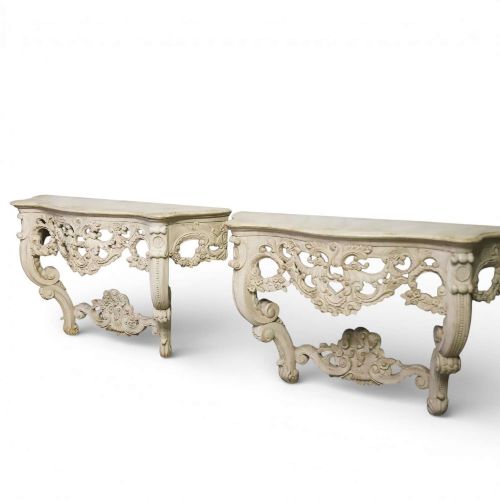
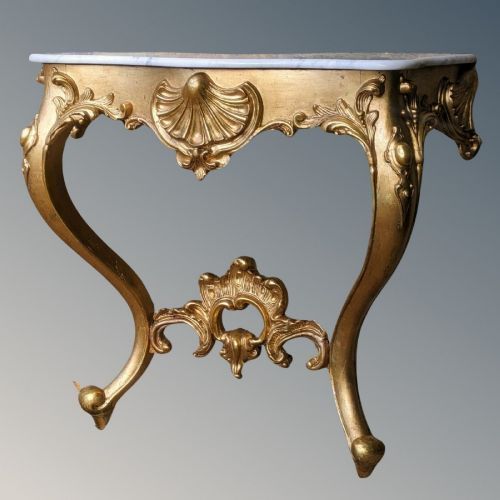


Ornate Entry Hall Table
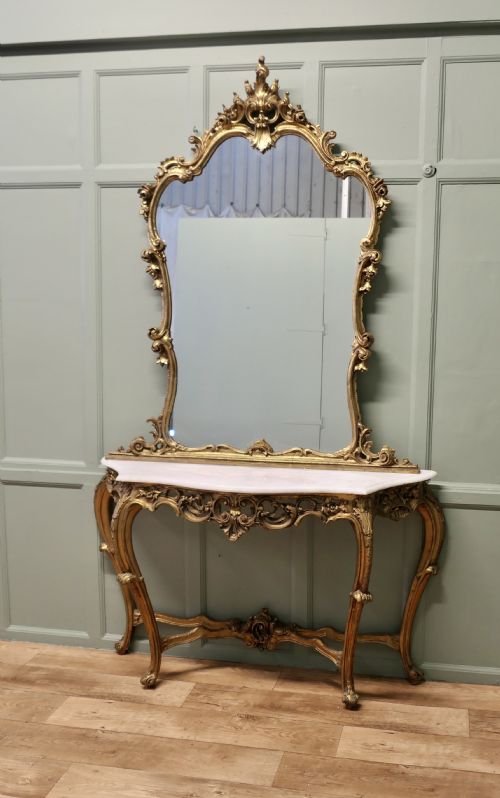
An ornate entry hall table sets the tone the moment the door opens, bringing marble, giltwood, and carved timber into the threshold.
Ornate Entry Hall Table
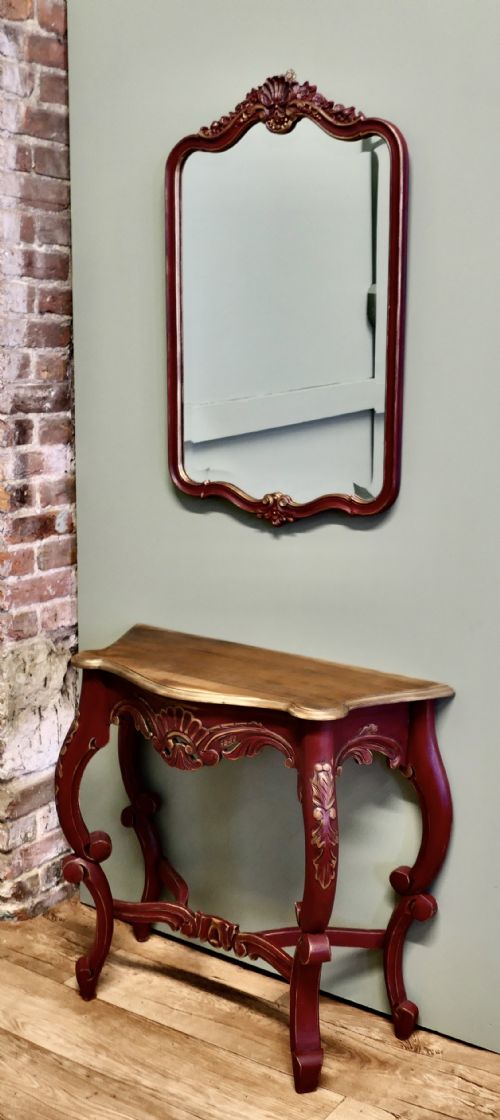
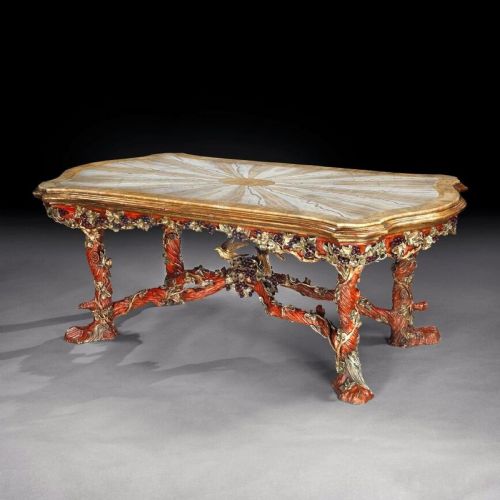
When searching for an ornate entry hall table, you encounter console tables, centre tables, and console table and mirror sets designed for reception spaces. The forms span the eighteenth century, nineteenth century, and the nineteen-twenties, originating from French, Italian, Venetian, and Anglo-Indian workshops.
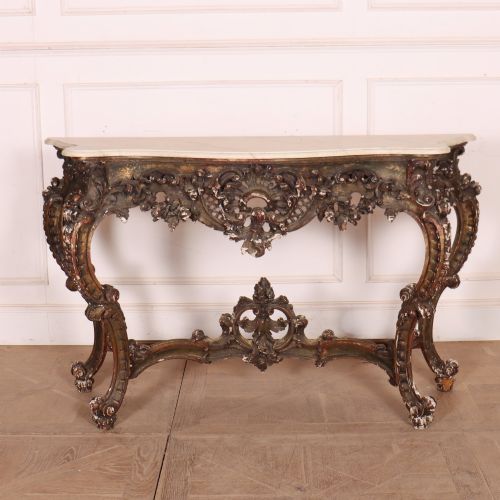
The pieces on this page lean heavily into the Rococo Revival and French Rococo styles, alongside Venetian, French Chateau, and Art Deco designs. Console tables predominate, often featuring fitted marble tops designed to sit flush against a wall in a hallway or landing.
Makers and origins vary widely, from nineteenth-century giltwood pieces with putto carvings to nineteen-thirties walnut and hand-carved painted variants. These tables serve a practical function as a surface by the door while establishing a decorative presence through elaborate carving and gilding.
How they were made
Cabinet makers utilised solid woods such as walnut, rosewood, and carved wood, applying gesso and heavy gilding to achieve the ornate surfaces characteristic of the Rococo and Baroque styles. Marble and onyx slabs were cut, polished, and fitted to the tops of console bases to provide a durable and cool surface.
Carving was executed by hand, producing intricate details including rams and maiden heads, putto figures, and serpentine fronts. Finishing techniques ranged from antique white paint and polychrome highlights to polished burr walnut veneers and giltwood leaf application.
Look closely for carved putti and wooden rams keeping silent watch beneath the marble.
What varies in quality
The depth and crispness of the hand-carving separate standard production from exceptional work, particularly in the rendering of figural elements like putto and maiden heads. Superior pieces exhibit deeply undercut wood and finely burnished giltwood rather than flat, moulded composition ornament.
The choice and thickness of the marble or onyx top also indicate the tier of the piece, with heavy, figured slabs fitted precisely to the wooden carcass. Integrated matching elements, such as original mirror frames paired with console tables, elevate the integrity and ambition of the design.
Amleto Bertoni
The Ornate Entry Hall Table Glossary
- Console table
- A table designed to stand against a wall, frequently supported by ornate brackets or legs rather than four standard posts.
- Giltwood
- Timber that has been coated with gold leaf or a gold-coloured metallic finish, commonly used on ornate nineteenth-century furniture.
- Gesso
- A plaster-based mixture applied to wood surfaces to create a smooth base for gilding and fine decorative carving.
- Serpentine front
- A furniture front characterised by a concave central section flanked by two convex curves, or the reverse.
Ornate Entry Hall Table: Frequently Asked Questions
Where should I place a console table?
These tables are traditionally stationed in entrance halls, reception rooms, and grand corridors where they provide an immediate focal point upon entry. Their shallow depth allows them to sit against hallway walls without obstructing movement.
Paired versions often include matching wall mirrors that hang directly above the table surface, completing a unified display for the threshold.
How do I care for a marble top?
Marble surfaces require gentle cleaning with a damp cloth and mild soap, avoiding acidic cleaning agents that can etch the polished stone. Using coasters and mats helps prevent moisture rings and scratches on antique tops.
The wooden and gilt bases should be dusted gently with a dry, soft cloth to protect delicate gesso and leaf finishes.
What is the difference between a console and a centre table?
A console table is constructed specifically to stand flat against a wall, often featuring a finished front and sides while the back remains plain or unadorned. A centre table is finished on all sides and designed to stand independently in the middle of a room.
Both forms appear frequently within nineteenth-century decorative schemes, though console tables dominate entry hall configurations.
How do I identify a Rococo Revival piece?
Rococo Revival furniture draws inspiration from eighteenth-century French design, featuring asymmetric C-scrolls, S-scrolls, and naturalistic floral motifs. The timber and giltwood frames on these tables often display exuberant carved ornamentation without strict symmetry.
Pieces from this movement frequently incorporate serpentine fronts, cabriole legs, and elaborate cartouches executed by nineteenth-century craftsmen.