
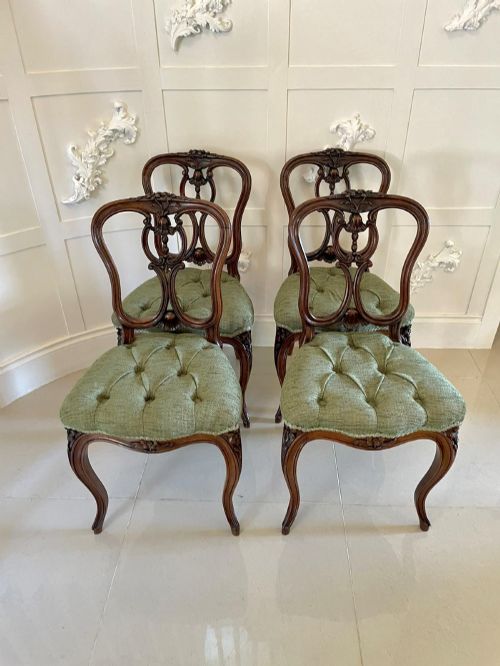
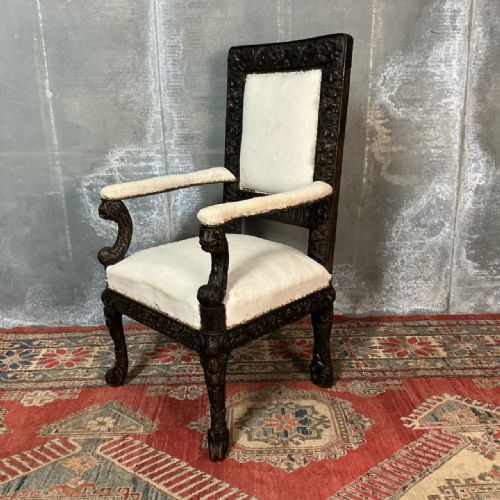
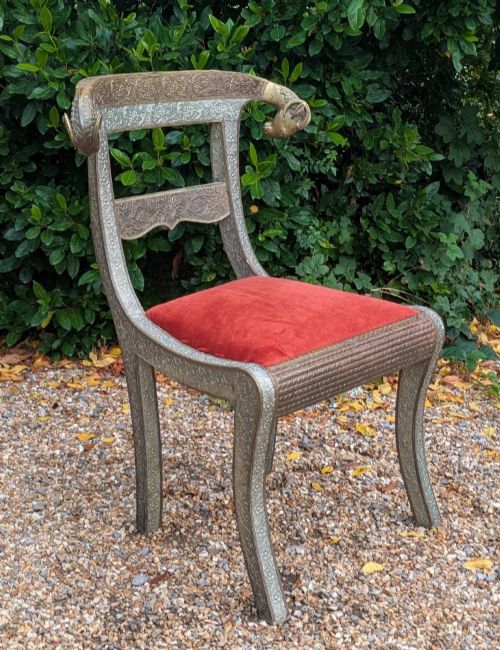
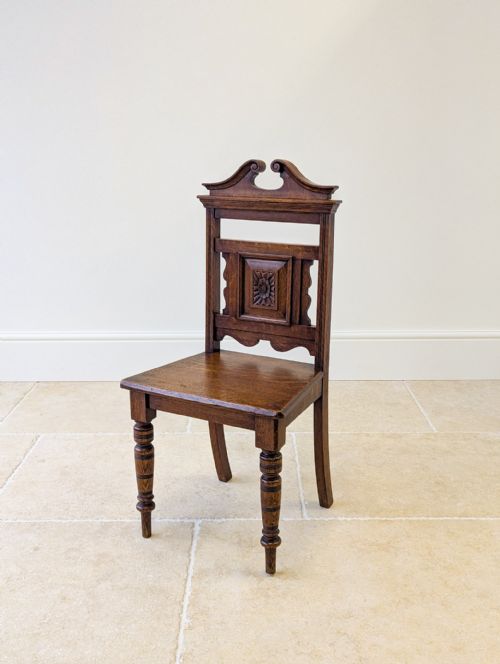


Ornate Carved Side Chair
An ornate carved side chair brings heavy timber and elaborate detail into a room, offering a seat built to command attention.
Ornate Carved Side Chair
An ornate carved side chair is a decorative seating form found primarily across the nineteenth century, including Victorian and earlier periods, designed for display in halls, salons, and boudoirs. These pieces emerge in walnut, oak, and mahogany, often carrying high-relief ornamentation shaped by hand.
The versions most common on this page are nineteenth-century hall chairs and side chairs drawing on revival styles like Baroque, Rococo, and Renaissance. Makers across Britain, Continental Europe, and regions such as India and Burma produced these chairs with detailed backrests and turned or fluted legs.
How they were made
Makers shaped these chairs using dense hardwoods like walnut, oak, mahogany, teak, and padouk, selected for their ability to hold deep, crisp chisel work. Solid wood frames provide the structural strength needed to support elaborate fretwork, high backs, and sculptural elements without fracturing.
Surface embellishment often involved manual carving, marquetry inlay, bone inlay, and giltwood finishes applied to the timber. Upholstered variants integrated textiles, velvet, and various fabrics into the seat pads and back panels, secured with traditional tacks.
What varies in quality
The depth and precision of the hand carving separate standard production from exhibition pieces, where sculptors spent hours undercutting leaves, figures, and scrollwork. Crisp margins on relief work and clean joints indicate high workshop standards.
Choice of timber grain and the integrity of the original construction dictate longevity, particularly in pieces subjected to heavy structural loads on delicate legs and high backs. Intricate marquetry and bone inlay demand exact fitting to remain stable within the surrounding wood.
The Ornate Carved Side Chair Glossary
- Side chair
- A chair without arms, traditionally designed to sit against a wall or around a dining table. These forms prioritise a decorative backrest over cushioned comfort.
- Hall chair
- A rigid wooden seat placed in an entrance hall, frequently featuring a carved shield, crest, or high panelled back. They were seldom upholstered.
- Giltwood
- Timber coated with a thin layer of gold leaf or gilt powder over a prepared gesso ground. This finish catches candlelight and natural light in formal rooms.
- Marquetry
- The art of applying small pieces of veneer to a structure to form decorative patterns. Craftsmen utilised contrasting woods to create pictorial scenes.
- Sgabello
- An Italian Renaissance wooden chair featuring a panel-like back and solid trestle supports. The surfaces typically display rich carved motifs.
Ornate Carved Side Chair: Frequently Asked Questions
Where did people place ornate carved side chairs?
These chairs stood in entrance halls, formal parlours, and bedrooms where guests gathered. Their sculptural backs served as visual focal points against plain walls.
In larger houses, hall chairs displayed family crests or heavy regional carving to impress visitors upon arrival.
How do I care for antique carved timber?
Dust the deep recesses of the carving regularly with a soft bristle brush to prevent particle buildup. Keep the timber away from direct heat sources to avoid shrinkage.
Apply traditional beeswax occasionally to nourish the grain and maintain the natural lustre of walnut or oak.
Are these chairs comfortable for daily sitting?
Most historic side and hall chairs were built for posture and display rather than lounging. Their upright wooden backs and firm seats encourage an erect seating position.
Upholstered salon or boudoir variants offer softer padding, though their fragile frames require careful use.
How can I tell a Victorian piece from earlier styles?
Victorian pieces often combine historical revival motifs like Rococo or Renaissance Revival with industrial-era woodworking precision. Machine assistance sometimes aided the initial rough shaping before hand finishers sharpened the details.
Earlier examples from previous centuries rely entirely on manual hand tools, showing subtle tool marks and greater timber density.