
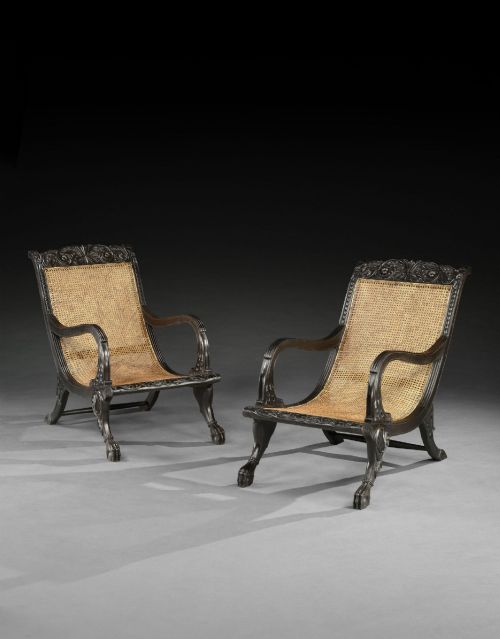
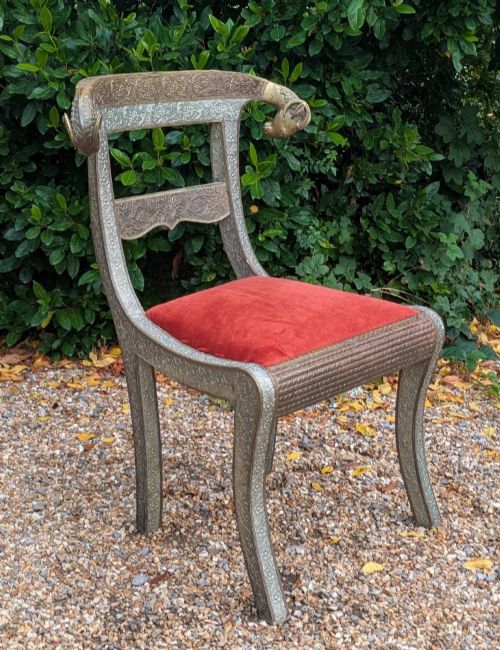
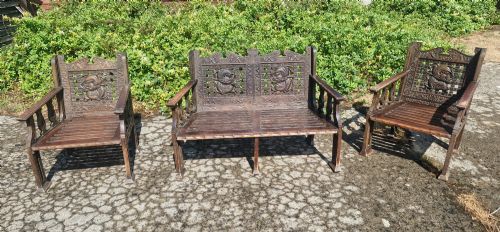
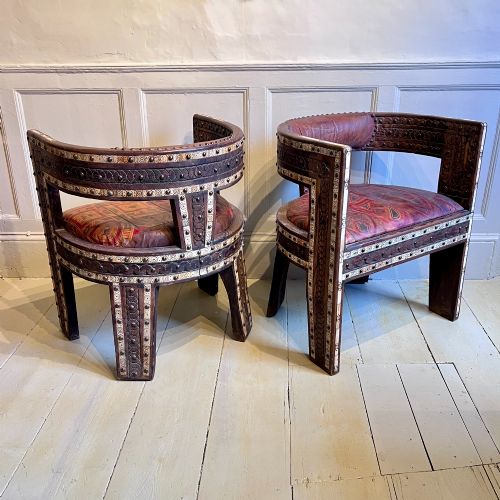


Indian Carved Armchair
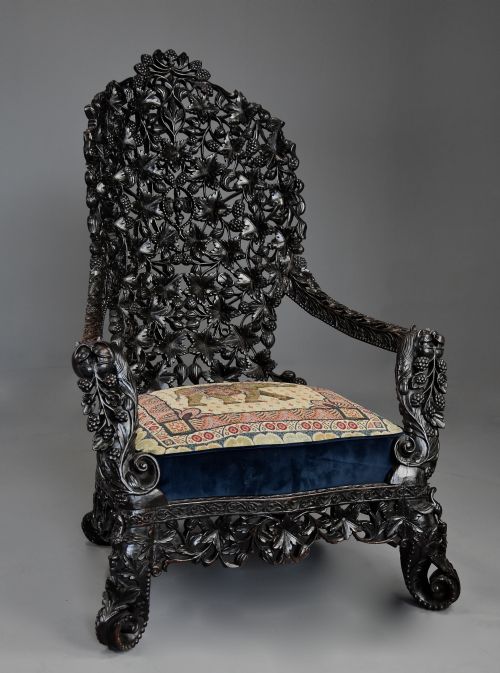
An indian carved armchair brings dense colonial craftsmanship and elaborate botanical or figurative woodwork directly into a room.
Indian Carved Armchair
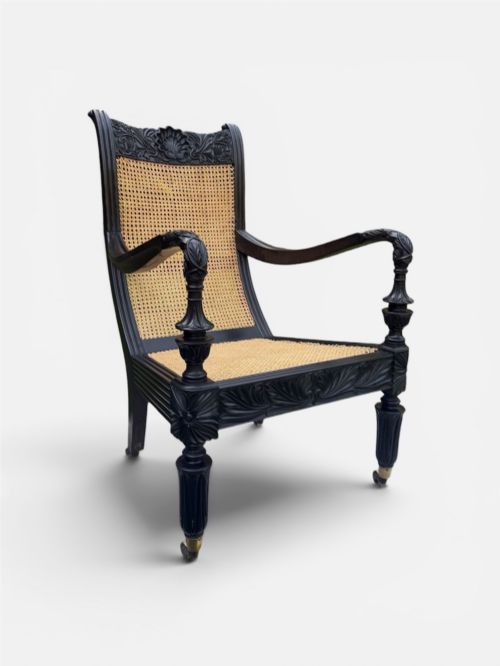
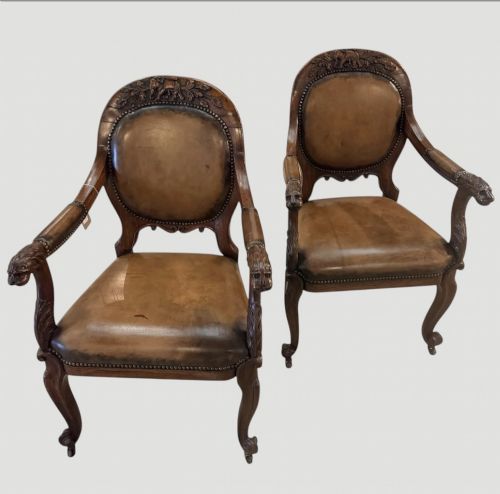
An indian carved armchair spans diverse regional workshops, styles such as Anglo-Indian and Moorish, and forms ranging from deep planters' chairs to library seating.
The most common examples on this page date from the nineteenth century, utilising heavy hardwoods shaped into ceremonial, throne, or elbow chairs.
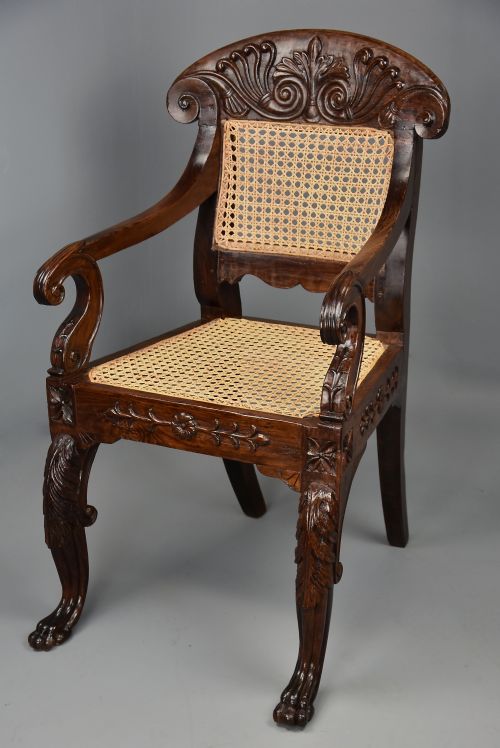
Makers often drew on Regency, Baroque, or traditional local motifs, resulting in seating designed for colonial planters, residences, and grand libraries.
Materials and carving techniques
Workshops constructed each indian carved armchair using dense tropical timbers such as teak, ebony, rosewood, padouk, and walnut.
Artisans applied deep relief carving, sometimes complemented by brass wire inlay, cane work, leather, velvet, or turned elements to build complex structural frames.
Watch out for elaborately carved peacock and wedding motifs staring back from the upholstery.
Distinctions in construction and ornament
Superior examples display crisp, deeply undercut foliage and figures that retain sharp definition across dense ebony or rosewood, whereas lesser pieces show softer, shallower handwork.
The integrity of the joinery, the weight of the selected timber, and the balance between structural strength and ornamental relief separate standard seating from exceptional pieces.
The Indian Carved Armchair Glossary
- Anglo-Indian
- Furniture made in India during the British colonial period, combining local craftsmanship with European forms.
- Planters chair
- A deep-seated armchair featuring extended flat arms designed for resting legs, common in tropical colonial residences.
- Padouk
- A heavy, durable tropical hardwood with a reddish-brown tone frequently utilised in colonial seating.
- Savonarola chair
- A folding armchair formed of multiple curved wooden slats intersecting to create a scissors-like X-shape frame.
- Cane
- Strips of rattan woven into an open mesh pattern used for seats and back panels in seating.
Indian Carved Armchair: Frequently Asked Questions
How do I care for a carved wooden armchair?
Dust the intricate crevices regularly with a soft brush to prevent dirt accumulation within the deep relief work. Apply traditional wax sparingly to nourish dense timbers like teak or ebony.
Keep the seating away from direct heat sources and strong sunlight to prevent the timber and cane work from drying out and splitting over time.
Were these chairs made in Britain or India?
These pieces were produced primarily in Indian workshops and colonial centres for British residents, officers, and export markets.
Local artisans combined traditional woodworking skills with European furniture designs dictated by Regency and Victorian tastes.
What is the difference between a planter chair and a standard armchair?
A planter chair incorporates exceptionally deep seating and long, pivoting armrests intended for reclining in warm climates.
Standard armchairs follow conventional upright dining, library, or drawing room proportions with fixed supports.
How can I date a nineteenth-century carved chair?
Dating relies on examining the timber species, tool marks left by hand carving, and stylistic influences ranging from Regency to late Victorian.
Comparing structural joinery methods and upholstery support systems helps narrow the production era within the nineteenth century.