



Indian Carved Accent Chair
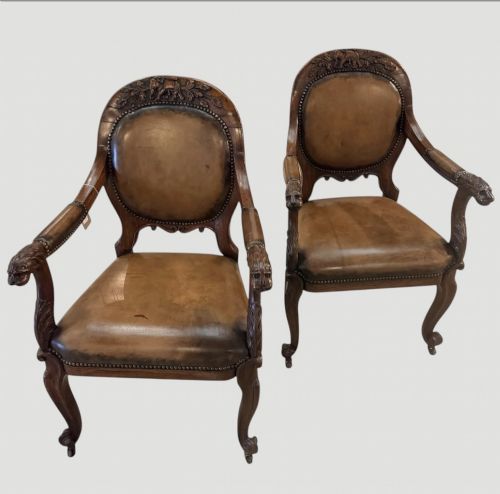
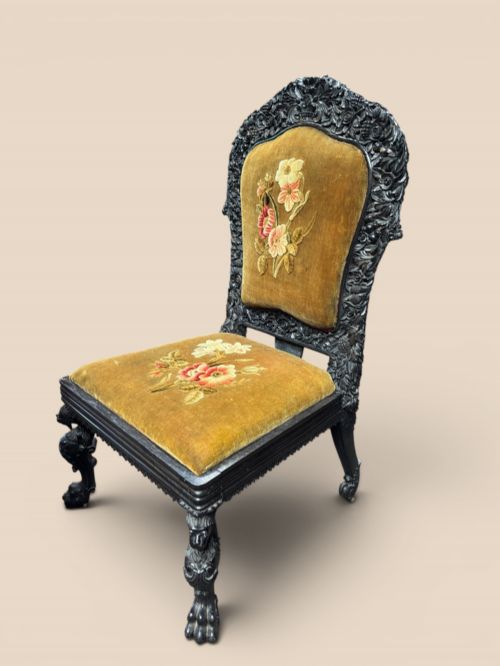
An indian carved accent chair brings dense foliage and mythological beasts into a room, fashioned from exotic timbers by hands that worked without mechanical shortcuts.
Indian Carved Accent Chair
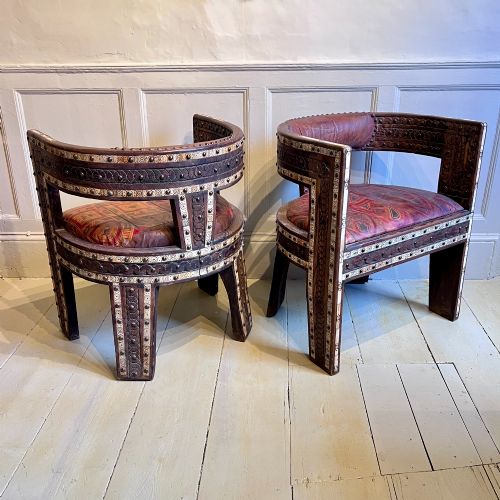
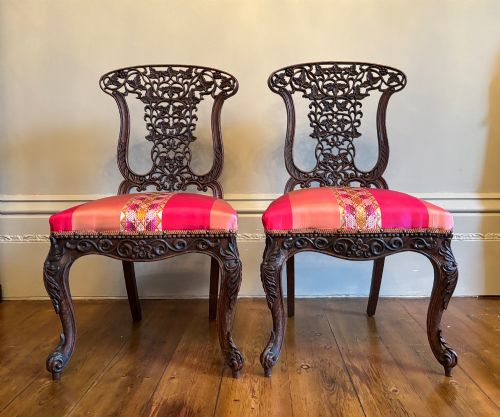
An indian carved accent chair encompasses armchairs, side chairs, and occasional pieces that draw upon Anglo-Indian, Moorish, and Burmese traditions. The most prevalent examples date from the nineteenth century, reflecting the cross-cultural exchange of the colonial period.
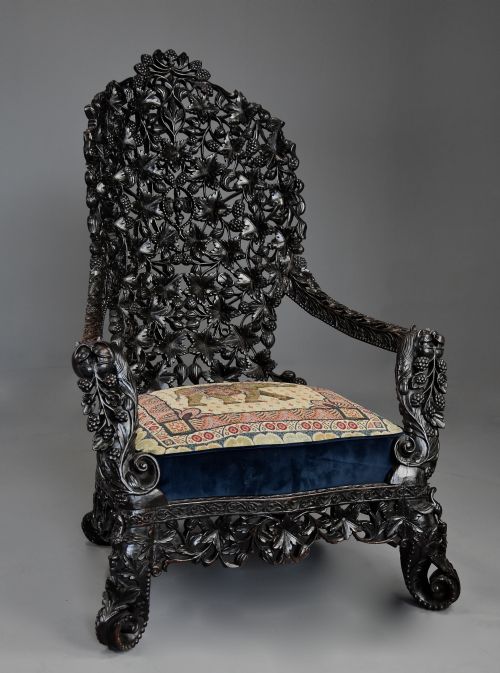
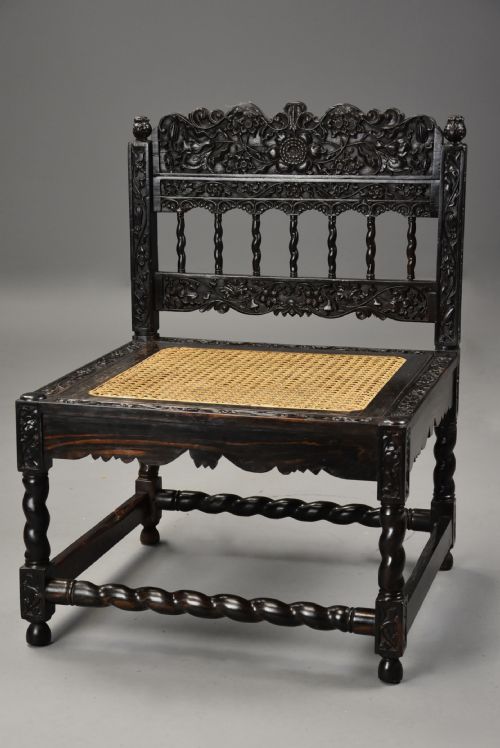
Makers shaped these seats from dense timbers such as teak, padauk, and rosewood, incorporating low chairs, throne chairs, and folding forms. Surfaces teem with intricate foliage, animal motifs, and geometric brass inlay that mark them out from standard domestic seating.
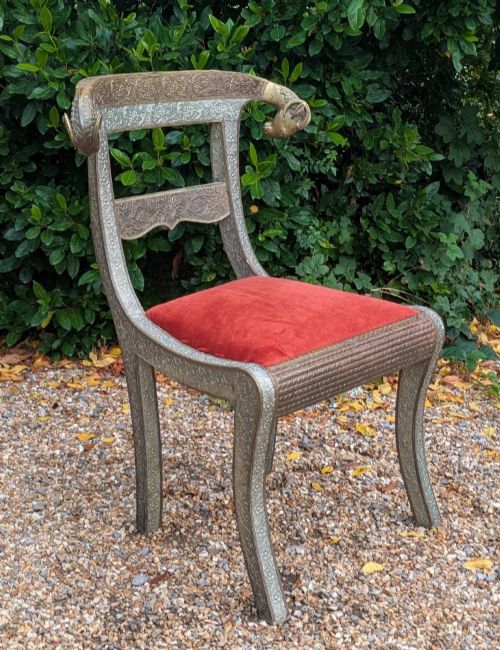
Period variations span from seventeenth-century solid ebony craftsmanship to twentieth-century wedding chairs adorned with rams' heads or silver elements. These pieces function naturally as striking standalone accents in modern or traditional interiors.
Materials and Construction Techniques
Carpenters utilised heavy tropical hardwoods including ebony, satinwood, teak, and padauk, which permitted remarkably deep and crisp chisel work. These timbers resisted splitting under intricate undercutting and supported heavy structural carving without losing integrity.
Decoration often combined relief carving with applied brass wire inlay, cane panels, or fitted upholstery in velvet and leather. Structural joinery relied on traditional pegged frames that accommodated the seasonal movement of dense regional woods.
The listings span from the seventeenth century through to the 1930s, featuring hardwoods like ebony, padauk, and satinwood.
Distinguishing Quality and Execution
Superior execution shows in the depth and crispness of the foliage, where background areas are cleanly cleared and details retain sharp edges rather than a softened finish. The selection of timber also dictates grade, with dense, heavy rosewood, padauk, or solid ebony marking out ambitious commissions.
Proportion and symmetry separate standard workshop production from exceptional temple or wedding chairs. Balanced animal heads, precise brass wire placement, and tight structural joints distinguish the finest seating from simpler export wares.
The Indian Carved Accent Chair Glossary
- Anglo-Indian
- Describes furniture made in India under British colonial rule, often blending European seating forms with traditional local carving. This style frequently employs regional timbers like padauk and rosewood.
- Padauk
- A heavy, dense tropical timber with a characteristic reddish hue that darkens with age. It provides a stable base for deep relief carving.
- Savonarola
- A folding chair constructed from multiple curved wooden slats that cross in an X-shape. Originating in the Italian Renaissance, the form was adopted by Indian makers incorporating brass inlay.
- Cane
- Split rattan woven into an open mesh pattern for chair seats and backs. It offers flexibility and ventilation in warmer climates.
- Ceylonese
- Pertaining to colonial Ceylon, now Sri Lanka, known for distinct satinwood and ebony furniture production. Pieces from this region often feature intricate pierced carving.
Indian Carved Accent Chair: Frequently Asked Questions
How do I care for an antique carved chair?
Keep these pieces away from direct heat sources and sudden temperature shifts to prevent timber shrinkage and splitting. Dust gently with a dry brush to clear crevices without damaging delicate relief work.
Apply a microcrystalline wax sparingly if the wood appears dry, avoiding any buildup within the carved recesses.
Where should I place an accent chair?
Position the chair where its detailed carving can be appreciated in natural light, away from heavy traffic that might catch protruding elements. They function effectively as single statement seats in hallways, bedrooms, or studies.
Pair them with neutral surroundings to allow the dense wood and intricate motifs to remain the visual focus.
How do I date a carved Indian chair?
Examine the timber species, joinery methods, and the style of decoration to estimate the period. Nineteenth-century examples often display deep floral relief in padauk or rosewood, while earlier seventeenth-century pieces tend to use solid ebony.
Twentieth-century wedding chairs frequently incorporate specific symbolic elements like rams' heads or applied silver alongside regional hardwood.
Are these chairs comfortable for daily sitting?
Many of these pieces were built for ceremonial use, display, or specific climate conditions rather than lounging. Low seats, upright backs, and rigid carved arms require added cushions for extended sitting.
Consider adding a loose pad that complements the timber tone while improving posture and comfort.