


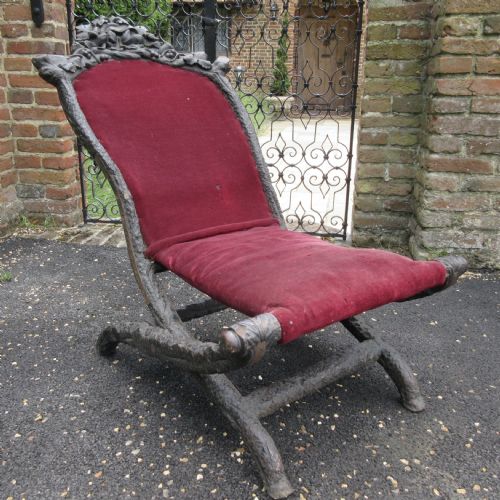


Folding X Frame Chair
These folding x frame chair examples combine clever collapsing design with striking regional craftsmanship from the nineteenth century.
Folding X Frame Chair
A folding x frame chair brings together centuries-old scissor-action design with portable seating traditions from across the globe. When you search for a folding x frame chair, you encounter a surprisingly diverse selection ranging from European campaign furniture to intricate Middle Eastern and Asian interpretations.
The pieces on this page mostly date from the nineteenth century, including Victorian periods and turn-of-the-century examples. Common forms span occasional chairs, steamer deck chairs, childs seating, and occasional armchairs built for both travel and static display.
Regional variations dominate the selection, showing distinct aesthetics from Syria, China, India, Burma, and Spain alongside French and British workshop traditions. Buyers frequently meet heavily carved hardwood frames, inlaid mother-of-pearl surfaces, and rustic folk art interpretations.
Construction and Materials
Makers utilised solid timbers such as walnut, oak, and fruitwood to build the structural intersecting slats that define the folding mechanism. These hardwoods provided the necessary tensile strength to support weight while allowing the frame to pivot smoothly on central pins.
Decoration often involved detailed carving, intricate joinery, and nacre-shell or mother-of-pearl inlay embedded directly into the wood. Some regional pieces also incorporated cane seating or upholstered panels to add comfort to the rigid folding architecture.
Regional styles span French country, Syrian, Chinese, and Black Forest traditions within the folding chair category.
Assessing Quality
Quality rests upon the precision of the intersecting joint and the integrity of the pivoting mechanism. A superior piece operates smoothly without excessive lateral play in the frame when fully opened.
The depth and sharpness of the hand carving or the complexity of the mother-of-pearl inlay distinguishes higher workshop output from simpler utilitarian items. Material selection, such as dense figured walnut versus softer general hardwoods, elevates the standing of the piece.
The Folding X Frame Chair Glossary
- X-frame
- A seating structure formed by intersecting diagonal members that cross to support the seat and back, allowing the object to collapse flat. This ancient geometry appears in ceremonial seats and campaign furniture alike.
- Savonarola chair
- A specific type of X-frame chair originating in Renaissance Italy, constructed from multiple curved wooden slats. Later regional interpretations adopted this distinctive scissor form.
- Campaign furniture
- Portable items designed for easy dismantling or folding to travel with military officers or travellers. These pieces prioritize clever hinges and robust hardwoods.
- Nacre
- An iridescent inner layer of mollusc shell, commonly known as mother-of-pearl, used for intricate geometric inlay work on frames. It creates striking contrast against dark walnut surfaces.
Folding X Frame Chair: Frequently Asked Questions
How do folding X-frame chairs work?
The two curved or straight wooden legs cross in the middle to form an X shape, pivoting on a central pin. This scissor mechanism allows the entire seat frame to collapse flat for storage or transport.
Historically, this portability made them ideal for campaign use or easy movement between rooms in large households.
Are these chairs comfortable for daily use?
Comfort varies significantly depending on the specific regional style and whether the chair includes upholstered cushions or supportive cane seating. Many historical examples prioritize ornate carving or rigid geometric support over ergonomic lounging.
Buyers often place them as accent chairs in hallways or studies rather than primary seating for long periods.
How do I identify a 19th-century piece?
Nineteenth-century examples show characteristic hand-tool marks, traditional joinery methods, and patination on woods like walnut and oak. Stylistic clues such as Victorian Gothic Revival details or Syrian nacre inlay point directly to this era.
Examining the wear patterns around the central pivot point also helps confirm age and regular historical use.
Where were these folding chairs made?
Production spanned across Europe, the Middle East, and Asia, reflecting diverse cultural interpretations of the X-frame concept. Surviving pieces originate from workshops in France, Spain, Syria, India, China, and Britain.
Each region applied its own distinct decorative vocabulary, from Black Forest carving to Islamic geometric inlay.