


Ornate Carved Settee
An ornate carved settee brings heavy timber frames, elaborate moulding, and period upholstery straight into a sitting room.
Ornate Carved Settee
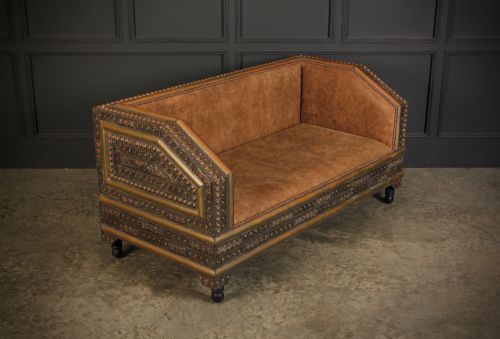
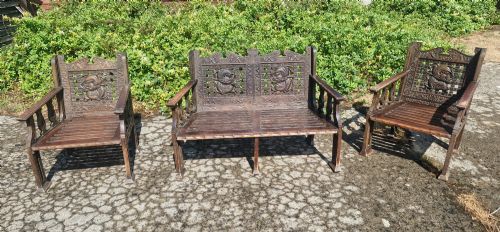
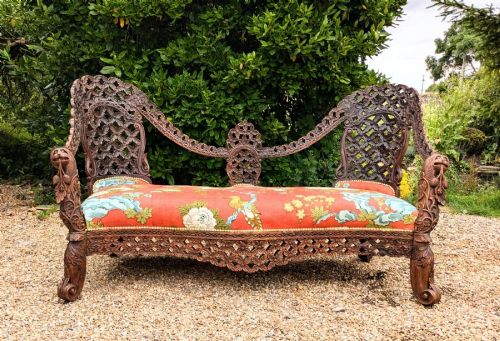
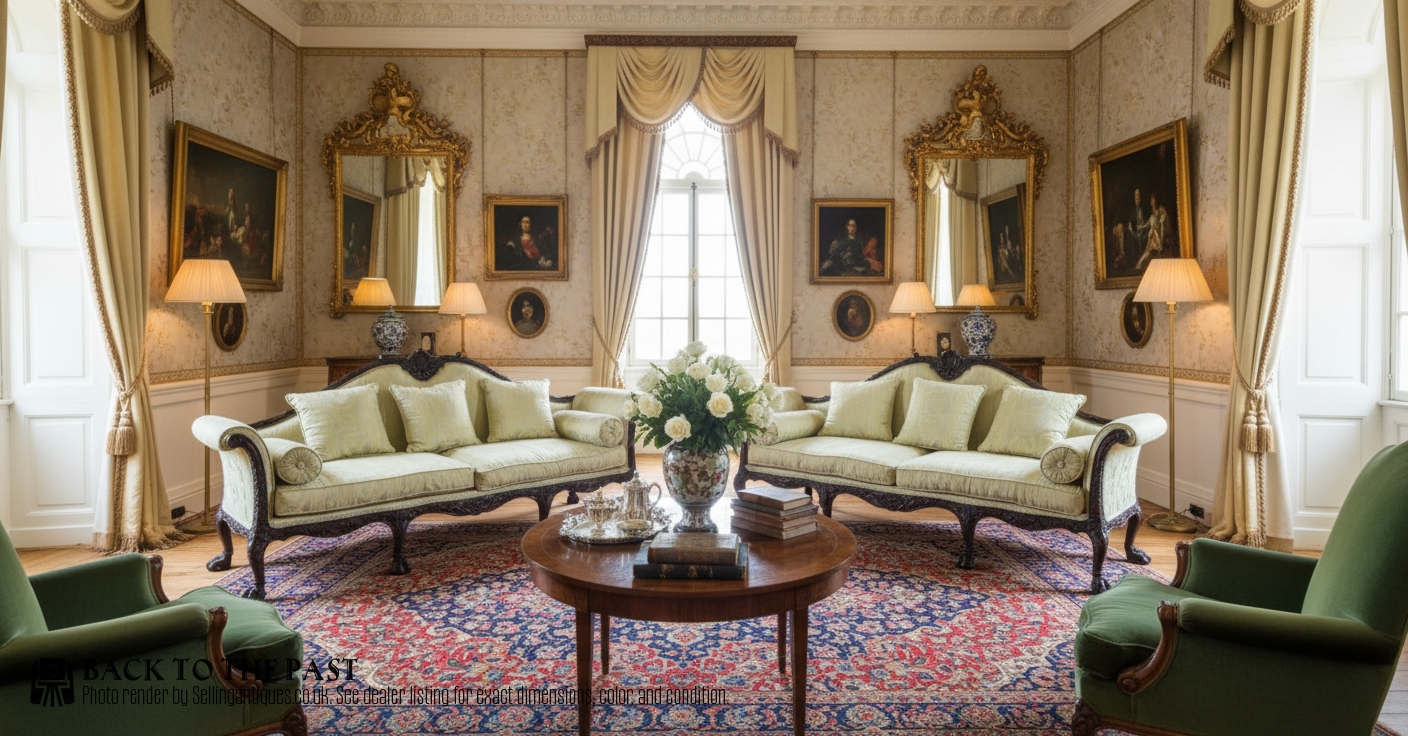
An ornate carved settee combines formal seating with dense hand-carved woodwork across backs, arms, and rails. The listings show forms ranging from large country house conservatory suites and three-piece suites to single veranda benches and chaise longues.
Buyers will most frequently meet Victorian pieces alongside Anglo-Indian colonial imports, Venetian rococo influences, and revival styles spanning the eighteenth to early twentieth centuries. Timber frames appear frequently in mahogany, teak, padauk, walnut, and beech wood.
Upholstery varies substantially across the recorded examples, utilising velvet, damask silk, and standard fabric alongside exposed polychrome paint and gilt finishes. The scale stretches from two-seat frames up to substantial three-seat versions designed for verandas or reception rooms.
Materials and construction methods
Makers shaped these frames from dense hardwoods including mahogany, teak, padauk, and walnut, selecting timbers capable of holding deep, intricate relief carving without splitting along the grain. Beech and general carved wood also appear in specific regional workshops.
Surface treatment relies on heavy hand-carvings supplemented occasionally by polychrome paint and gilt highlights to accentuate the scrollwork and floral motifs. Upholstered sections use traditional sprung or padded foundations covered in textiles such as velvet and damask silk.
One recorded veranda bench from Ceylon includes an ornate seat built to withstand tropical sitting without losing its carved flourish.
Distinctions in build and design
The depth and crispness of the hand-carving define the upper tier of these pieces, separating confident relief work from shallow, mechanical shaping. Timber selection also dictates grade, with dense tropical hardwoods and figured mahogany outperforming secondary softwoods.
Structural integrity depends on the original joinery of heavy frames, particularly where raked backs and carved arms meet the main seat rails. The integration of period upholstery materials like damask silk and velvet further distinguishes standard workshop output from exceptional commissions.
The Ornate Carved Settee Glossary
- Anglo-Indian
- Describing furniture made in India during the British colonial period, often combining local dense timbers with European forms. These pieces frequently feature intricate vegetal and figural carvings.
- Rococo Revival
- A nineteenth-century style drawing on mid-eighteenth-century French designs characterised by asymmetry, C-scrolls, and naturalistic floral motifs. Frames in this taste display exuberant, flowing curves.
- Chippendale Revival
- A later reproduction style emulating the mid-eighteenth-century designs of Thomas Chippendale. These items typically showcase elaborate pierced splats and ornate cabriole legs.
- Polychrome
- Painted in several colours, usually applied to wood or plaster surfaces to create decorative patterns. Venetian examples often utilise this technique to mimic richer materials.
- Damask
- A reversible figured fabric traditionally woven on a jacquard loom with patterns formed by contrasting warp and weft sateen weaves. It provides a formal, textured surface for period upholstery.
Ornate Carved Settee: Frequently Asked Questions
Where were these settee types placed originally?
Many examples served in formal drawing rooms, libraries, and large reception spaces where guests gathered. Others originated for veranda or conservatory use in colonial settings.
Larger three-piece suites accommodated multiple sitters in country houses and substantial residences. Single benches and chaise longues suited narrower galleries or private chambers.
How do I identify a revival style?
Revival pieces copy historical aesthetics from centuries past, such as eighteenth-century Chippendale or rococo forms, executed with nineteenth-century or later tooling. Timber seasoning and joinery methods usually give away the actual manufacturing period.
Examining the underside and internal frame construction clarifies whether a piece is an early model or a later revival.
What woods appear most often?
Mahogany, teak, padauk, and walnut form the backbone of these carved frames, offering the structural strength needed for heavy ornamentation. Beech and general painted woods also feature in specific European and regional pieces.
Exotic tropical hardwoods typically indicate colonial or overseas manufacture.
How should I care for the upholstery?
Velvet, damask silk, and standard fabric upholstery require gentle vacuuming with a soft brush attachment to lift surface dust. Avoid placing these settees in direct sunlight to prevent fading of delicate textiles.
Professional textile cleaners should handle deeper stains on historic fabrics.
Are these settees suitable for daily use?
Most frames possess sturdy hardwood construction capable of supporting regular sitting when placed on level floors. Historic joinery and delicate carved elements do benefit from sensible handling rather than heavy rough usage.
Upholstery may require reinforcement or reupholstering depending on the internal webbing condition.