




Ornate Carved Hall Chair
An ornate carved hall chair brings heavy timber and elaborate regional styles into an entranceway, offering rigid posture and decorative impact.
Ornate Carved Hall Chair
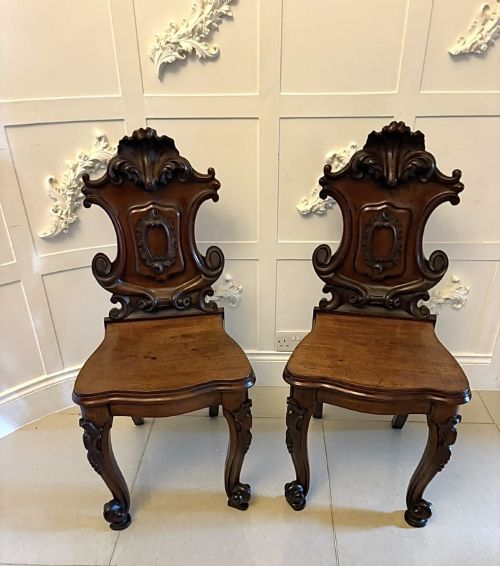
When you search for an ornate carved hall chair, you encounter upright wooden seating designed for passage spaces rather than lounging. These pieces typically date from the nineteenth century, spanning Victorian interpretations and continental revivals.
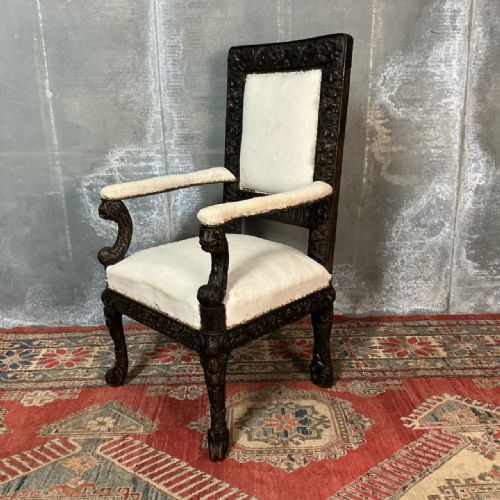
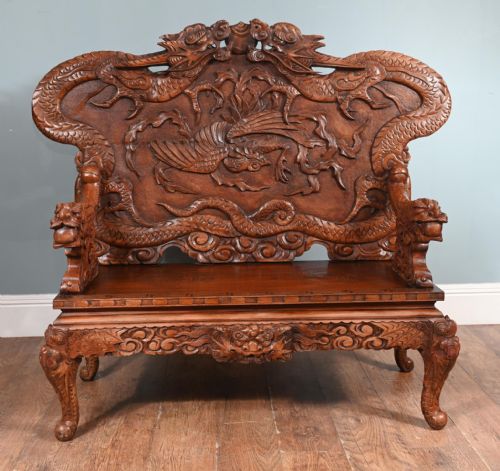
The selections on this page appear in various timber forms, including side chairs, high-backed throne variants, and benches. Many originate from British workshops or continental centres such as France and Italy, while others reflect global influences like Anglo-Indian, Ceylonese, and Chinese production.
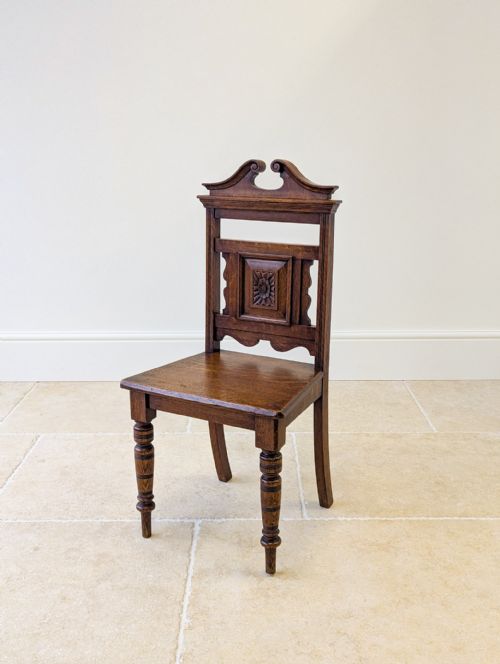
The standard version met here is a nineteenth-century oak or walnut side chair featuring deep relief carving along the backrest. These items were originally positioned in grand hallways to display the lineage, taste, or wealth of the household to arriving guests.
Materials and Technique
Makers utilised dense hardwoods such as oak, walnut, mahogany, and teak to support intricate chisel work without structural failure. These timbers were selected for their grain and stability, allowing craftsmen to carve deep scrolls, foliage, and figures into the solid wood.
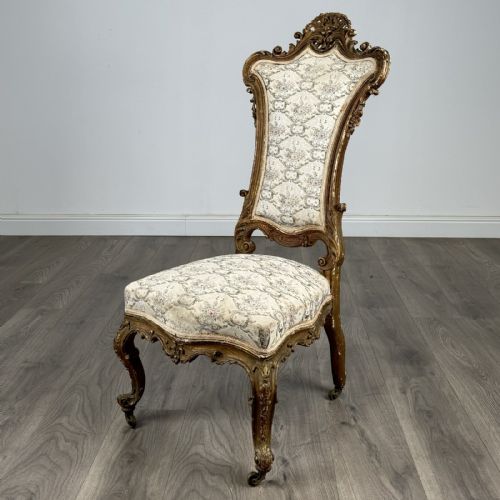
Assembly relied on traditional joinery methods, supplemented by marquetry inlay, bone elements, or giltwood finishes on continental examples. Upholstered variants incorporated textile or velvet pads fixed with brass elements, though many surviving pieces retain exposed carved wooden seats.
Ornate Carved Hall Chair Retail Price Guide 2026
Typical asking prices for ornate carved hall chair among the pieces listed under this phrase on Sellingantiques today, from the lower quarter to the upper quarter. They describe what is for sale here now, not the wider market.
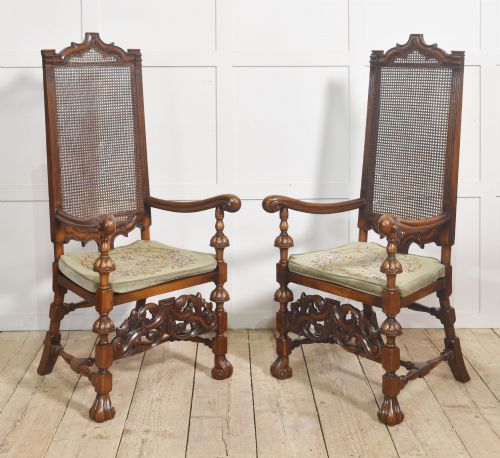
Revival styles represented on this page span Renaissance, Carolean, Gothic, and Baroque interpretations executed across European and Asian workshops.
Distinctions in Execution
The primary distinction lies in the depth and sharpness of the hand carving rather than the mere presence of decoration. Superior examples display crisp relief work where figures, foliage, and architectural motifs possess clear undercut details, whereas lesser items rely on shallow, machine-routed patterns.
Structural integrity also separates standard items from exceptional work, particularly regarding how the heavily carved backplates attach to the seat rails. Timber selection dictates the longevity of these joints, with dense old-growth walnut and oak maintaining stability under daily use better than softer secondary woods.
The Ornate Carved Hall Chair Glossary
- Sgabello
- A Renaissance chair type featuring a wooden seat supported by two carved trestle boards rather than four legs. This form originated in Italy and typically includes an ornate backrest.
- Carolean Style
- A seventeenth-century aesthetic revived during the Victorian era, characterised by scrolling crest rails, cane panels, and exuberant carved foliage. These chairs often utilise rich walnut timbers.
- Marquetry
- The art of applying small pieces of veneer to a structure to form decorative patterns. This technique appears on select nineteenth-century seating surfaces and back panels.
- Giltwood
- Timber treated with gold leaf or gilt paint to create a lustrous surface. Continental makers frequently applied this finish to ceremonial or reception chairs.
- Padouk
- A heavy, durable tropical hardwood with reddish tones. Craftsmen in regions such as Burma utilised this timber for deeply carved regional seating.
Ornate Carved Hall Chair: Frequently Asked Questions
Where were hall chairs placed?
These chairs were positioned along the walls of entrance halls, vestibules, and grand corridors in large residences. They served a formal purpose for visitors waiting to be announced rather than providing comfort.
Because hallways experienced heavy foot traffic and drafts, the furniture needed to be robust. Consequently, makers prioritized upright wooden construction over upholstered cushioning.
How do I identify a Victorian hall chair?
Victorian examples frequently combine nineteenth-century revival styles, such as Gothic, Renaissance, or Carolean motifs, executed in heavy oak or mahogany. They often feature stiff wooden seats and elaborate crest rails bearing heraldic or floral carving.
Examining the underside and joint construction reveals nineteenth-century hand tool marks and timber seasoning typical of the period. The presence of dark, dense hardwoods further distinguishes these pieces from later reproductions.
Are these chairs comfortable to sit on?
Most ornate hall chairs were built for visual display and upright posture rather than relaxation. The rigid wooden backrests and flat seats encourage an erect sitting position.
Some variants include upholstered pads in velvet or fabric to soften the seat. However, the primary function historically remained decorative.
What is the difference between a hall chair and a side chair?
Hall chairs specifically designate seating intended for entranceways, usually constructed entirely from wood with stiff backs and solid seats. Side chairs represent a broader category meant for dining rooms or parlours, which might feature upholstered seats.
Both types lack arms, but hall chairs often display more aggressive or heraldic carving suited to public reception spaces.