



Victorian Marquetry Side Chair
These Victorian marquetry side chair examples combine refined timber work with classic seating, bringing period character and subtle pattern into a room.
Victorian Marquetry Side Chair
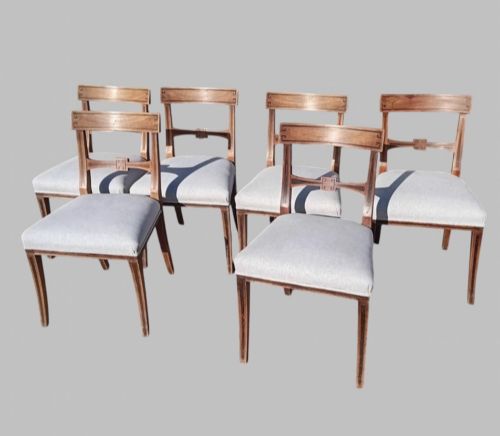
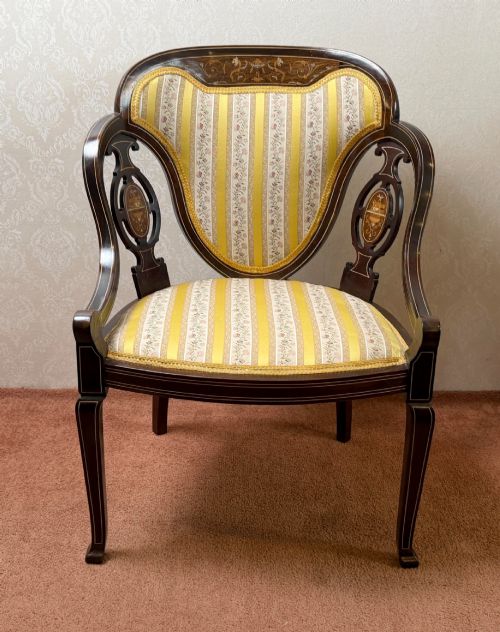
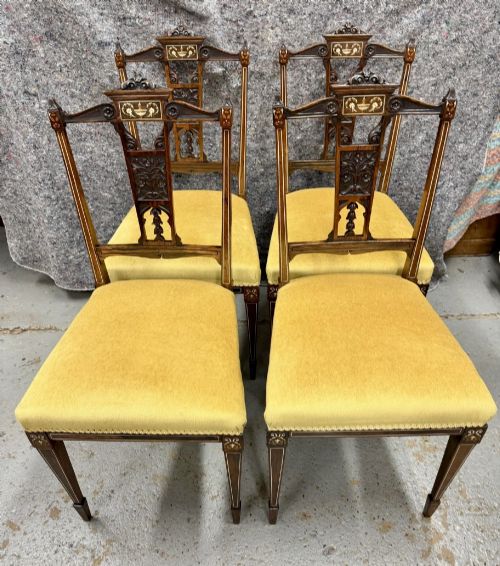
A victorian marquetry side chair brings decorative wood inlay into smaller seating forms designed for parlours, dining rooms and halls. You will frequently find these pieces rendered in mahogany, walnut and rosewood, often featuring elaborate floral or geometric motifs set into the timber.
The selection ranges from standard dining seats to high-backed models and pairs of salon chairs. Influences span from Sheraton Revival to Art Nouveau and Carolean styles, all sharing the characteristic inlaid ornamentation of the period.
How they were made
Cabinetmakers constructed the frames using dense hardwoods like mahogany, walnut and rosewood to provide a stable foundation for the delicate decorative work. Boxwood and satinwood were then precision-cut and fitted into recessed channels within the primary timber to create contrasting floral and linear patterns.
Upholstery elements utilised materials such as velvet and woven fabric, secured over traditional padding to complete the seating surface. Surface finishing relied on hand-applied polishes that enhanced the natural grain of the wood while protecting the intricate inlay.
Victorian Marquetry Side Chair Retail Price Guide 2026
Typical asking prices for victorian marquetry side chair among the pieces listed under this phrase on Sellingantiques today, from the lower quarter to the upper quarter. They describe what is for sale here now, not the wider market.
Styles span from Sheraton Revival and Art Nouveau to Swiss decorative influences and Carolean inspired forms.
What varies in quality
The finesse of the marquetry dictates much of the distinction across these chairs, where tighter joints and sharper contrast between woods indicate superior craftsmanship. Simpler geometric arrangements sit at one end of the scale, while elaborate multi-wood pictorial inlays require greater skill from the cabinetmaker.
Timber selection and frame integrity also separate standard examples from finer works, particularly where carved details or rarer woods like satinwood and rosewood are employed. The harmony between the structural woodwork and the applied inlay defines the overall success of the piece.
The Victorian Marquetry Side Chair Glossary
- Marquetry
- Decorative veneer work arranged in pictorial or ornamental patterns on a solid wood base. This technique uses contrasting woods and tinted elements to create detailed designs.
- Side chair
- A light, upright chair without arms designed primarily for dining or occasional use around a room. These form the bulk of surviving antique seating sets.
- Satinwood
- A lustrous, yellowish-orange tropical timber prized for its bright contrast in inlay work. Cabinetmakers utilised it extensively during revival periods for highlights.
- Carolean
- A revival style drawing on seventeenth-century motifs featuring carved scrollwork and high backs. Examples borrow the rich ornamentation associated with the Restoration era.
Victorian Marquetry Side Chair: Frequently Asked Questions
How do I care for antique inlaid chairs?
Keep these chairs away from direct sunlight and extreme temperature fluctuations to protect the delicate wood veneers and adhesives.
Apply a quality furniture wax periodically to nourish the timber and maintain the lustre of the polished surface.
Were these chairs used for dining?
Many examples served around formal dining tables, while lighter models functioned as decorative salon or hall seating.
Their slender proportions made them versatile for various rooms rather than heavy everyday use.
What is the difference between marquetry and inlay?
Marquetry assembles a complete veneer puzzle over the entire surface of the piece before application. Inlay involves fitting contrasting materials into carved recesses directly into the solid wood.
How do I identify a Sheraton Revival piece?
Sheraton Revival items draw on late eighteenth-century classical proportions with refined tapered legs and delicate marquetry. They typically feature lighter woods and symmetrical floral motifs.