
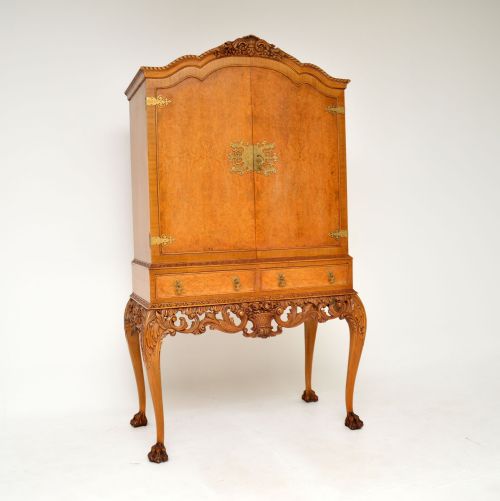

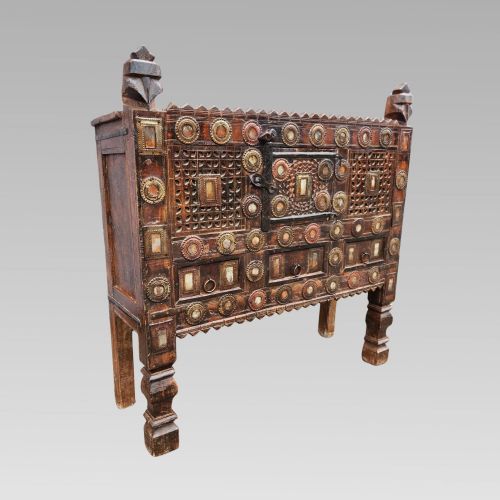
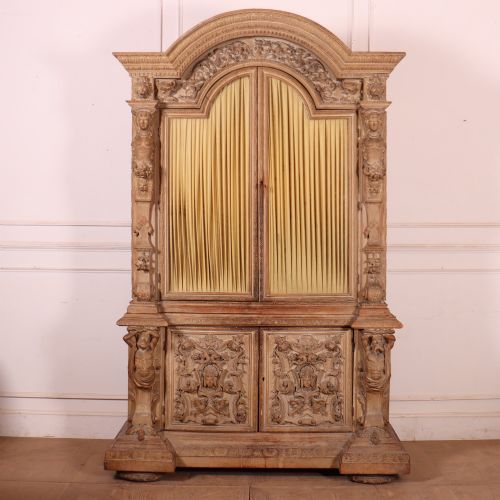


Ornate Carved Cabinet
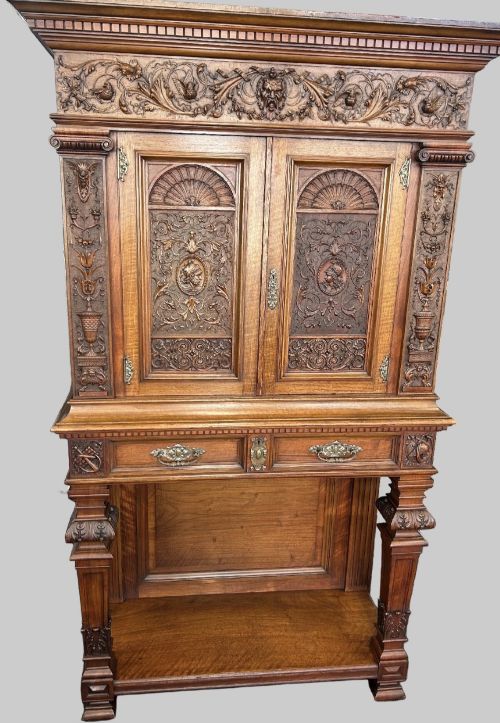
An ornate carved cabinet brings heavy timber and elaborate reliefwork into a room, offering both display and storage through revival styles.
Ornate Carved Cabinet
An ornate carved cabinet spans multiple forms including sideboards, drinks cabinets, vitrines, and writing desks produced across the nineteenth and twentieth centuries.
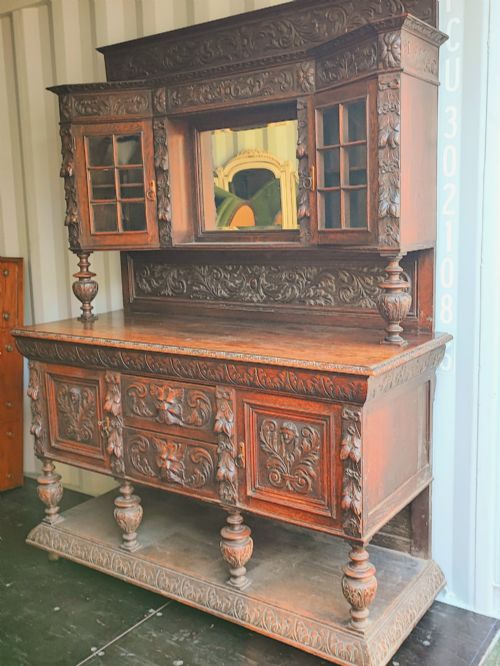
The Victorian era supplies numerous oak and walnut examples featuring heavy carving, mirror backs, and buffet layouts designed for formal dining rooms.
Continental and revival pieces draw on French Rococo, Italian Renaissance, and Jacobean motifs, alongside Anglo-Indian production in teak, padauk, and satinwood.
Materials and Construction
Makers rely primarily on dense hardwoods like walnut, oak, and burr walnut, frequently accented with brass hardware, marble tops, and glass panels.
Carving is executed directly into the timber or applied in relief, complemented by marquetry inlay and giltwood details on select revival and exhibition pieces.
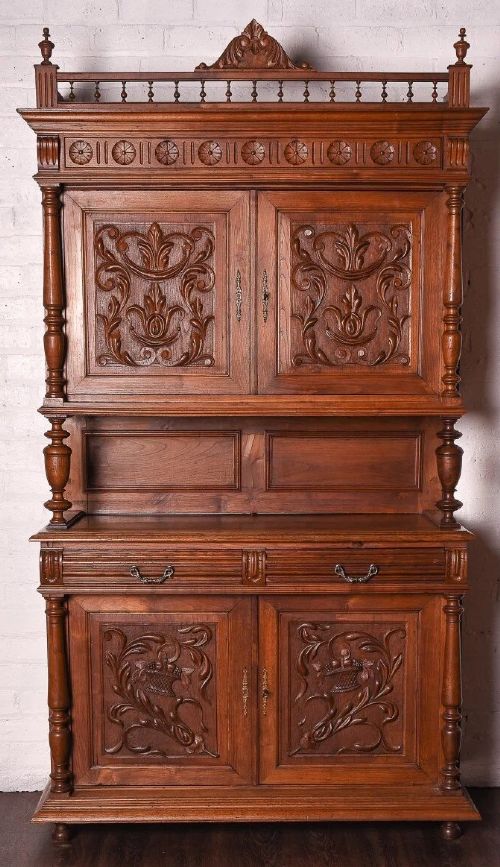
A French hunts game cabinet brings woodland fauna right into the dining room.
Craftsmanship and Execution
The distinction between standard utility items and exhibition pieces rests entirely on the depth, crispness, and ambition of the hand carving.
Selected timbers with strong burr patterns or contrasting satinwood and padauk veneers elevate a piece beyond basic regional output.
Waring and Gillows·Sigmund Jaray Wien
The Ornate Carved Cabinet Glossary
- Vitrine
- A glass-fronted display cabinet intended for the exhibition of porcelain and small ornaments. These pieces often feature glazed sides to maximise light penetration.
- Damchiya
- A traditional low storage chest or cabinet originating from India, typically characterised by heavy carving and recessed panel construction.
- Marquetry
- The art of applying decorative veneer pieces to a structure to form intricate geometric or pictorial designs. Walnut and exotic hardwoods serve well for this technique.
- Breakfront
- A piece of furniture where the central section projects forward from the flanking outer sections. This architectural arrangement creates depth and shadow on sideboards and pedestals.
Ornate Carved Cabinet: Frequently Asked Questions
How do I date a carved oak sideboard?
Victorian oak sideboards often display heavy machine-assisted or deep hand carving alongside mirror backs and substantial bracket feet.
Earlier nineteenth-century iterations rely on tighter proportions and distinct revival motifs, such as Jacobean strapwork or Renaissance panels.
Where should I place a cocktail cabinet?
Burr walnut and marquetry cocktail cabinets suit reception rooms where their fitted glass interiors and drop-front surfaces remain accessible.
Ensure adequate clearance for hinged doors and fold-down mixing shelves before positioning against a primary wall.
What distinguishes Anglo-Indian cabinets?
Anglo-Indian pieces utilise regional timbers like padauk, teak, and satinwood combined with dense, intricate floral or figural carving.
These cabinets reflect nineteenth-century cross-cultural design, pairing European cabinet forms with indigenous carving traditions.
Are marble tops original to these cabinets?
Renaissance revival and continental cupboards frequently incorporate fitted marble slabs to provide a durable, decorative working surface.
Such tops are typically heavy inset stone resting directly upon the rebated wooden framework of the base.