

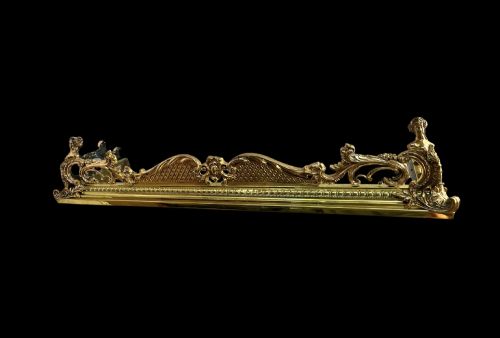
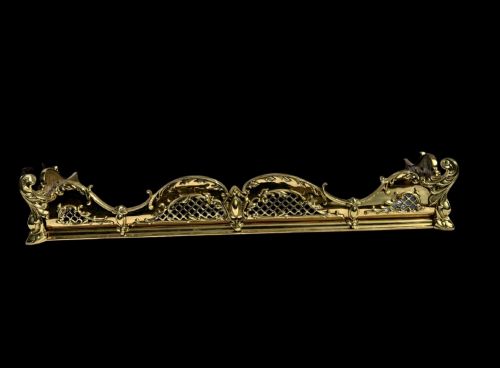


Ornate Brass Fireplace Curb
An ornate brass fireplace curb frames the hearth, combining heavy cast metalwork with French and Victorian decorative styles to anchor a room.
Ornate Brass Fireplace Curb
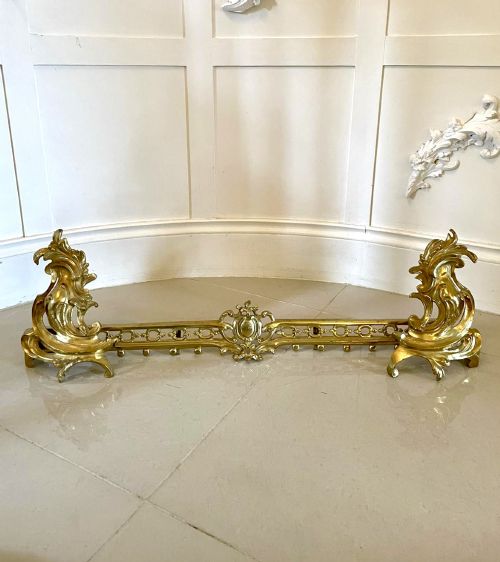
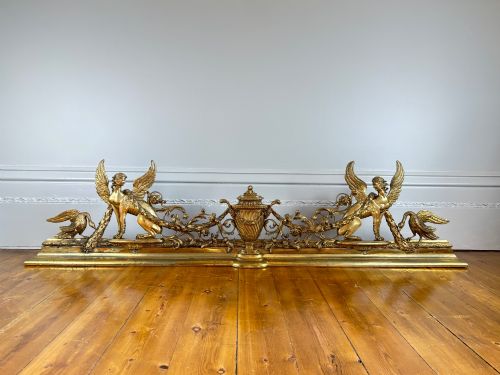
An ornate brass fireplace curb, also known as a fender or fire kerb, sits on the hearth to contain ash and protect the room from stray embers. The pieces seen here span the Victorian period and the nineteenth century, extending into nineteen twenty.
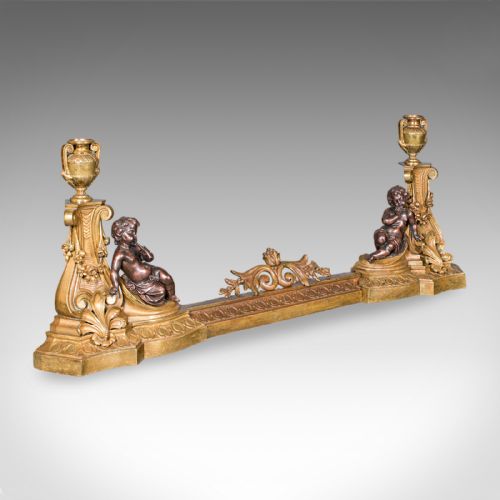
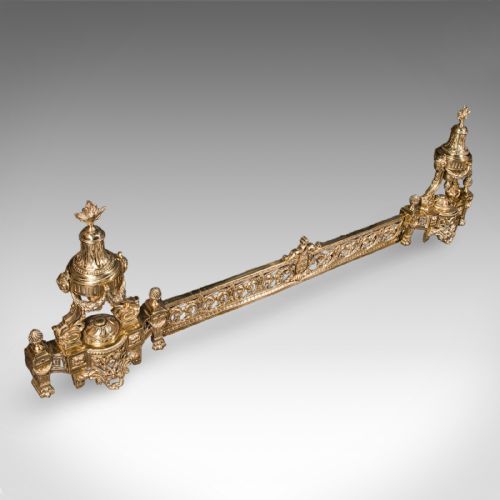
Makers and designers of the period produced both extending English designs and grand French-influenced models bearing garlands and polychrome details. They range from simple brass and steel combinations to heavy, highly decorative showpieces.
How they were made
Makers utilised cast brass, gilt bronze, and ormolu to achieve the heavy, ornate forms found across these listings. Iron and steel occasionally provided internal structural strength for adjustable extending frames.
Decorative elements like garlands and architectural motifs were cast separately and then secured to the main body. Guilds and foundries employed gilding, polychrome painting, and patination to finish the metal surfaces.
Some nineteenth-century makers built extending curbs so you could adjust the fender after buying a larger house.
What varies in quality
The weight of the cast brass and the crispness of the chased or moulded details distinguish finer examples from standard production pieces. Heavier gauge metal and substantial bronze components indicate superior original manufacture.
Design complexity also plays a role, with intricate Louis XV or neoclassical revival styling demanding greater skill from the metalworker. The presence of adjustable mechanisms that operate smoothly adds practical merit to the build.
E F Caldwell New York
The Ornate Brass Fireplace Curb Glossary
- Fender
- A low metal guard placed around the hearth to keep burning coals and ash contained. It doubles as a decorative border for the fireplace.
- Ormolu
- Gilded bronze applied to ornamental metalwork, particularly popular in French-inspired decorative arts. The technique involves coating metal in a gold amalgam.
- Neoclassical Revival
- A style drawing on classical Greek and Roman architecture and art, seen here in nineteenth-century decorative pieces. It favours symmetry and restrained ornamentation.
- Extending Fender
- A hearth guard designed with a sliding mechanism to fit varying fireplace widths. This practical adaptation allowed one fender to suit multiple rooms.
Ornate Brass Fireplace Curb: Frequently Asked Questions
What is a fireplace curb used for?
A fireplace curb creates a physical barrier around the hearth to stop rolling logs and hot embers from damaging floor coverings. It also establishes a neat visual boundary between the fire and the room.
Historically, these pieces also served as a place to warm feet or rest fire irons. Today, they remain central decorative focal points for period fireplaces.
How do I measure for a fender?
Measure the width of your hearth opening and the depth of the space where the curb will sit. Adjustable models offer flexibility if your hearth dimensions fall between standard sizes.
Ensure you account for any protruding hearthstones or surround mouldings so the piece sits flush against the floor. Heavy models rely on their own weight to stay in position without permanent fixings.
How do I clean antique brass?
Dust the metal regularly with a soft, dry cloth to prevent grime accumulation. Avoid harsh chemical polishes that strip away the aged patina accumulated over decades.
If cleaning is necessary, use a mild soapy solution and dry the surface thoroughly immediately afterwards. Preserving the original surface colour maintains the character of the piece.
How can I tell Victorian styles apart?
Victorian pieces often incorporate gothic revivals or heavy cast elements, reflecting the industrial manufacturing capabilities of the nineteenth century. Earlier nineteenth-century examples lean towards French Rococo or Louis XV influences with ornate garlands and scrolls.
Later Victorian and nineteen-twenties pieces sometimes simplify these motifs or combine brass with copper and iron. Examining the weight, casting quality, and fastening methods helps date an individual piece.