


Brass Adjustable Fireplace Curb
A brass adjustable fireplace curb frames the hearth with a practical telescopic form, keeping stray embers in check while catching the room's firelight.
Brass Adjustable Fireplace Curb
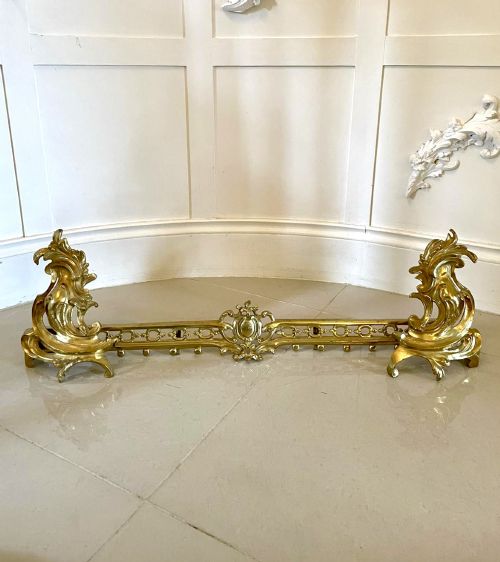
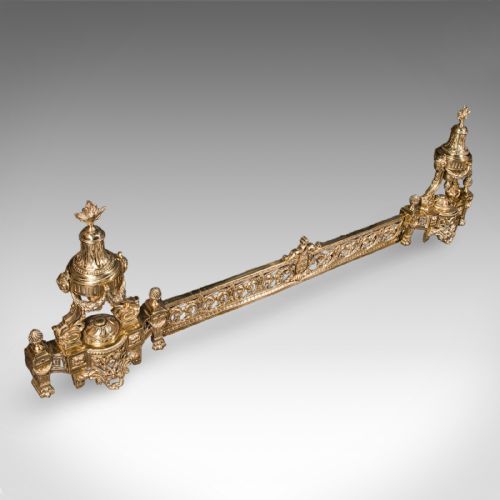
A brass adjustable fireplace curb acts as a functional barrier around the hearth, expanding or contracting to fit various fireplace openings. Buyers searching for a brass adjustable fireplace curb will find extending hearth fenders originating from the Victorian and Edwardian eras.
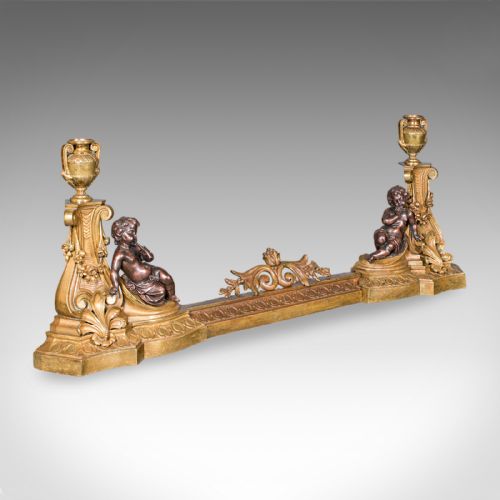
The selection ranges from simple nineteenth-century brass extending rails to ornate French chateau pieces executed in gilt bronze and the Louis XV style. Most examples rely on a sliding mechanism that alters the width to suit the hearth stone perfectly.
English iterations often present straightforward scrolled brass or cast frames, while continental pieces lean towards French Rococo cast ornamentation. These fireplace accessories sit directly on the floor to contain ash and protect the flooring.
How they were made
Foundries shaped these items primarily through casting and fabricating brass, bronze, and ormolu. Metalworkers cast detailed decorative motifs like scrolls and foliage before mounting them onto the telescopic rails.
Gilding techniques such as fire-gilding or applying gilt-brass finishes gave many pieces their bright surface sheen, while other examples utilised patinated bronze for a darker, muted appearance.
Current listings feature pieces spanning the Victorian, Edwardian, and nineteenth-century periods, constructed from brass, gilt bronze, and patinated bronze.
What varies in quality
Weight and casting crispness separate standard utility items from finer parlor pieces. Heavy, thick-gauge metalwork holds its telescopic alignment better and shows sharper detail in the chased or cast ornament.
The refinement of the sliding mechanism and the depth of the metal finishing determine the overall caliber. Superior examples display seamless joints in the extending sections and richly chased surface relief rather than flat, machine-stamped edges.
The Brass Adjustable Fireplace Curb Glossary
- Fender
- A low metal guard placed before a hearth to prevent burning coals from rolling onto the floor. It defines the boundary of the fireplace enclosure.
- Ormolu
- Finely ground high-carat gold mercury-gilded onto a bronze or brass object. This technique imparts a durable, rich yellow metallic lustre.
- Louis XV Style
- An asymmetric, highly decorative eighteenth-century aesthetic revived during the nineteenth century. It heavily utilises C-scrolls, naturalistic foliage, and rocaille motifs.
- Chenet
- A French term for fire dog or firedog, often used in pairs to support logs within the hearth. Some adjustable designs incorporate these directly into the fender assembly.
Brass Adjustable Fireplace Curb: Frequently Asked Questions
How do I measure for a curb?
Measure the width of your hearth opening stone from side to side where the outer edges of the fender will rest. Because these pieces are telescopic, you select a model whose minimum and maximum sliding range comfortably spans your measurement.
Account for any clearance needed around the hearth surround or side tiles so the extending arms move freely without scraping the walls or fire basket.
How do I clean brass and ormolu?
Dust the metal regularly with a soft, dry cloth to prevent soot and ash accumulation from pitting the surface. Avoid harsh commercial brass dips or abrasive wire wool, which strip original patination and thin historic gilding.
If the metal requires deeper cleaning, use a mild soap solution on a damp cloth and dry immediately. Preserving the mellow tone of nineteenth-century brass is preferable to achieving an overly bright shine.
Were these made in pairs?
Most hearth curbs were manufactured as single, self-contained extending units designed to span the front of a single fireplace opening. Occasionally, related fireplace accessories such as chenets or fire dogs were produced to accompany the main fender.
When listings mention pairs, they usually refer to matching sets of independent fenders intended for multiple hearths in a grand residence rather than two halves of one curb.
How do I date an antique curb?
Examine the casting quality, fastening screws, and stylistic clues to determine the age of a piece. Victorian examples often display heavier cast brass and hand-finished screw threads, while Edwardian pieces may show lighter commercial production methods.
French pieces from the mid-nineteenth century frequently incorporate gilt-bronze mounts that reflect the revived Louis XV taste popular during that era.