



Louis XV Hearth Guard
A louis xv hearth guard brings extravagant French Rococo curves and openwork brass mesh to a fireplace, shielding a room from stray sparks.
Louis XV Hearth Guard
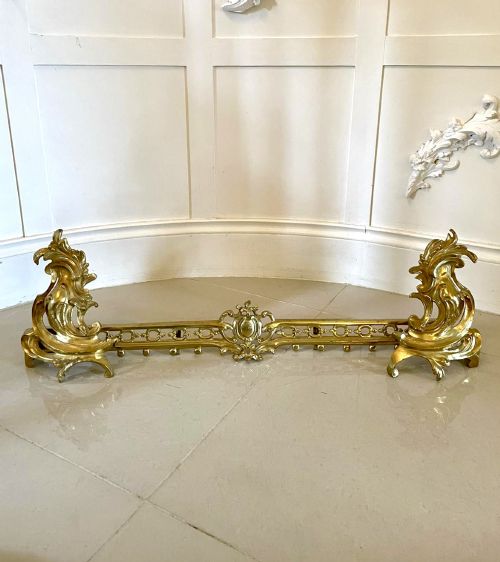
A louis xv hearth guard encompasses decorative fire screens, extending fenders, and folding guards created in the French Rococo and Louis XV styles. These accessories protect living spaces from stray embers while adding a layer of ornate metalwork to the fireplace surround.
The versions most commonly met on this page date from the nineteenth century and the early twentieth century. They adopt revival forms featuring pierced brass, gilt bronze, and ormolu mounts.
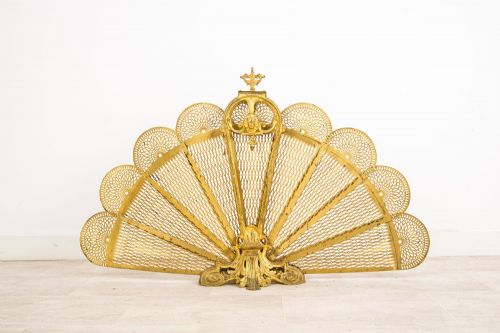
Makers of the period utilised traditional French chateau designs, producing screens with peacock fan arrays, dolphin motifs, and adjustable frames. Each object serves both a functional role as a spark screen and a decorative role within the room.
How they were made
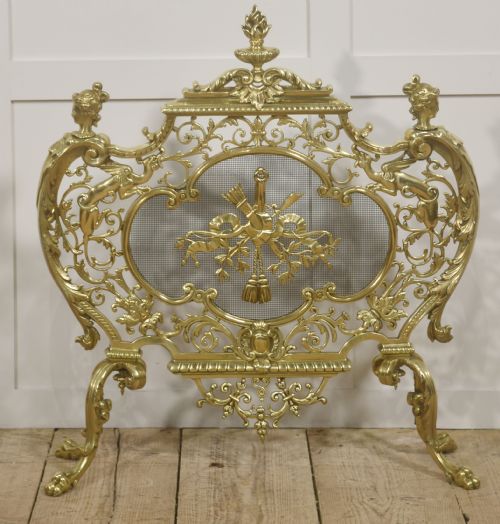
Brass, gilt bronze, and ormolu form the primary structural and decorative components of these fireplace accessories. Craftsmen cast and chased the metal to create asymmetrical Rococo scrolls, floral motifs, and figural mounts.
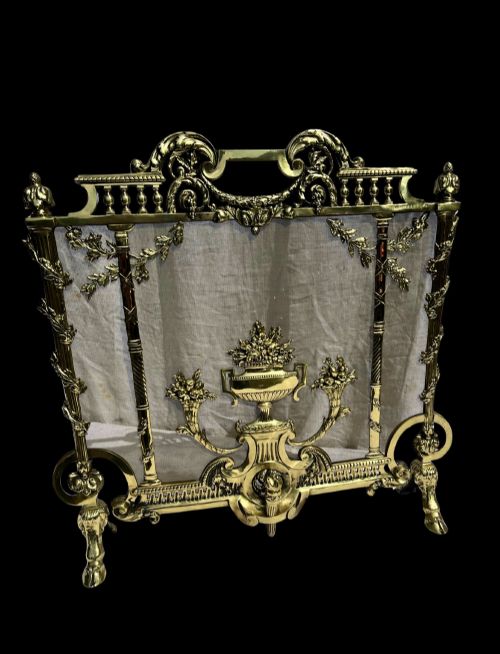
Wire mesh and metal mesh provide the protective barrier across the central frame, allowing heat to radiate while stopping sparks. Folding mechanisms and adjustable extending fenders rely on hinged metal joints built into the brass framework.
Listings show items spanning the nineteenth century through to the early twentieth century, utilising brass, wire mesh, gilt bronze, and ormolu.
What varies in quality
The refinement of the cast metal ornamentation dictates the upper tier of quality. Crisp chasing in gilt bronze and heavy, solid brass frames distinguish finer work from simpler stamped or light cast pieces.
Complexity of form also defines the range. Multi-fold screens with integrated mesh panels and finely articulated ormolu mounts represent more ambitious workshop production than basic single-panel brass fire screens.
The Louis XV Hearth Guard Glossary
- Ormolu
- Gilded bronze used extensively in French decorative arts to add bright metallic highlights to furniture and fireplace hardware. This technique involves applying a mercury and gold amalgam to a bronze base.
- Chenets
- Andirons or firedogs placed inside the hearth to support burning logs. They frequently appear alongside fire screens in period fireplace arrangements.
- Fender
- A low metal guard placed on the hearth in front of the fireplace opening to contain rolling embers. Extending versions allow the width to adjust to different fireplace proportions.
- Rococo
- An ornate design style characterised by asymmetry, C-scrolls, and naturalistic shell or plant motifs. It forms the stylistic basis for Louis XV revival metalwork.
Louis XV Hearth Guard: Frequently Asked Questions
How do I measure for a hearth guard?
Measure the width of your fireplace opening and the hearth floor space to ensure the screen or fender sits securely in front of the fire. Extending fenders offer flexibility if you require adjustment for varying hearth widths.
Consider the height of the fireplace opening as well, selecting a guard tall enough to cover the main combustion zone while leaving adequate clearance for mantel details.
Are these guards safe for modern fires?
Most pieces feature fine wire mesh or metal mesh designed to block stray sparks and embers from escaping onto the floor. They function well with open hearths and gas fire setups.
Exercise caution with intense heat sources, as antique gilt finishes and lacquered brass surfaces can degrade if exposed to excessive temperatures directly against the metal.
How do I clean gilded brass?
Dust the metal gently with a soft, dry cloth to remove surface particles without scratching the gilt finish. Avoid abrasive metal polishes that can strip away the historic gilding.
For stubborn grime, use a slightly dampened cloth with mild soap, drying the piece immediately to prevent tarnishing on exposed brass areas.
How do I date a nineteenth-century screen?
Examine the construction methods, including the type of screws, hinge joints, and the thickness of the cast brass or bronze elements. Nineteenth-century revival pieces often exhibit heavier casting and distinct patination compared to later reproductions.
Stylistic cues such as the specific interpretation of Rococo scrolls and the presence of peacock fan folding mechanisms point towards nineteenth-century production periods.