



Antique French Hearth Surround
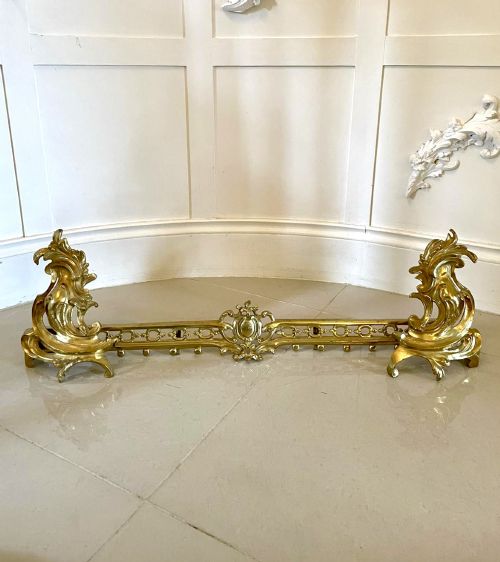
An antique french hearth surround brings heavy cast iron, polished steel and gleaming ormolu into the room to anchor a fireplace with period proportion.
Antique French Hearth Surround
When you search for an antique french hearth surround, you encounter heavy fireplace fenders, adjustable fire guards and complete fire surrounds spanning the nineteenth century. These pieces originate from distinct periods including the Victorian era and the years around eighteen sixty, eighteen eighty and nineteen hundred, showing that French design heavily influenced British and international interiors.
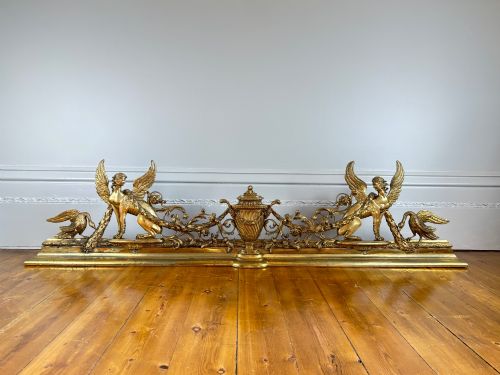
The objects take several forms, most commonly extending brass or bronze fenders designed to sit on the hearth, alongside paired chenets, fire grates and marble fire surrounds. The styling draws heavily from French Rococo, Louis the fifteenth, Louis the sixteenth neoclassical and French Empire aesthetics, creating ornate focal points for period chimneys.
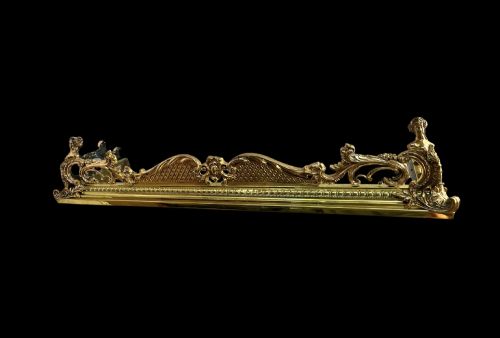
The version most frequently met on this page is the adjustable metal fender fashioned from gilded brass, cast iron, ormolu or polished steel. These items often feature extendable mechanisms to fit various hearth widths while retaining intricate decorative casting.
Materials and construction
Makers utilised cast iron for robust structural foundations and heavy fire grates, pairing this dark metal with bright brass, bronze and ormolu to create strong visual contrast. Gilt bronze and gilded brass components catch the firelight, while polished steel provides a harder, reflective surface for nineteenth-century hearth furniture.
Foundries employed skilled casting and parcel gilding techniques to produce intricate rococo scrollwork, cherub figures and neoclassical motifs on fenders and chenets. Many pieces incorporated adjustable mechanisms allowing the main body of the fender to extend smoothly between stone jambs.
Distinctions in quality
The distinction between standard production and the finest work lies in the crispness of the chasing and the depth of the metal casting. Superior pieces display finely detailed relief work on the ormolu and bronze elements, whereas simpler items rely on basic cast shapes with minimal hand finishing.
Weight and structural integrity also separate tiers of quality, with heavier gauges of brass, steel and cast iron providing greater durability. Original gilding and integrated extension mechanisms that move without sticking indicate higher workshop standards.
E F Caldwell New York
The Antique French Hearth Surround Glossary
- Ormolu
- Gilded bronze, where a layer of gold amalgam is applied to a bronze base through intense heat. This technique gives nineteenth-century hearth hardware a warm, lasting lustre.
- Chenet
- An alternative term for an andiron, used to support logs within the fireplace opening or placed as decorative guards at the hearth edge. They frequently match the design of the accompanying fender.
- Fender
- A low metal guard placed around the hearth to contain stray embers and ash. Many period examples feature adjustable widths to suit different fireplace openings.
- Rococo
- An ornate design style characterised by asymmetry, curves, scrolls and naturalistic plant motifs. It heavily influences nineteenth-century French metalwork.
- Neoclassical
- A revival style drawing on classical Greek and Roman forms, featuring strict symmetry, urns, fluting and restrained geometric ornament.
Antique French Hearth Surround: Frequently Asked Questions
How do I measure for a fender?
Measure the width of your hearth opening between the fireplace jambs and check whether the antique piece has an adjustable mechanism. Many nineteenth-century designs slide outward to fit varying floor spaces.
Ensure you also account for the depth of the hearth so the fender sits safely clear of the open fire grate.
Can these be used with modern fires?
Most of these pieces are built from heavy cast iron, brass and bronze, making them structurally sound for use around gas or electric hearth setups. They function effectively as physical barriers just as they did in the nineteenth century.
Take care with delicate ormolu surfaces when placing them close to high heat sources to protect the original finish.
How do I clean gilded brass?
Dust the metal gently with a soft dry cloth to remove surface grit without disturbing the underlying surface. Avoid harsh chemical polishes that can strip away thin layers of gilt or ormolu.
If deeper cleaning is necessary, consult a metal conservation specialist rather than using abrasive household cleaners.
What is the difference between bronze and ormolu?
Bronze is an alloy of copper and tin used for strong structural castings and fire accessories. Ormolu refers specifically to bronze that has been treated with a gold amalgam finish.
In period listings, ormolu parts usually exhibit a brighter, golden appearance compared to plain patinated bronze.