


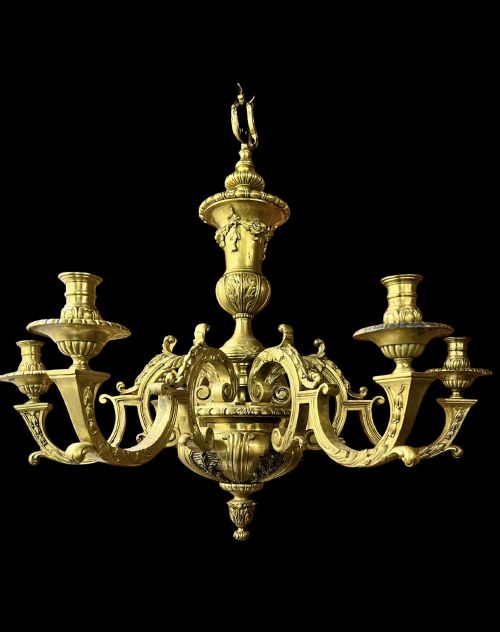


Ornate Brass Candelabrum
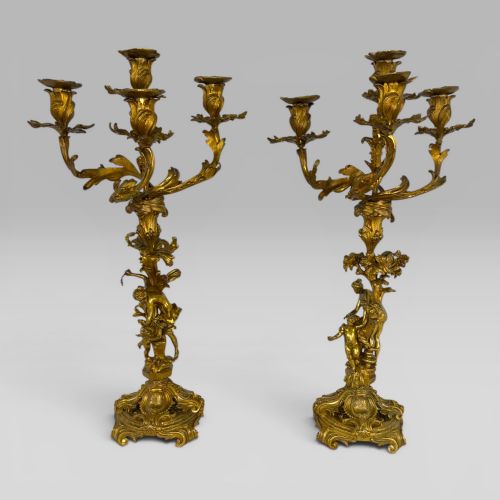
An ornate brass candelabrum brings dramatic height and warm metallic reflection to a mantelpiece or dining table.
Ornate Brass Candelabrum
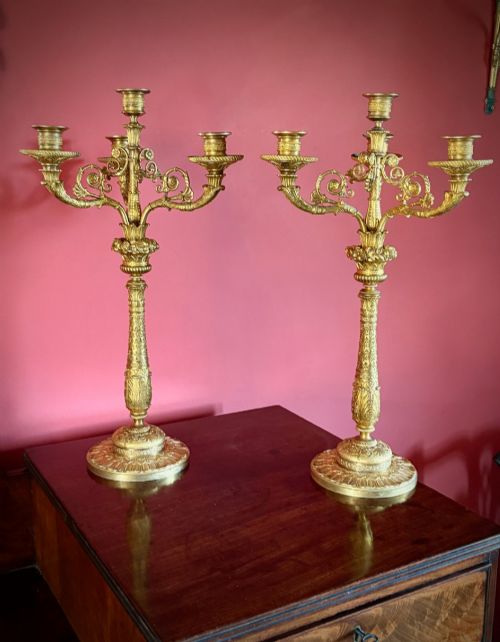
When searching for an ornate brass candelabrum, buyers encounter multi-branched lighting fixtures designed to hold several candles simultaneously. These objects originate largely from the nineteenth century, spanning decades such as the eighteen-sixties, eighteen-eighties, and nineteen-twenties.
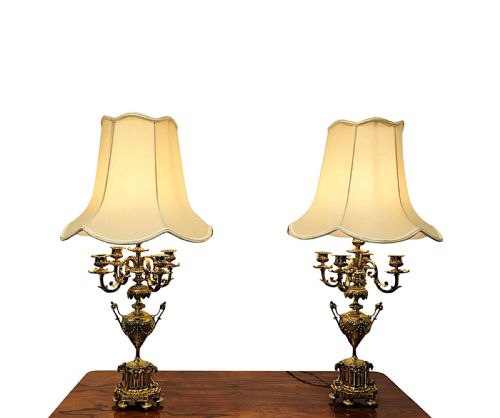
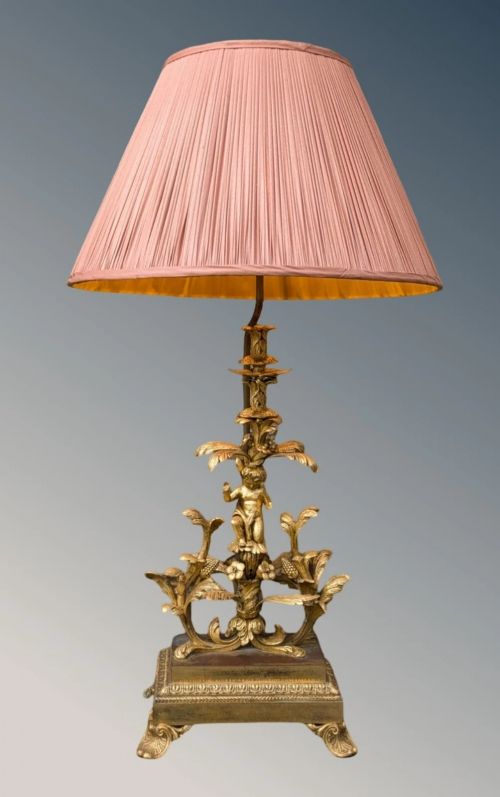
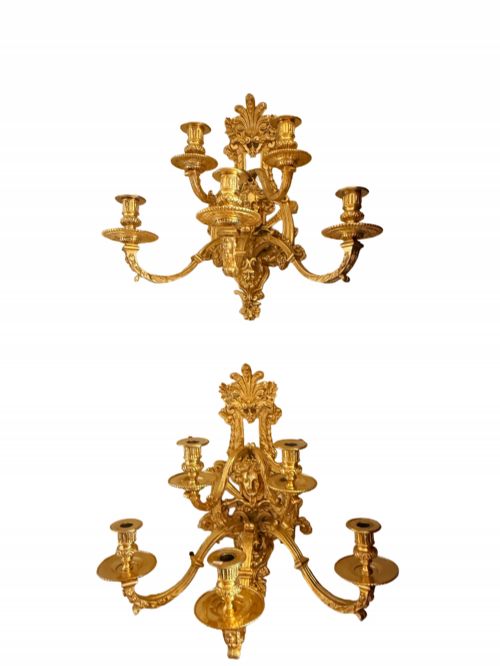
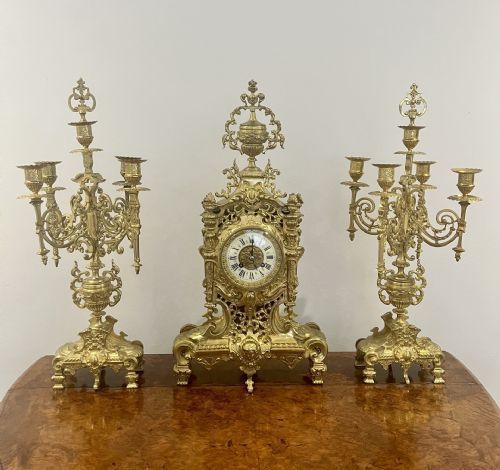
The most common forms on this page include pairs of candelabra, wall sconces, clock garnitures, and table lamps converted from earlier fittings. Many examples adopt French Rococo Revival, Victorian, Empire, and Neoclassical styles.
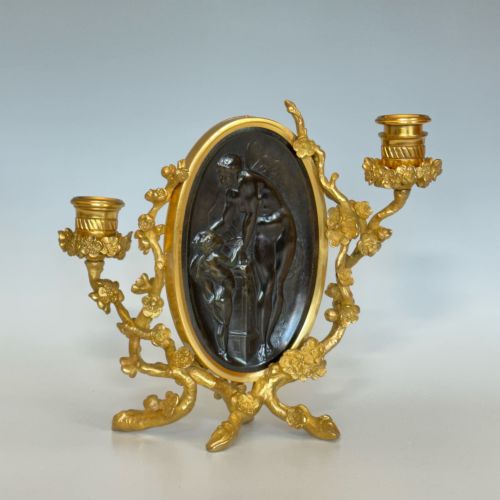
The objects frequently incorporate decorative elements beyond plain metalwork. Brass often appears alongside marble, crystal, glass, enamel, and bronze, resulting in heavy, highly detailed decorative items.
Materials and construction
The manufacturing process relies heavily on cast brass, ormolu, and gilt bronze, which provide a rich metallic surface when polished or gilded. Makers shape these metals into complex scrollwork, figural motifs, and branching arms.
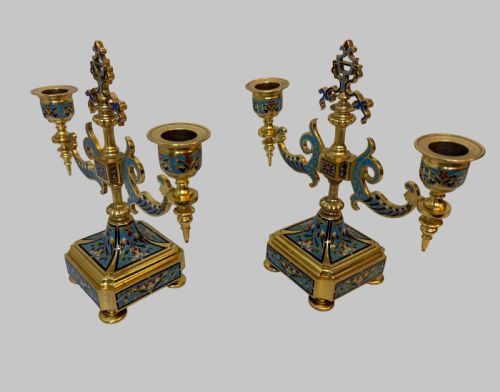
Many pieces combine metal components with contrasting materials like white or green marble bases, champleve enamel panels, and cut crystal drops. These combinations require precise assembly to secure heavy stone bases and delicate glass elements to the main metal body.
Cupid figures frequently appear lounging amidst the scrolling arms of nineteenth-century French clock garnitures, keeping watch over the ticking hours.
Variations in quality
The weight of the object and the quality of supplementary materials such as solid marble bases or fire-gilt ormolu distinguish higher-grade items from lighter, simpler productions. Heavier metal gauge and secure branch construction indicate superior craftsmanship.
Thiebaut Freres
The Ornate Brass Candelabrum Glossary
- Ormolu
- A method of applying finely ground high-carat gold to a bronze or brass object using a mercury amalgam. This technique produces a warm, durable golden finish found on many nineteenth-century pieces.
- Clock garniture
- A set comprising a mantel clock flanked by matching decorative objects such as candelabra or urns. These matched sets create a unified decorative arrangement for a room.
- Champleve
- An enamelling technique where troughs or cells are sunk into the surface of the metal and filled with vitreous enamel powder before firing. The resulting coloured patterns decorate the body of the piece.
- Girandole
- A branched wall sconce or candelabrum equipped with mirrors or crystal pendants to reflect and multiply the candlelight. The glass elements scatter light across the surrounding space.
- Candelabrum
- A large decorative candlestick with multiple branches or arms for holding several candles. Singular form of candelabra.
Ornate Brass Candelabrum: Frequently Asked Questions
How do I clean an antique candelabrum?
Cleaning requires dusting with a soft dry cloth to protect the original metallic finish and any applied gilding. Avoid chemical metal polishes that can strip thin layers of ormolu or damage adjacent marble and enamel.
Take care around crystal drops and fabric components if present. Gentle maintenance preserves the aged patina that collectors value on nineteenth-century metalwork.
Were these originally wired for electricity?
Most nineteenth-century pieces were manufactured exclusively for wax candles before electricity became common in domestic interiors. Many surviving examples have since been converted to function as electric table lamps or wall lights.
Conversions often utilise existing central channels to run wiring without permanently altering the historic metal arms. Buyers can find both un-converted candle holders and electrified variations.
What is the difference between brass and ormolu?
Brass is an alloy of copper and zinc, finished to a polished yellow metallic sheen. Ormolu refers specifically to gilded bronze or brass where a gold layer has been applied to the base metal.
Ormolu displays a deeper, richer golden colour that does not tarnish in the same way as exposed brass. This technique was widely used in French decorative arts during the eighteenth and nineteenth centuries.
How do I identify the period of a piece?
Dating relies on stylistic clues, manufacturing techniques, and secondary materials like marble or crystal. Pieces from the eighteen-sixties often reflect Victorian tastes or heavy French Rococo Revival influences, while later items may show Neoclassical or early twentieth-century lines.
Casting methods and screw threads can also indicate whether a piece dates from the mid-nineteenth century or a later revival period.