





Ornate Brass Candelabra
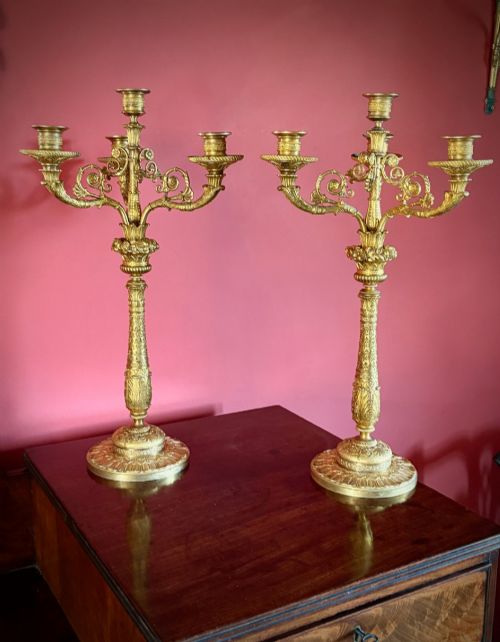
These ornate brass candelabra combine heavy metal casting with intricate multi-branch lighting designs from the nineteenth and early twentieth centuries.
Ornate Brass Candelabra
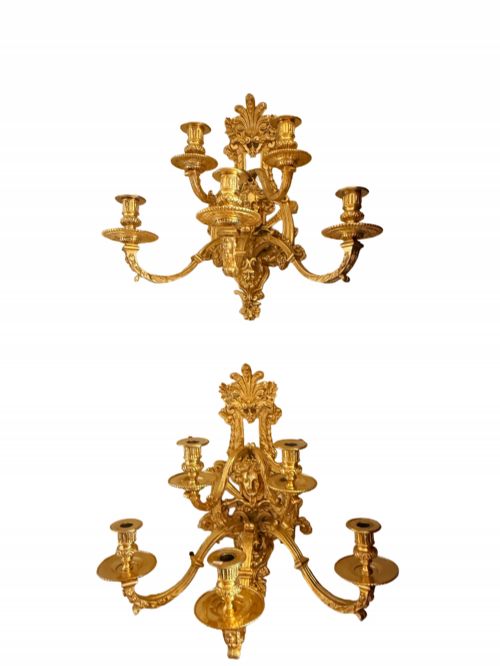
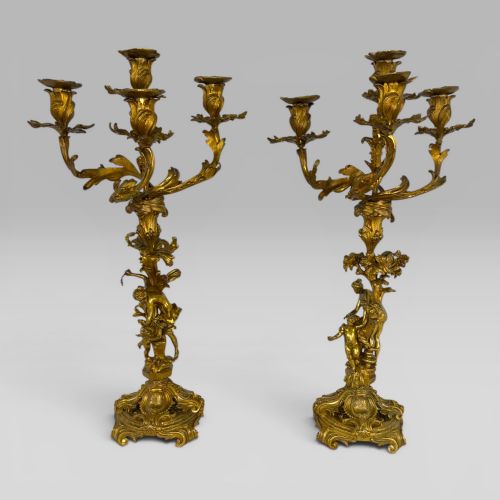
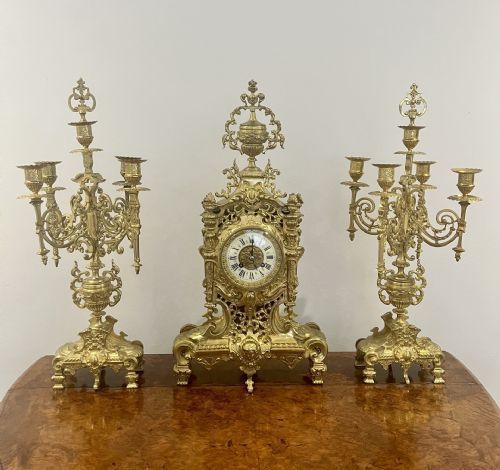
Ornate brass candelabra take the form of branched light holders designed for tables, walls, and mantelpieces, often appearing alongside matching clock garnitures. These items emerge primarily from nineteenth-century workshops in France and Britain, spanning styles from Victorian and Regency to elaborate Rococo and Neoclassical revivals.
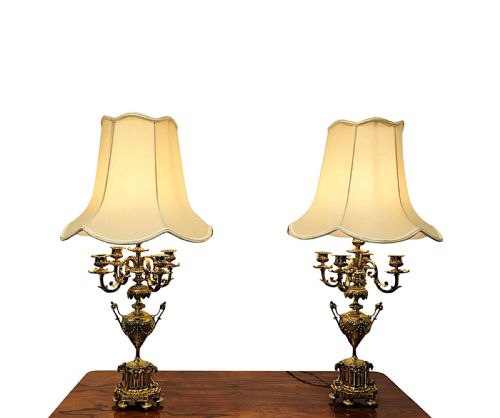
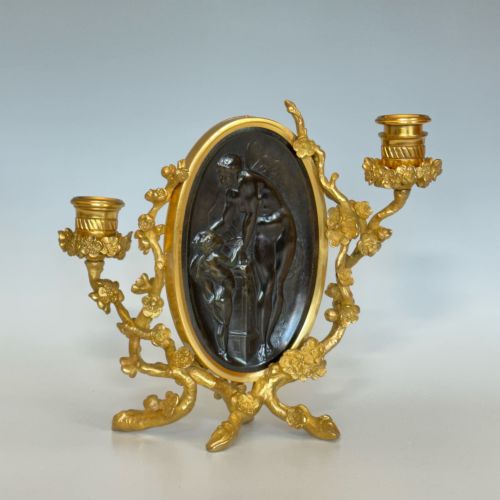
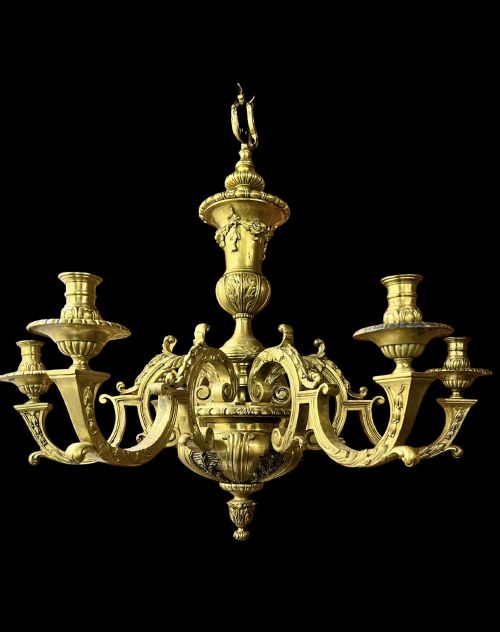
Buyers encounter pairs configured with anywhere from two to six arms, sometimes adapted later into electric table lamps or wired wall lights. The forms incorporate figural motifs, crystal drops, and marble bases alongside standard brass, ormolu, and gilt bronze constructions.
How they were made
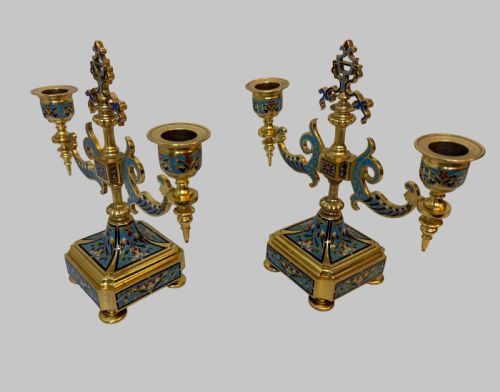
The construction of these pieces relies on metal casting in brass, bronze, and gilt ormolu, often assembled from multiple screwed sections to create elaborate multi-branch candelabra. Artisans combined cast metal components with decorative elements such as hand-cut crystal drops, inset enamel panels in champleve techniques, and polished marble or onyx plinths.
Surface finishes range from polished brass to fire-gilded bronze layers that give an even golden lustre. Many examples integrate secondary materials like fabric shades or glass chimneys added during later conversions to electricity.
Listings include items incorporating green onyx, marble, glass, and fabric alongside standard brass and gilt bronze.
What varies in quality
Quality reveals itself in the crispness of the cast ornamentation, where superior pieces retain deep, sharp relief in scrolls, acanthus leaves, and figural details without soft edges. Heavier metal weight and solid construction at the joints separate substantial decorative works from lighter, simpler productions.
The integration of secondary materials like genuine white marble bases, heavy crystal pendeloques, and well-preserved fire gilding indicates higher workshop standards during production.
Thiebaut Freres
The Ornate Brass Candelabra Glossary
- Ormolu
- Gilded bronze produced by applying a mercury and gold amalgam to a bronze base and heating it until the mercury vaporised. This technique creates a durable, rich golden surface typical of fine French decorative objects.
- Clock garniture
- A set comprising a central mantel clock flanked by matching side pieces such as candelabra, vases, or urns. These matched sets were designed to coordinate decorative schemes on mantelpieces.
- Champleve
- An enamelling technique where troughs or cells are hollowed out of the metal surface and filled with vitreous enamel powder before firing. The resulting coloured patterns sit flush with the surrounding brass or bronze body.
- Girandole
- A branched wall sconce or candelabrum featuring reflective glass or mirrored backplates to amplify candlelight. These fixtures were placed on walls to bounce illumination around dim rooms.
- Candelabrum
- A freestanding branched candlestick designed to hold multiple candles simultaneously. Pluralised as candelabra, these pieces served both functional lighting and grand decorative purposes.
Ornate Brass Candelabra: Frequently Asked Questions
How do I clean an antique candelabrum?
Dust gently with a soft, dry brush to avoid disturbing any original gilt or patinated surfaces. Avoid harsh chemical polishes that strip away age-related finishes.
Water and harsh detergents should also be kept away from fabric elements or delicate crystal components attached to the frame.
Were these electrified later?
Many nineteenth-century examples show subsequent conversions where wiring was threaded through the central stem to house lamp bulbs. This adaptation allowed period items to function as table lamps while retaining their original brass arms.
Buyers find both unaltered candle-holding formats and converted electric variants across these listings.
What styles are most common?
French Rococo and Victorian revivals dominate the selection, bringing ornate scrolls, asymmetry, and elaborate floral motifs. Neoclassical and Louis XVI styles also appear, offering more symmetrical, restrained geometric lines.
Both British and French workshops contributed to these diverse aesthetic categories throughout the nineteenth and early twentieth centuries.
How can I tell if it is ormolu or brass?
Ormolu consists of gilded bronze and displays a deep, warm golden tone resulting from historical mercury gilding processes. Standard brass exhibits a more uniform yellow metallic composition throughout the entire cast body.
Examining worn areas reveals whether a golden surface layer sits atop a darker bronze substrate.