
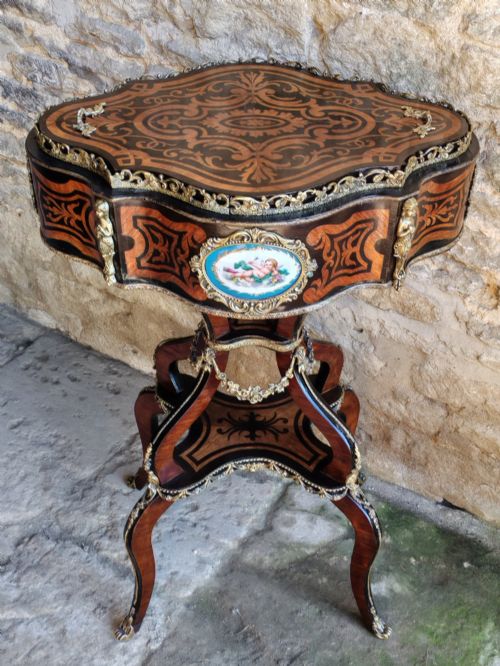


Ormolu Porcelain Stand
An ormolu porcelain stand marries gilt metalwork with ceramic form, offering a decorative surface that elevates nineteenth-century interiors.
Ormolu Porcelain Stand
When you search for an ormolu porcelain stand, you encounter nineteenth-century furnishings designed to display plants, wine, or decorative objects. These pieces combine ceramic plaques or vessels with gilded bronze mounts, typical of the Victorian and Napoleon III periods.
The items on this page primarily take the form of jardinieres, plant stands, side tables, and occasional tables. Many reflect revival movements, drawing heavily on French Louis XV and Louis XVI styles.
Origins span English and French workshops of the eighteen-fifties, eighteen-sixties, and eighteen-eighties. The aesthetic relies on the contrast between polished gilt metal and painted ceramic elements.
How they were made
Makers constructed these stands using hardwoods such as kingwood, walnut, ebonised wood, burr walnut, and rosewood. These timbers formed the structural frames, occasional tables, and jardiniere bodies.
Craftsmen cast ormolu, or gilt bronze, to create decorative mounts, caryatids, and structural feet. Porcelain components, including Sevres-type panels and painted plaques, were then integrated into the timber and metal framework.
A porcelain bird sits quietly inside a candelabrum, watching the room through a nineteenth-century glass dome.
What varies in quality
The standard of the casting in the ormolu mounts determines much of the visual success of the piece. Crisp chasing and deep gilding distinguish superior metalwork from softer, shallower production.
The integration of the porcelain plaques within the wood and bronze armature reveals the hand of the maker. Precise joinery and high-grade ceramic painting separate the finer examples from simpler workshops.
Louis Pierre Malpass
The Ormolu Porcelain Stand Glossary
- Ormolu
- Gilded bronze used for decorative mounts and hardware. It requires careful cleaning to preserve the gold surface.
- Jardiniere
- A decorative stand or container intended for holding plants or flowers. These often feature waterproof liners or porcelain inserts.
- Sevres
- A type of porcelain associated with French royal manufacture. The style is frequently emulated on nineteenth-century plaques and panels.
- Etagere
- A piece of furniture consisting of open shelves for displaying small objects. These tiers are sometimes mounted with ormolu and porcelain.
- Marquetry
- Inlaid wood designs forming decorative patterns on furniture surfaces. This technique appears on the tables and stands alongside metal mounts.
Ormolu Porcelain Stand: Frequently Asked Questions
What is an ormolu porcelain stand used for?
These pieces were originally designed to hold indoor plants, serve wine, or function as side tables in formal nineteenth-century reception rooms.
Today, collectors use them as decorative accent furniture to display small sculptures, clocks, or ceramic items.
How do I identify a French nineteenth-century stand?
French pieces often display Louis XV or Louis XVI revival characteristics, utilising kingwood, rosewood, and Sevres-style porcelain plaques.
The presence of finely chased gilt bronze mounts alongside specific timber framing points toward continental workshops of the eighteen-fifties and eighteen-eighties.
Are these stands suitable for holding real plants?
While jardinieres were built to house plants, nineteenth-century timber and porcelain require protection from moisture and damp soil.
Using a modern waterproof liner inside the ceramic or metal insert prevents water damage to the historic wood structure.
What woods were commonly used in these pieces?
Framing and surfaces typically feature exotic and domestic hardwoods such as kingwood, walnut, burr walnut, rosewood, and ebonised timber.
These woods provided a stable, dark background that highlighted the bright finish of the ormolu mounts and painted porcelain.
How do I care for ormolu and porcelain?
Ormolu requires gentle dusting with a soft brush to avoid wearing away the thin layer of gold leaf or gilt finish.
Porcelain plaques should be wiped with a dry or barely damp cloth, keeping moisture away from the surrounding wooden joints.