
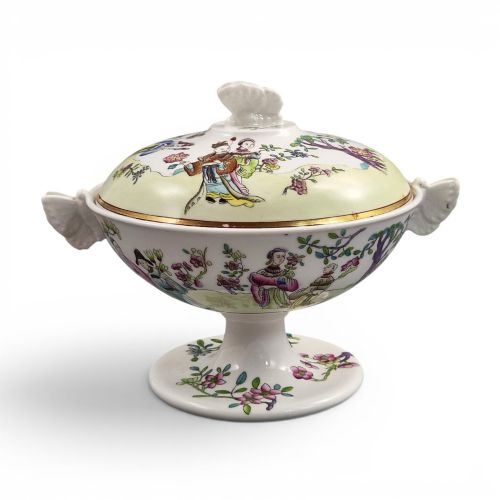


19th Century Porcelain Tazzas
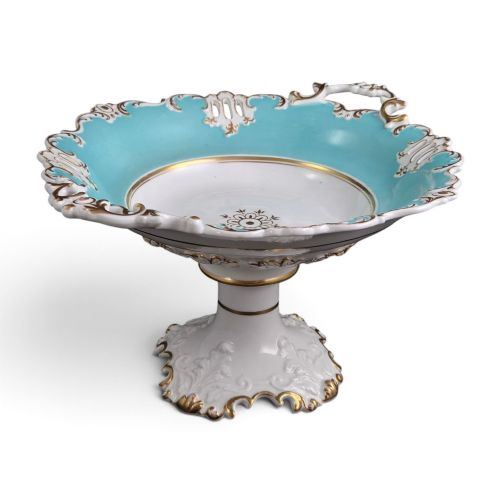
These 19th century porcelain tazzas combine raised pedestals with decorative bowls, offering a striking centrepiece for a table or sideboard.
19th Century Porcelain Tazzas
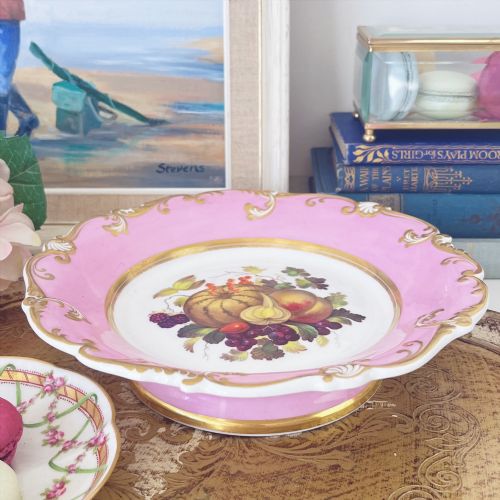
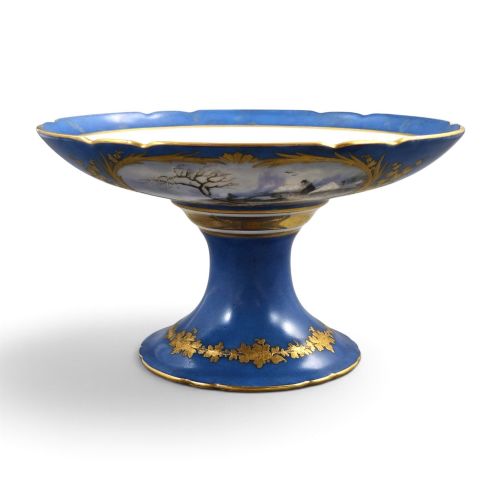
When you search for 19th century porcelain tazzas, you encounter raised footed dishes, comports, and pedestal bowls designed for display or serving. The selection ranges from English bone china examples to French and Chinese export pieces.
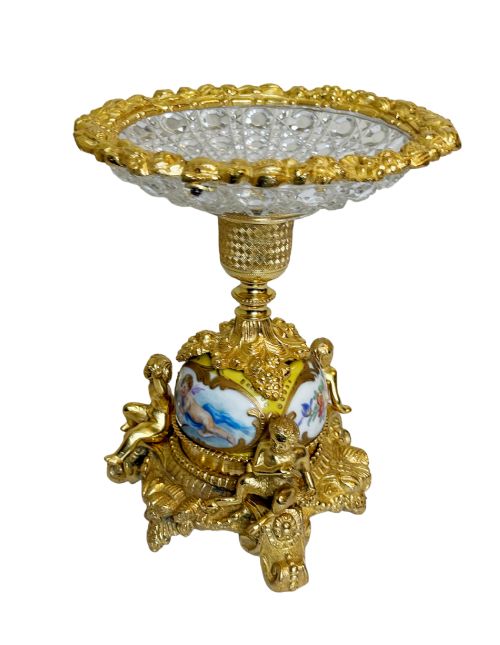
Forms span from simple shell edge comports to elaborate pedestal bowls featuring butterfly handles or mounted cherubs. Many pieces double as centrepieces, functioning as decorative dishes on tables.
Origins include English factories such as Coalport and Spode, alongside French Sèvres style pieces and Chinese Canton imports. Dates stretch across the Georgian and Victorian periods into the late nineteenth century.
How they were made
Makers shaped porcelain and bone china into pedestal bowls, applying coloured grounds like pink or blue alongside handpainted fruits. Gilding, gilt bronze, and ormolu mounts frequently accent the ceramic bodies.
Advanced examples incorporate cut crystal and champlevé enamel set into gilt bronze mounts. Enamel details and intricate handles complete the construction of these decorative dishes.
Listings feature porcelain, enamel, gilt bronze, and cut crystal across English, French, and Chinese origins.
What varies in quality
The sophistication of the handpainting and the complexity of the mounts distinguish finer tazzas from simpler production. Handpainted fruits and detailed enamelling demonstrate higher craftsmanship than plain grounds.
The integration of materials such as cut crystal, gilt bronze, and champlevé enamel alters the character and weight of the piece. Quality rests on the precision of the porcelain body and the execution of the metalwork.
Coalport·H & R Daniel·Sèvres·Spode·Louis Pierre Malpass
The 19th Century Porcelain Tazzas Glossary
- Tazza
- A shallow bowl raised on a high foot, used for display or serving. It sits prominently as a centrepiece.
- Comport
- A large footed dish or bowl for fruit or sweetmeats, often paired with matching plates. This term frequently overlaps with tazza.
- Ormolu
- Finely ground high-carat gold cast and chased onto bronze, used for mounts. It provides a bright golden finish.
- Champlevé
- An enamelling technique where troughs are dug into metal and filled with vitreous enamel before firing. This creates colourful decorative patterns.
- Bone china
- Porcelain strengthened with bone ash, developed in England for durable tableware. It permits thinner walls and crisp moulding.
19th Century Porcelain Tazzas: Frequently Asked Questions
What is a tazza used for?
These elevated dishes served as decorative centrepieces or vessels for fruit on dining tables. Their raised profile created height and visual interest among tableware.
Today they function primarily as decorative display items on sideboards or mantelpieces, holding small objects or standing alone as art.
How do I identify a 19th century piece?
Examine the paste, glaze, and mounting style for characteristics of the Victorian or Georgian eras. Makers often used specific porcelain formulations like bone china or felspar porcelain.
Stylistic cues such as Rococo Revival curves or Japonisme motifs help anchor the object within the nineteenth century.
What is the difference between a tazza and a comport?
The terms are often used interchangeably for footed serving dishes from the period. Both feature a elevated bowl supported by a central pedestal.
Regional preferences and factory nomenclature determined whether a piece left the works labelled as a tazza or a comport.
How should I clean porcelain with gilt mounts?
Dust gently with a soft, dry brush to protect delicate gilding and enamels. Avoid harsh liquids or abrasive cloths that can wear away the metallic finishes.
Keep pieces away from direct sunlight and excessive moisture to preserve the integrity of the porcelain and bronze mounts.