

Ormolu Mounted Vitrine Cabinet
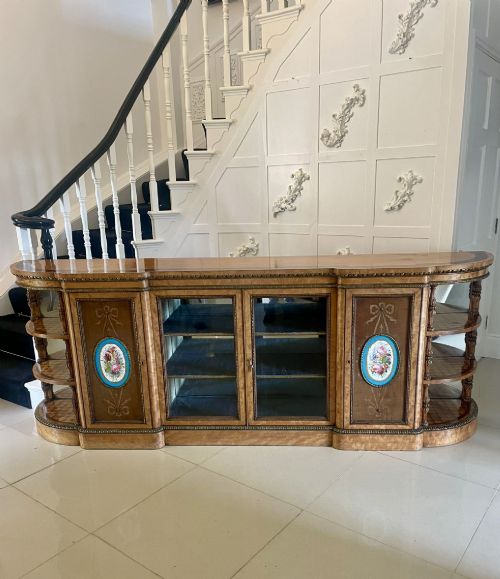
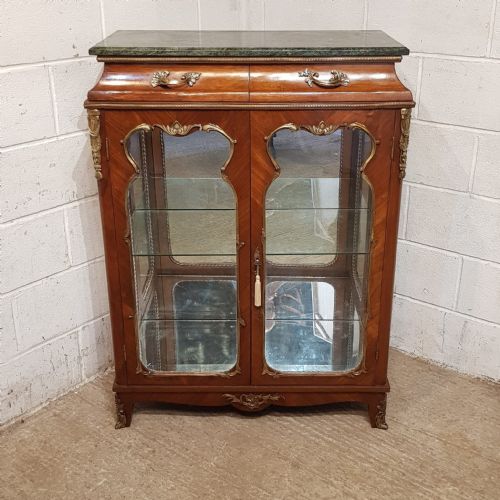
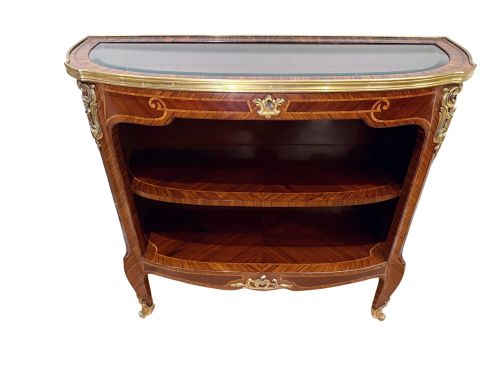
An ormolu mounted vitrine cabinet brings together fine cabinet timbers and cast gilt mounts to display precious porcelain and small objects of vertu.
Ormolu Mounted Vitrine Cabinet
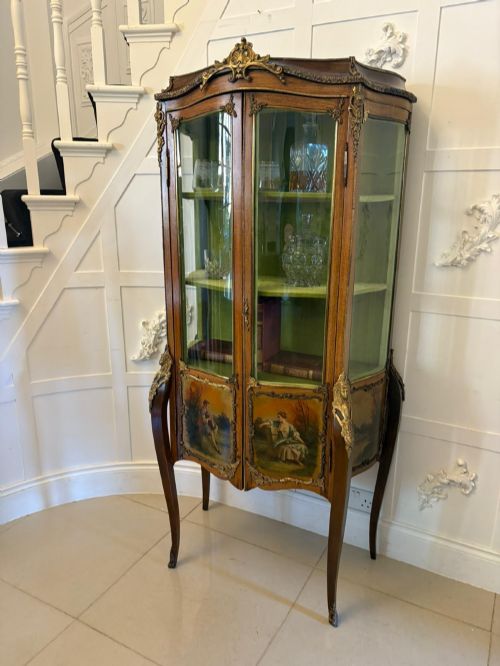
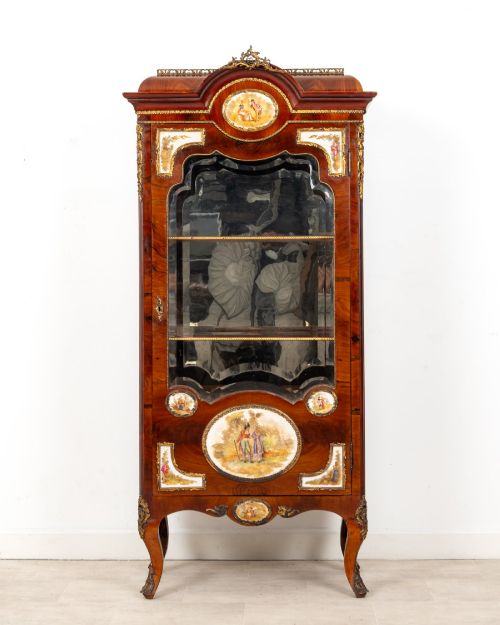
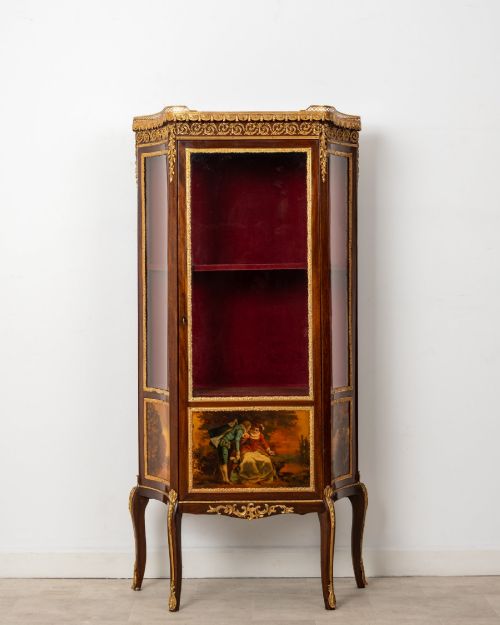
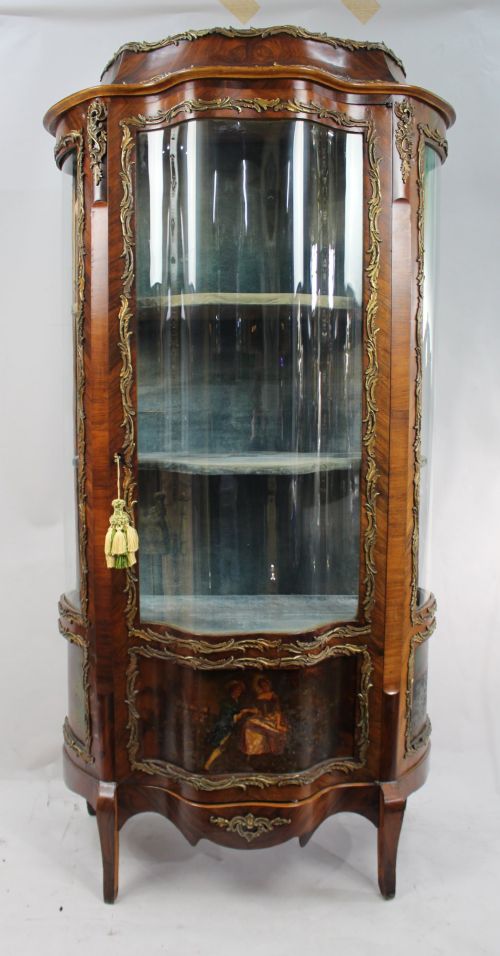
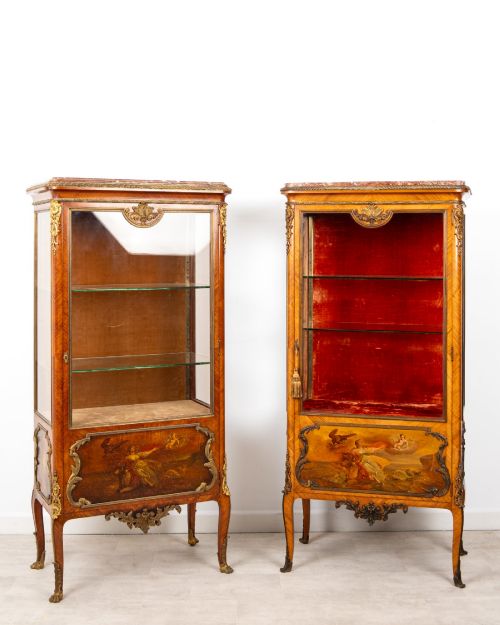
An ormolu mounted vitrine cabinet serves primarily to exhibit prized possessions behind glass panels, utilising frames of mahogany, walnut, or kingwood. These pieces emerge predominantly from nineteenth-century French and Victorian workshops, embracing revivalist design movements such as Louis XV and Louis XVI styles.
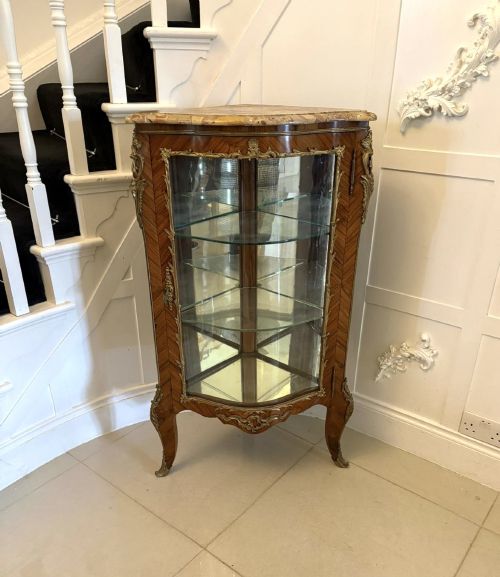
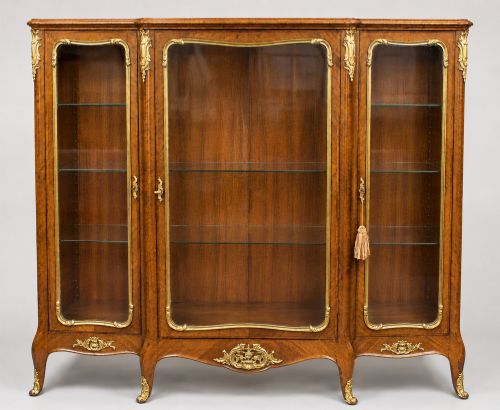
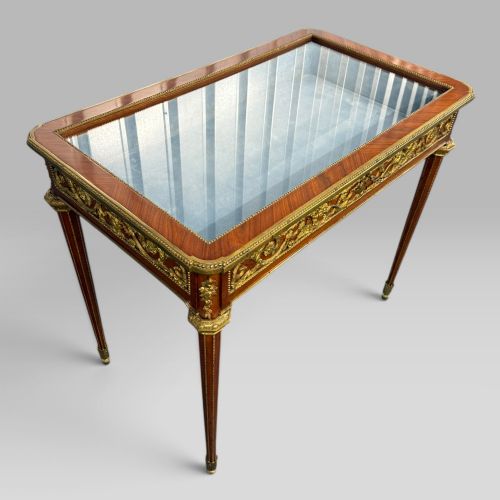
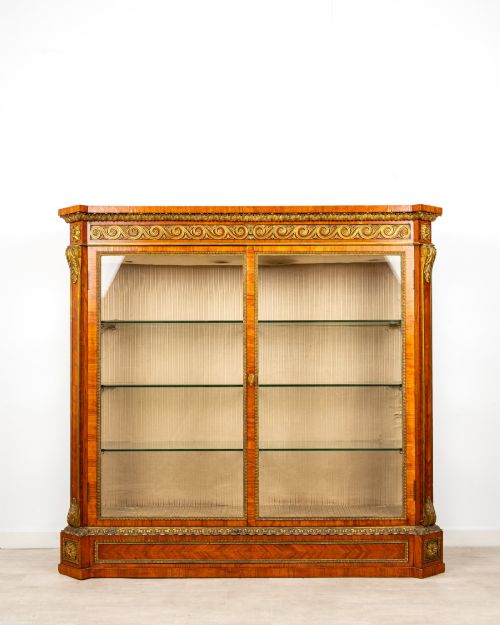
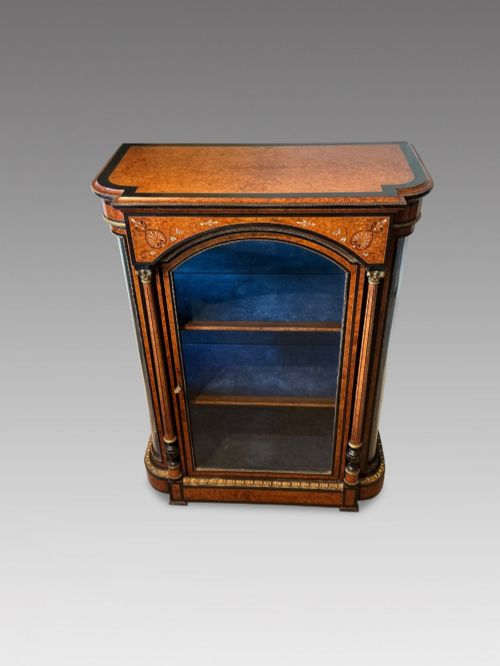
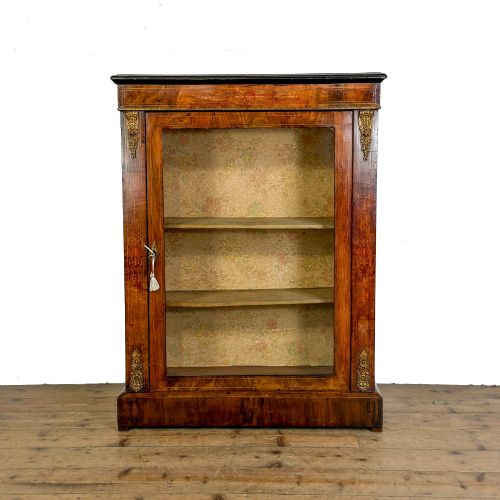
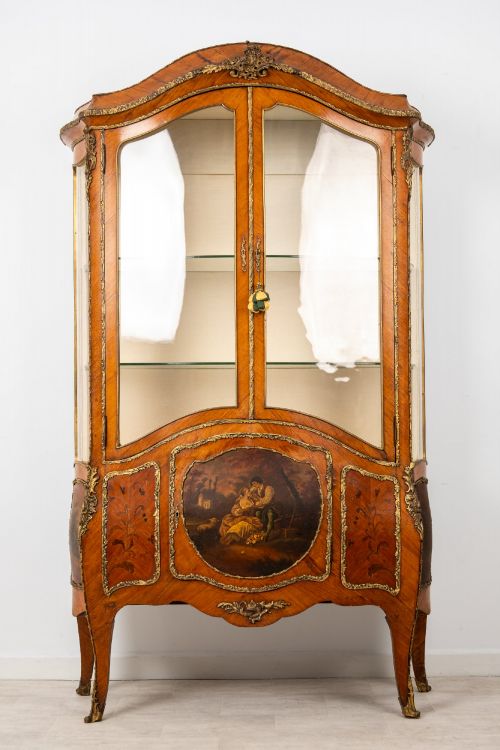
The format ranges from tall freestanding display cabinets and serpentine corner units down to low pier cabinets and tabletop vitrines. Buyers frequently encounter variants featuring painted Vernis Martin lower panels alongside marble display tops.
Makers often drew inspiration from court furniture of the ancien régime, translating eighteenth-century aesthetics into decorative household centerpieces. The resulting forms prioritize visual transparency, placing glass on multiple sides to illuminate the interior contents.
Materials and Construction
Makers constructed the carcases using dense foundational timbers like mahogany and walnut, veneered over with decorative striped kingwood, satinwood, or amboyna. Artisans applied marquetry patterns and intricate Boulle brass inlays to enrich the wooden surfaces before sealing them with traditional French polish.
Gilt bronze or ormolu mounts were cast, chased, and fire-gilded before being screwed onto corners, friezes, and feet to accentuate the structural lines. Marble slabs were shaped to fit the upper surfaces of many freestanding cabinets, providing a cool, contrasting counterpoint to the timber and metal below.
Tabletop sedan vitrines allowed fashionable travellers to transport their favourite miniature treasures securely inside horse-drawn carriages.
Distinctions in Quality
The refinement of the cast ormolu mounts separates standard production from exceptional work, visible in the crispness of the chasing and the depth of the gilding. Master makers invested heavily in sculptural mounts that followed the cabinet contours precisely rather than relying on generic cast stock.
The choice and execution of veneering and hand-painted Vernis Martin panels dictate the visual hierarchy of these cabinets. Superior examples display harmonious grain matching across curved serpentine fronts, alongside finely detailed miniature painted scenes framed securely within the woodwork.
François Linke·H. J. Hatfield & Sons·Paul Sormani·Victor Raulin
The Ormolu Mounted Vitrine Cabinet Glossary
- Ormolu
- Gilded bronze used for decorative mounts and furnishings. The technique involves applying a mercury and gold amalgam to cast bronze before heating.
- Vitrine
- A glass-fronted display cabinet designed for showing porcelain, silver, and curiosities. The sides are frequently glazed to allow light to enter from multiple angles.
- Vernis Martin
- A simulated Japanese lacquer developed by the Martin brothers in eighteenth-century France. Artisans applied multiple layers of varnish to painted wooden panels to achieve a glossy, translucent finish.
- Kingwood
- A dense, heavy Brazilian timber featuring rich dark violet and brown tones with golden streaks. It was extensively used as a luxury veneer during the nineteenth century.
- Boulle
- A marquetry technique combining tortoiseshell and brass inlay, named after the cabinetmaker André-Charles Boulle. Pieces utilising this method display intricate metallic scrollwork against a dark ground.
Ormolu Mounted Vitrine Cabinet: Frequently Asked Questions
What were ormolu mounted vitrine cabinets used for?
These cabinets housed delicate porcelain, ivories, medals, and small decorative curiosities collected during travels or inherited as family treasures.
The glass panels protected the collection from dust while allowing guests to admire the owner's taste and refinement in a formal drawing room setting.
How do I tell Louis XV and Louis XVI styles apart?
Louis XV revival pieces emphasise asymmetrical curves, flowing naturalistic scrolls, and undulating serpentine fronts.
Louis XVI style shifts toward geometric symmetry, straight fluted columns, neoclassical urn motifs, and rectilinear proportions.
Where should I place a vitrine in my home?
Position the cabinet away from direct sunlight to protect interior fabrics, wooden veneers, and painted panels from fading over time.
Place the piece in a room with steady ambient light and stable humidity to preserve the integrity of the timber and veneer.
Are marble tops original to these cabinets?
Many nineteenth-century French and Victorian cabinets were designed with fitted marble tops, often matching the colour palette of the room or the wood tones below.
Inspect the underside of the stone and the cabinet frieze to ensure the weight rests evenly without modern structural shims or alterations.