

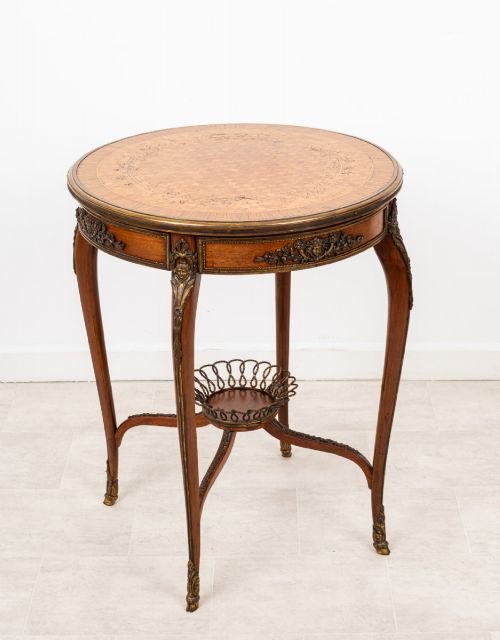
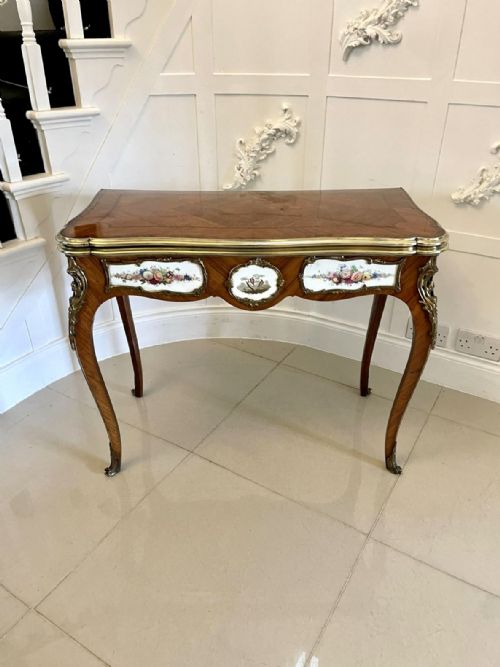
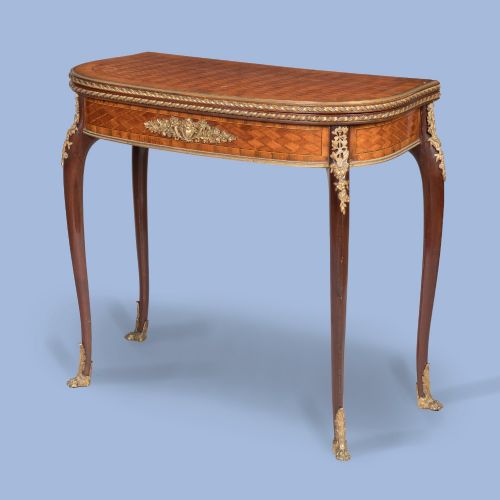
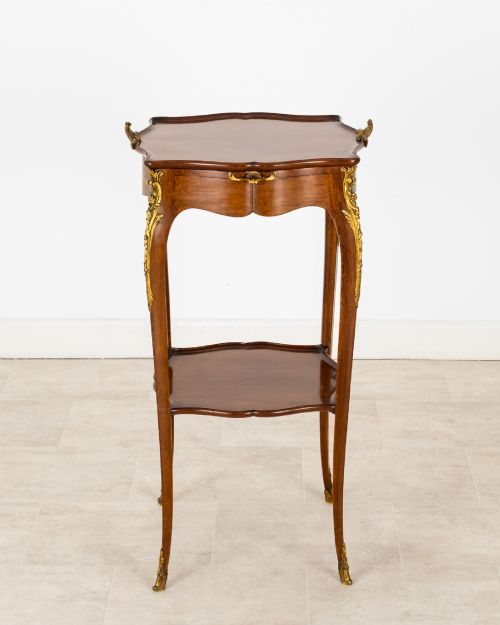
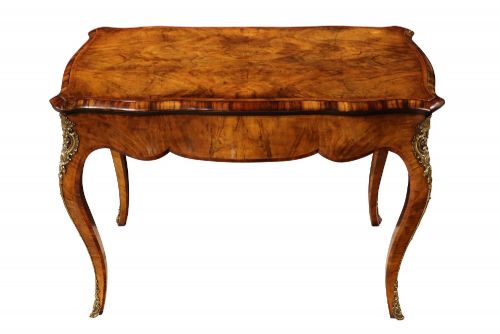


Ormolu Mounted Tea Table
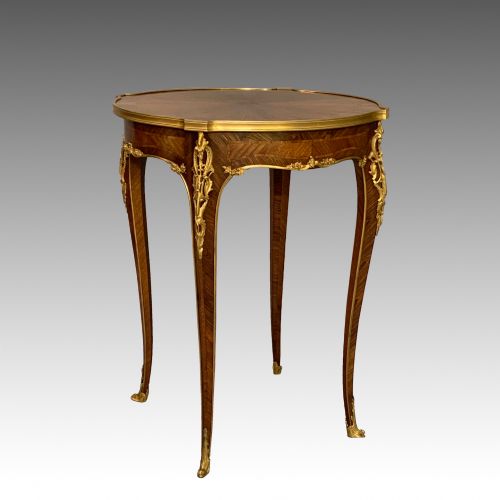
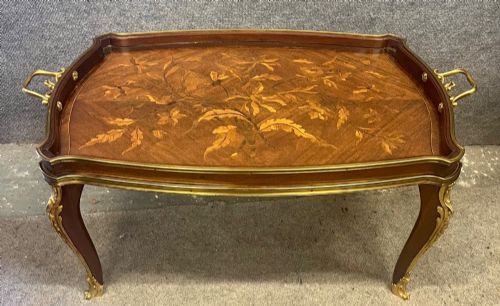
When you search for an ormolu mounted tea table, you enter a world of finely cast gilt bronze and exotic woods designed for aristocratic leisure.
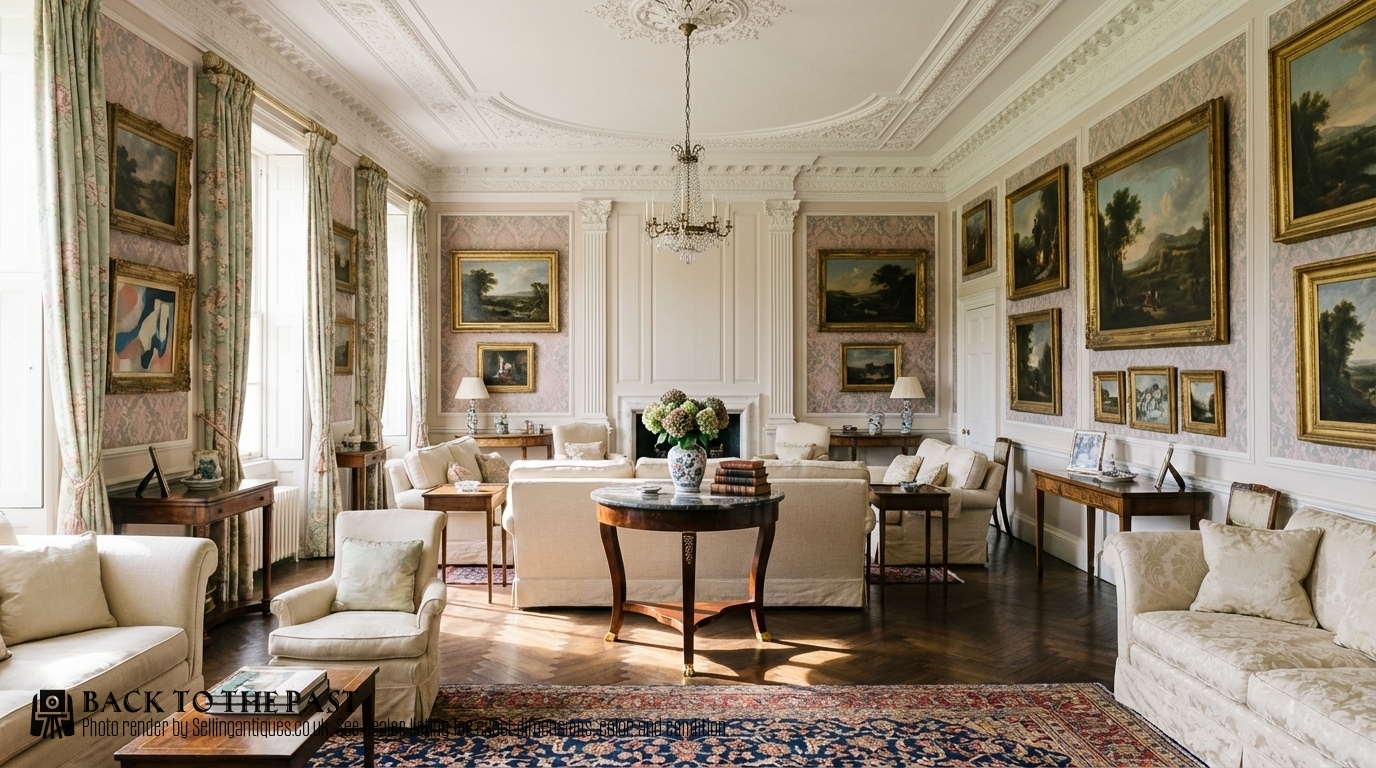
Ormolu Mounted Tea Table
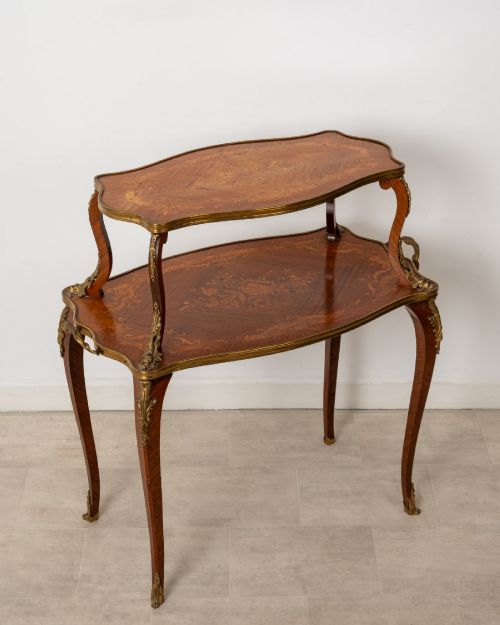
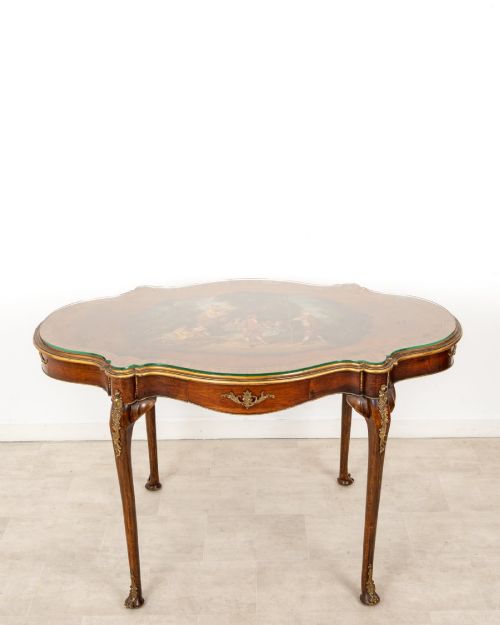
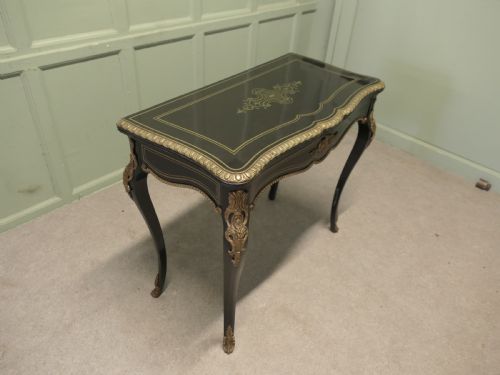
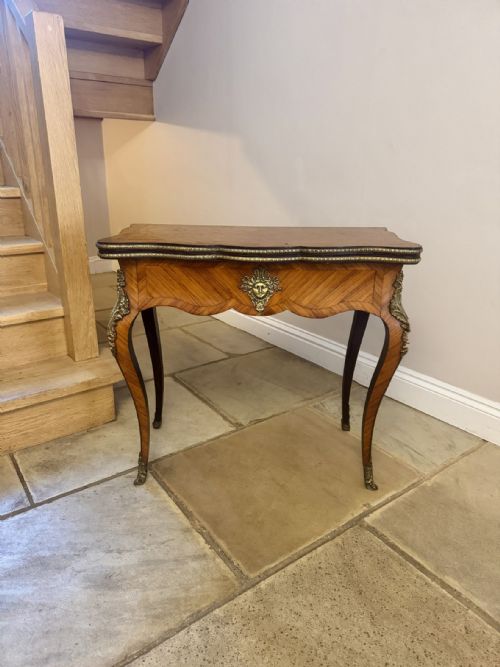
An ormolu mounted tea table is typically encountered as a nineteenth-century French creation, spanning the Victorian era, the Napoleon III period, and revivals of Louis XV and Louis XVI styles. These pieces often overlap in form with games tables, card tables, and occasional tables designed for parlour use.
The evidence shows variations including two-tier etageres, demi-lune consoles, and fold-over surfaces that transform from compact stands into display pieces. Walnut, mahogany, and kingwood form the structural foundation of these tables across the nineteenth century.
Makers working in London and Paris during the eighteen-fifties to nineteen-hundreds produced these items using continental design vocabularies. The surviving inventory demonstrates a heavy reliance on French aesthetic models adapted for domestic drawing rooms.
Quality distinctions
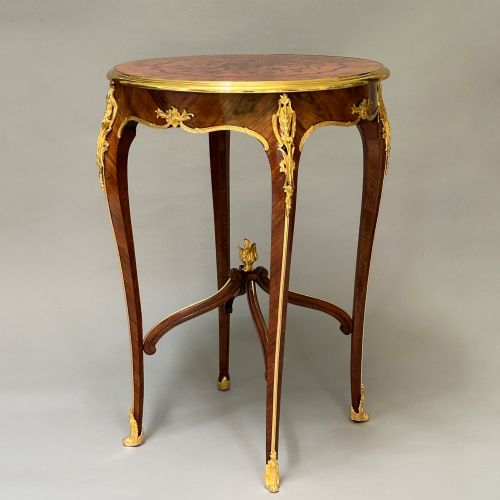
The refinement of the bronze chasing and the crispness of the cast ormolu mounts separate standard production from exceptional pieces. Heavier, deeply carved mounts indicate a higher investment of artisan labour.
The precision of the marquetry cutting and the choice of figured timber veneers determine the upper tier of the range. Subtle cross-banding and well-matched grain patterns reflect superior cabinet-making standards.
Listings feature nineteenth-century French card tables, etageres, and centre tables utilising kingwood, walnut, and gilt bronze ormolu mounts.
Joseph-Emmanuel Zwiener·François Linke·G T Morant·Edwards & Roberts
The Ormolu Mounted Tea Table Glossary
- Ormolu
- Gilded bronze used for decorative mounts on furniture. The technique involves applying a gold amalgam to heated bronze before firing.
- Marquetry
- Inlaid wood pieces arranged to form decorative pictures or patterns. Craftsmen use varied timber tones to create naturalistic floral designs.
- Parquetry
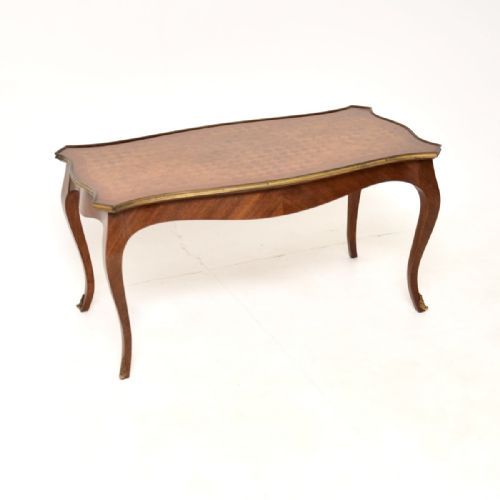
- Geometric wood inlay forming repeating patterns like cubes or herringbone. This technique decorates the top surfaces of card and games tables.
- Étagère
- A set of open shelves for displaying small objects. These tiered tables appear frequently in nineteenth-century French interiors.
- Guéridon
- A small round table supported by a central pillar or columns. The form originates from seventeenth-century French furniture design.
Ormolu Mounted Tea Table: Frequently Asked Questions
What is an ormolu mounted tea table?
An ormolu mounted tea table is a nineteenth-century decorative surface embellished with gilt bronze mounts and veneered in woods such as kingwood and walnut.
These pieces reflect historic French design revivals and served functional roles in formal nineteenth-century drawing rooms.
How do I identify a Louis XV style table?
Louis XV style tables display asymmetric curves, cabriole legs, and floral marquetry decoration. The overall silhouette avoids straight lines in favour of flowing serpentine forms.
Ormolu mounts on these pieces typically wrap around the corners and feet to highlight the organic contours of the timber.
Where were these tables made?
The majority of these tables originated in workshops in Paris and London during the Victorian and Napoleon III periods. Master cabinet-makers adapted traditional French court styles for contemporary elite interiors.
Signatures or stamps occasionally appear on the bronze mounts or timber frames, pointing to specific maker ateliers.
How do I care for ormolu and wood veneer?
Keep these tables away from direct sunlight and steady heat sources to protect fragile wood veneers and natural polishing. Dust the surfaces gently with a dry, soft cloth.
Avoid liquid cleaners on the gilt bronze mounts and the timber polish to preserve the original nineteenth-century finishes.