

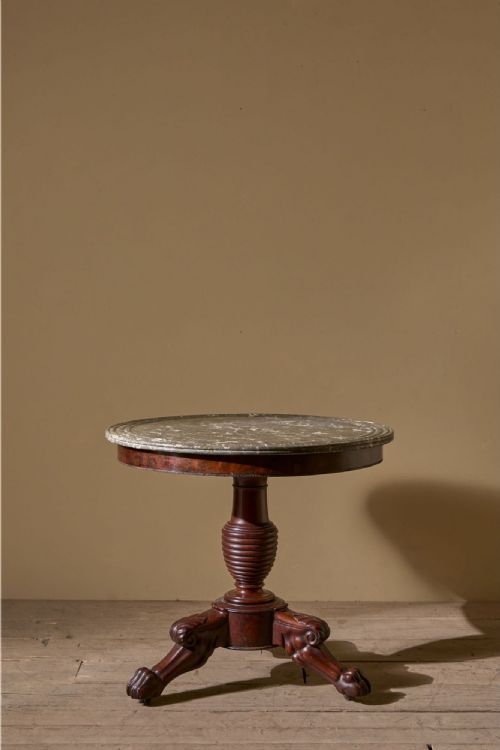
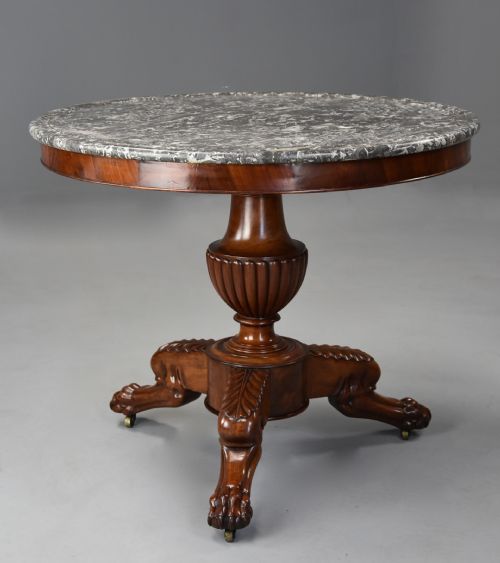


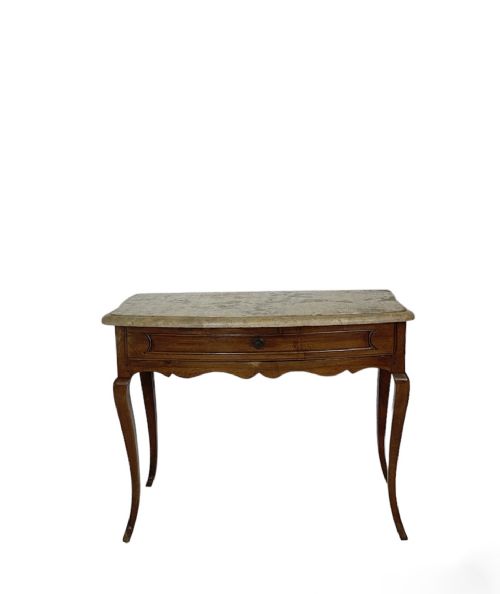


Grey Marble Occasional Table
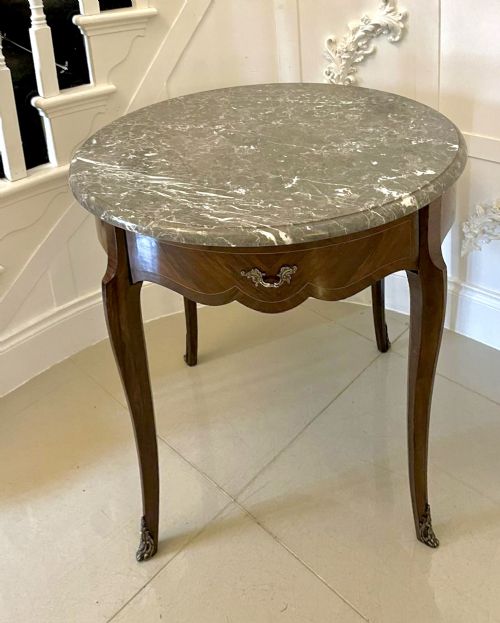
A grey marble occasional table brings cold, heavy stone into a room on a slender wooden frame, offering a cool surface for lamps and drinks.
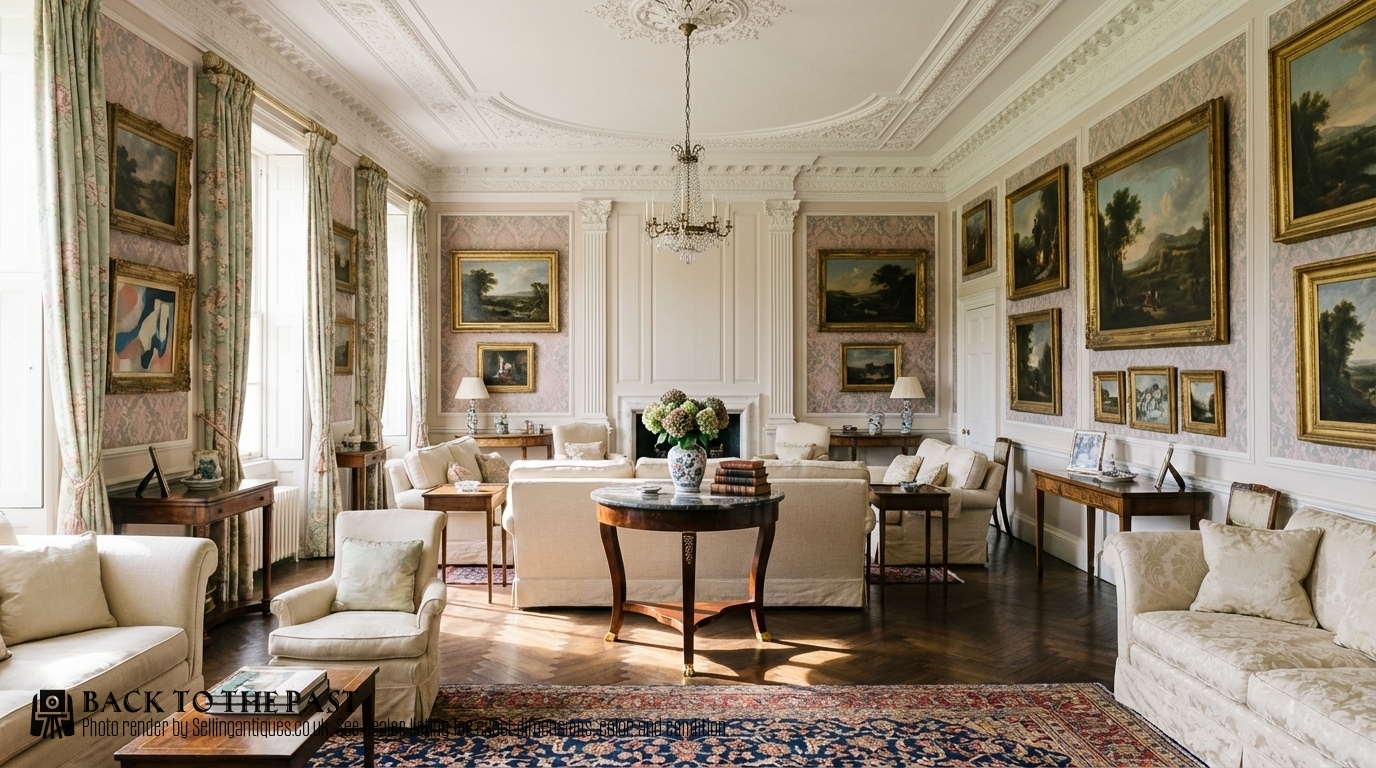
Grey Marble Occasional Table
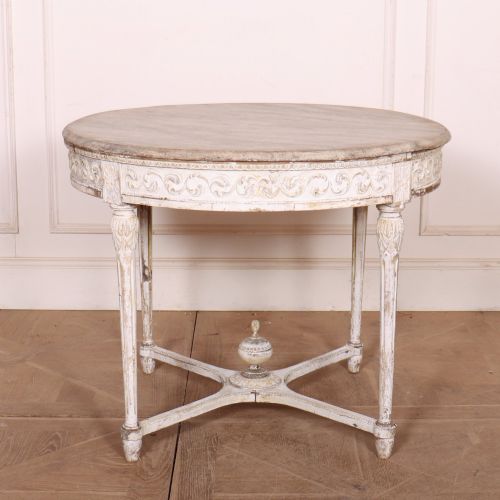
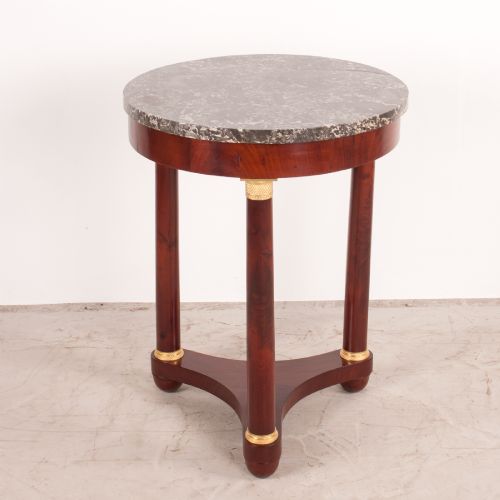
When you search for a grey marble occasional table, you are looking at small tables designed for mobility and display, most frequently appearing here as French gueridons with circular stone tops. These pieces serve as functional side tables, centre tables, and lamp tables, drawing their character from the contrast between polished stone and timber frames.
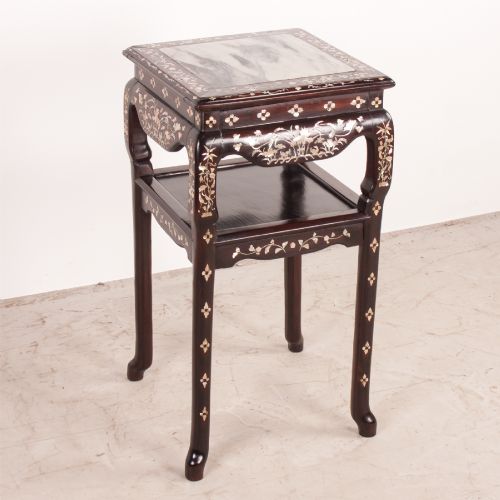
The selection on this page leans heavily toward nineteenth-century French examples, alongside occasional Victorian, Swedish, and Chinese export pieces. You will encounter tripod bases, column supports, and gilt-bronze mounts, spanning styles from French Empire and Rococo down to simpler country house interpretations.
How they were made
The construction relies on marrying heavy stone slabs to structurally sound timber frames, typically using mahogany, kingwood, or painted wood. Stonemasons cut and polished the grey marble tops to fit tightly into wooden rims or rest directly upon carved friezes, sometimes incorporating veined varieties or specific regional stones like Derbyshire fossil marble.
Cabinetmakers built the supporting tables using sturdy tripod or pedestal bases, occasionally embellishing them with ormolu mounts, parcel-gilt details, or mother-of-pearl inlay. The joinery had to be robust enough to support the significant weight of a solid marble top without sagging or tipping.
Grey Marble Occasional Table Retail Price Guide 2026
Typical asking prices for grey marble occasional table among the pieces listed under this phrase on Sellingantiques today, from the lower quarter to the upper quarter. They describe what is for sale here now, not the wider market.
A stray nineteenth-century table arrives bearing mother-of-pearl inlay alongside its grey marble, proving that cabinetmakers occasionally enjoyed mixing every material they could find.
What varies in quality
The distinction between ordinary and exceptional pieces lies in the crispness of the timber carving and the choice of materials. Finer examples feature richly figured mahogany or kingwood veneers, finely cast ormolu mounts, and original marble tops with deep, active grey veining rather than plain grey slabs.
Proportion and structural integrity also dictate worth, as top-tier tables maintain a balanced stance where the delicate base feels entirely secure beneath the heavy stone. Lesser pieces may show heavy-handed repairs, replacement timber, or replacement marble slabs that alter the original harmony of the design.
Zwiener Jansen Sucesseur
The Grey Marble Occasional Table Glossary
- Gueridon
- A small French round table, typically supported by a single central column or three legs. These tables gained popularity in the seventeenth century and remained a staple form for marble-topped designs.
- Ormolu
- Gilt-bronze ornamentation applied to furniture, cast and chased to give a bright golden finish. It appears frequently on French nineteenth-century frames.
- Kingwood
- A dense, richly figured tropical timber prized by cabinetmakers for veneers. Its distinctive dark grain patterns add visual weight to smaller occasional tables.
- Tripod table
- A freestanding table supported by three legs branching from a central pillar. This configuration offers stability on uneven floors and a compact footprint.
Grey Marble Occasional Table: Frequently Asked Questions
Are these marble tops original?
Many tables retain their original stone tops, which fit the specific rebates and wear patterns of the wooden frames beneath them. You can often judge originality by checking the alignment between the stone edge and the timber moulding.
Over the centuries, heavy marble could crack or break, leading to period or later replacements. Examining the underside of the stone and the condition of the support frame will help clarify if the top has been with the table since its creation.
Can I use a gueridon as a coffee table?
Gueridons and occasional tables are typically built taller than modern coffee tables, standing at a height intended for side seating or lamp placement. Using one as a central low table will generally place the surface well above standard sofa height.
Instead, these pieces excel beside an armchair, in a corner, or as a centre table in a hallway where their height allows for easy use and unobstructed display of the stone top.
How do I clean grey marble?
Grey marble requires gentle cleaning with a soft cloth and warm water, avoiding acidic or abrasive household cleaners that can etch the polished surface. Wiping up spills promptly prevents staining, particularly on older stone with more porous spots.
Applying a specialised stone wax or neutral sealer occasionally helps protect the polish and depth of the marble without leaving a sticky residue.
How do I date a nineteenth-century table?
Dating relies on examining the construction techniques, timber choices, and stylistic cues present in the frame. Pieces from the earlier nineteenth century often show heavier neoclassical influence or Restauration styling, while later Victorian examples might incorporate eclectic aesthetic movement details.
Comparing the turning of the legs, the type of screws or fixings used, and the secondary woods beneath can narrow down the decade of manufacture.