


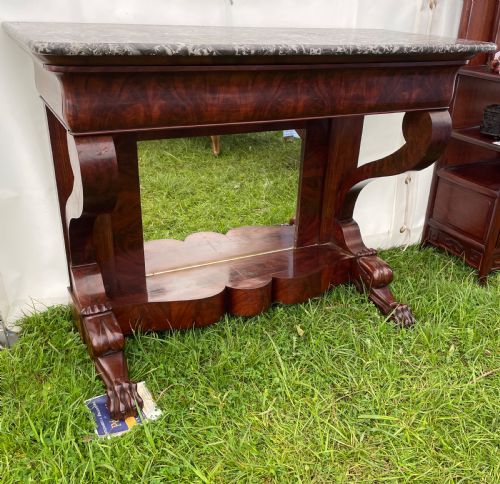


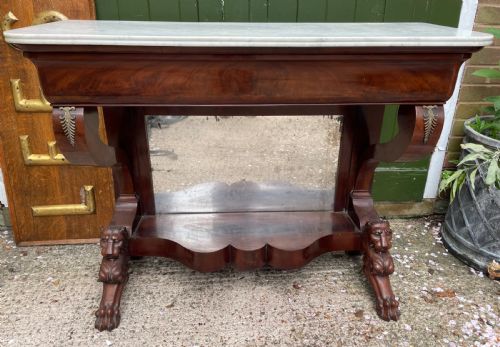
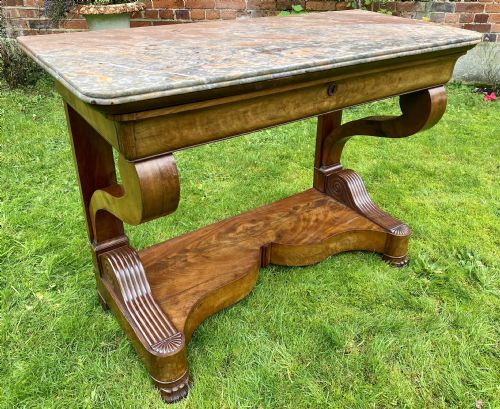


French Restauration Marble Table
A french restauration marble table brings classic continental proportion and refined stone work into a room.
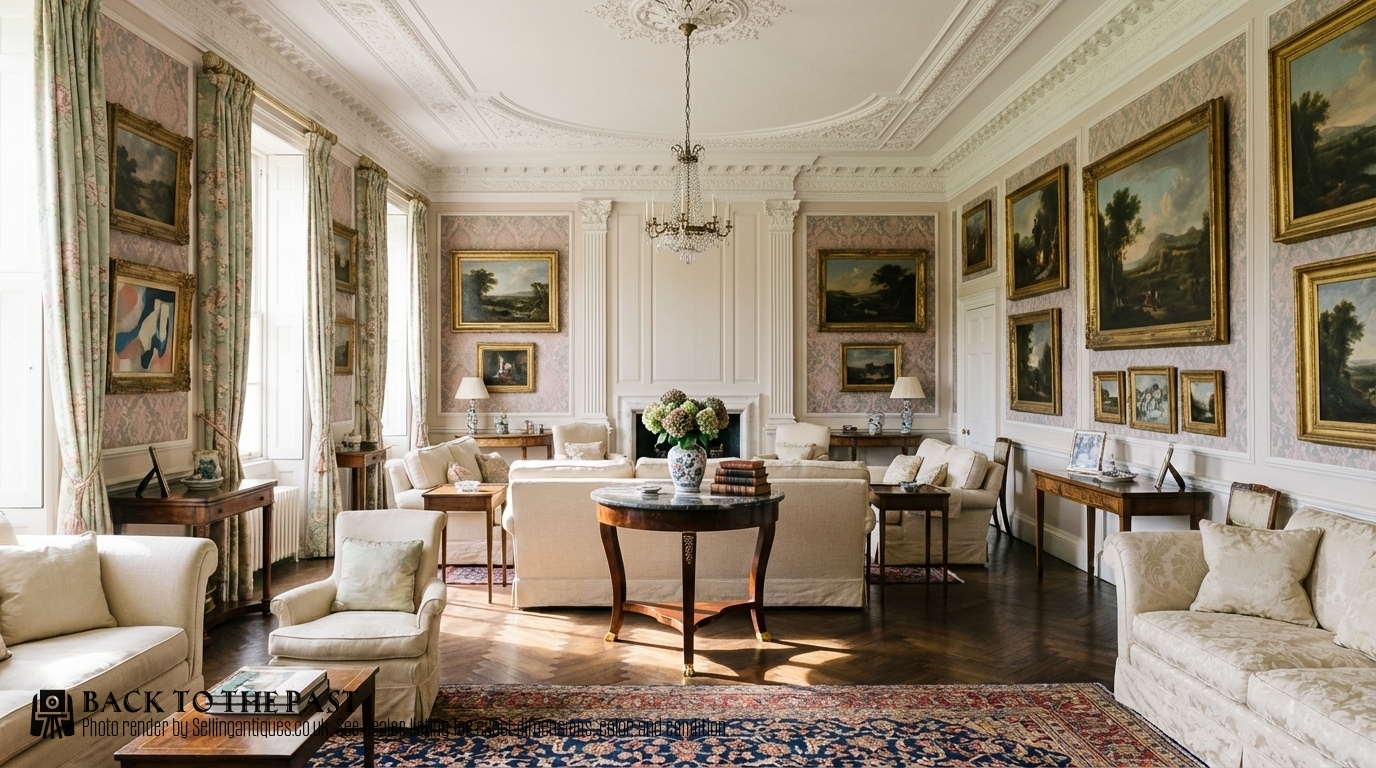
French Restauration Marble Table
When you search for a french restauration marble table, you are looking at continental furniture designed during the early nineteenth century and later revival periods. The listings here show console tables, centre tables, and side tables constructed with characteristic stone tops.
The most common form you will meet on this page is the gueridon or centre table, alongside console tables positioned against walls. These pieces originate from the nineteenth century, including specific Charles X and Restauration periods, as well as Victorian and Louis Philippe eras.
Makers and makers of related continental furniture utilised rich timbers to support heavy marble tops, creating balanced focal points for domestic interiors. The surviving examples demonstrate how functional surfaces were elevated through considered material choice.
How they were made
Construction relies heavily on mahogany and flame mahogany timbers, sometimes incorporating burr wood and walnut to form the structural bases. These woods provide the dense foundation necessary to support heavy stone surfaces.
Carved wooden frames are frequently paired with carrara marble tops, while decorative details integrate ormolu, brass, and bronze mounts. These metal elements accentuate the structural lines of the furniture.
French Restauration Marble Table Retail Price Guide 2026
Typical asking prices for french restauration marble table among the pieces listed under this phrase on Sellingantiques today, from the lower quarter to the upper quarter. They describe what is for sale here now, not the wider market.
Some tables double as elegant landing pads for runaway pocket watches and errant keys.
What varies in quality
The sophistication of the timber figure separates standard examples from finer work, particularly where flame mahogany or burr wood veneer is selected and matched. Grain movement across a centre table top dictates much of the visual weight.
Integration of cast ormolu and bronze mounts also defines the tier of a piece, showing crispness in chasing and secure placement against the wood. The quality of the carrara marble top and its edge profile complete the standard of execution.
The French Restauration Marble Table Glossary
- Console table
- A table designed to be fixed against a wall, traditionally supported by front legs or brackets. These often display shaped marble surfaces.
- Ormolu
- Gilt bronze ornamentation applied to furniture. This technique involves gilding a mercury and bronze amalgam.
- Flame mahogany
- Mahogany timber exhibiting a distinct, flamelike grain pattern. Cabinetmakers selected these veneers for prominent display surfaces.
- Carrara marble
- A type of white or blue grey marble quarried in Italy. It provides a smooth, durable surface for continental tables.
French Restauration Marble Table: Frequently Asked Questions
Where did these tables stand?
Console versions stood directly against walls, often in hallways or reception rooms where they held decorative objects. Centre tables occupied the middle of rooms as freestanding focal points.
Their heavy marble tops provided stable surfaces for lamps, clocks, or vases. This placement allowed light to reflect off the polished stone and timber.
How do I identify a Restauration piece?
Look for the restrained architectural lines and rich mahogany veneers characteristic of the period. These designs followed the Empire style, adopting a simpler elegance.
Marble tops and subtle use of bronze mounts frequently accompany these structural characteristics. The proportions remain balanced and understated.
What is a gueridon?
A gueridon is a round freestanding table supported by a central column or pedestal base. They functioned as small dining tables or display surfaces.
In nineteenth century interiors, these tables sat centrally in rooms. Their circular marble tops offered practical, wipeable surfaces.
How do I care for the marble?
Clean the stone surface with a soft, damp cloth and mild soap to preserve the polish. Avoid acidic cleaners that can etch the marble.
Use coasters and mats to protect the stone from moisture and staining. Regular dusting keeps the polished finish clear.