




Ormolu Mounted Pedestal Table
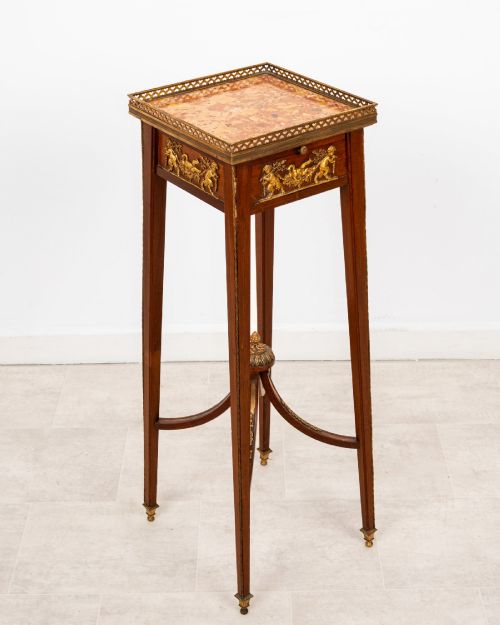
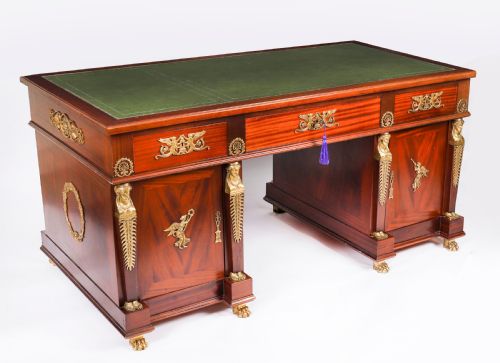
An ormolu mounted pedestal table brings together polished timber and cast gilt bronze mounts in forms ranging from French Empire to Victorian.
Ormolu Mounted Pedestal Table
When you search for an ormolu mounted pedestal table, you encounter a variety of forms designed for formal rooms, including centre tables, occasional tables, and pedestal desks. These pieces predominantly reflect nineteenth-century craftsmanship, drawing heavily on French Empire, Louis XVI style, and Victorian aesthetics.
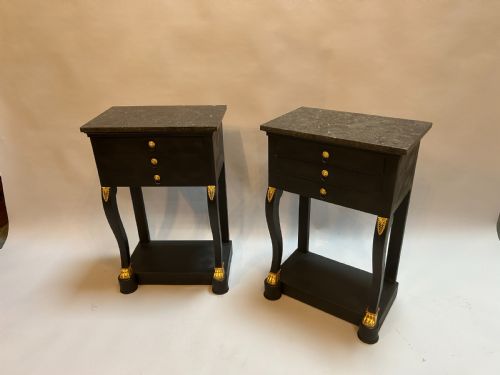
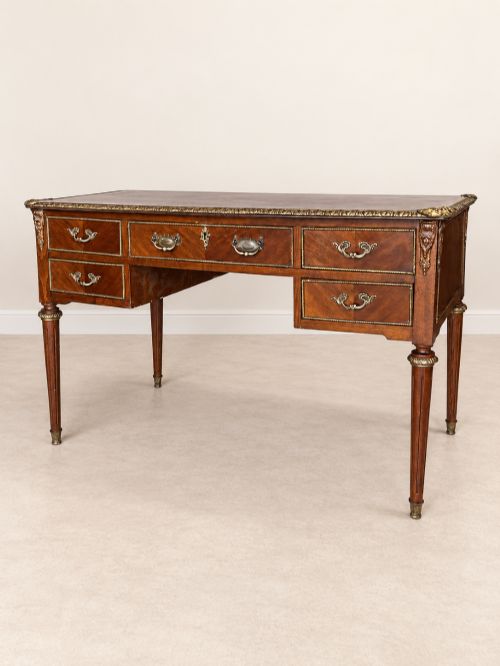
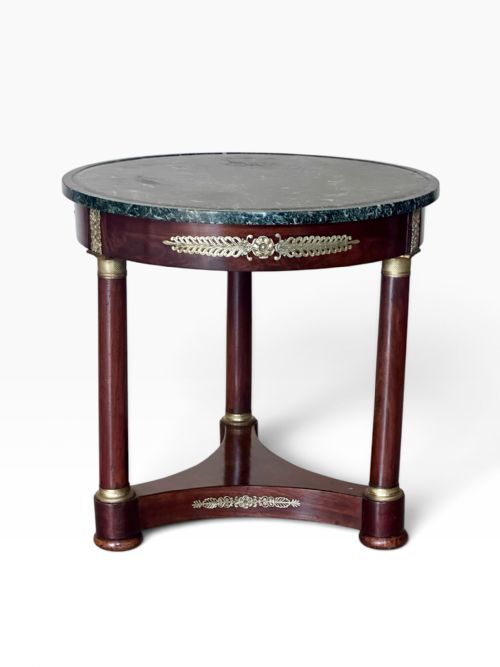
The most common examples on this page are French and Victorian tables and desks supported by a central column or set of pedestals. You will find items constructed as gueridons, writing tables, and bedside cabinets that incorporate distinct classical proportions.
Makers and designers working in these idioms utilised rich timbers and decorative mounts to create functional surface furniture for display and writing. The selection ranges from compact lampstands to large exhibition-quality desks.
Materials and construction
The construction relies on solid and veneered hardwoods such as mahogany, kingwood, burr walnut, and ebonised wood, often enhanced by marquetry and parquetry inlay. Cabinetmakers built rigid carcasses to support heavy marble tops and porcelain plaques.
Gilt bronze and ormolu mounts are cast, chased, and secured to the wooden frames at key architectural points like corners, feet, and friezes. Brass and gilt metal elements complement the primary ormolu decoration to accent the structural lines.
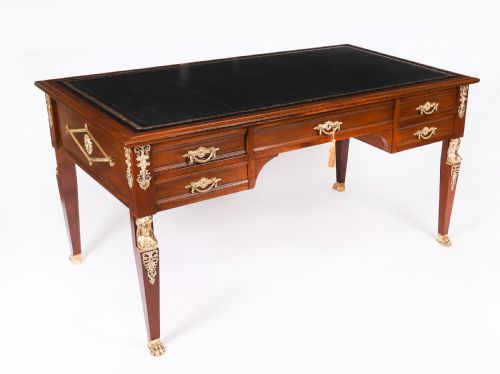
Several tables appear ready for an unexpected letter by candlelight, complete with original leather inserts waiting for a stray quill.
Assessing quality and execution
The distinction between ordinary and exceptional pieces lies in the crispness of the bronze casting and the precision of the timber work. Finer examples display hand-chased ormolu details that catch the light cleanly, alongside meticulously matched veneer patterns.
Attributions to notable makers or adherence to high nineteenth-century exhibition standards elevate certain tables through superior structural joinery and heavier gauge metalwork. The integration of inset leather writing surfaces and genuine marble slabs further separates standard production from top-tier specimens.
François Linke·Jackson and Graham·Zwiener Jansen Sucesseur
The Ormolu Mounted Pedestal Table Glossary
- Ormolu
- Gilded bronze used for decorative mounts on furniture. The technique involves applying a gold amalgam to a bronze base and heating it.
- Gueridon
- A small round table, typically supported by a single central pillar or column. This French form dates back to the seventeenth century and remains popular in nineteenth-century revivals.
- Bureau plat
- A flat-topped writing desk with drawers in the frieze. These pieces frequently feature leather inserts and elaborate ormolu mounts.
- Parquetry
- Geometric wood inlay forming patterns such as cubes or chequers. It differs from marquetry by using strictly geometric arrangements of veneer.
- Kingwood
- A dense, richly figured Brazilian timber valued in cabinetmaking for its contrasting dark and golden brown grain.
Ormolu Mounted Pedestal Table: Frequently Asked Questions
What is an ormolu mounted pedestal table?
An ormolu mounted pedestal table is a piece of furniture featuring a central support or column decorated with cast and gilded bronze mounts. These tables often include mahogany, walnut, or kingwood surfaces and date predominantly from the nineteenth century.
They were created as decorative and functional items for formal interiors, serving variously as centre tables, writing desks, and occasional stands.
How do I distinguish French Empire from Victorian styles?
French Empire pieces typically draw heavily on classical Roman and Greek motifs, displaying strict symmetry, architectural columns, and bold ormolu mounts. Victorian versions often incorporate heavier domestic timbers like burr walnut and eclectic revival details.
Examining the secondary woods and the specific character of the bronze casting usually clarifies the origin of the piece.
Where were these tables originally placed?
In nineteenth-century homes, these tables occupied prominent reception rooms, salons, and libraries where guests gathered. Centre tables stood in the middle of rooms for display, while pedestal desks and writing tables were positioned against walls or near windows.
Smaller occasional tables and bedside cabinets served functional roles in private chambers and drawing rooms.
How do I care for ormolu mounts and wood?
Ormolu mounts require gentle dusting with a dry microfibre cloth to prevent the accumulation of dirt in the chased recesses. Avoid chemical polishes, which can strip the original fire-gilt finish from the bronze.
Wooden surfaces benefit from occasional application of traditional beeswax to nourish the veneer and maintain a natural sheen.