



Ormolu Mounted Dressing Table
An ormolu mounted dressing table brings gilt bronze detailing to French and Victorian bedroom furniture.
Ormolu Mounted Dressing Table
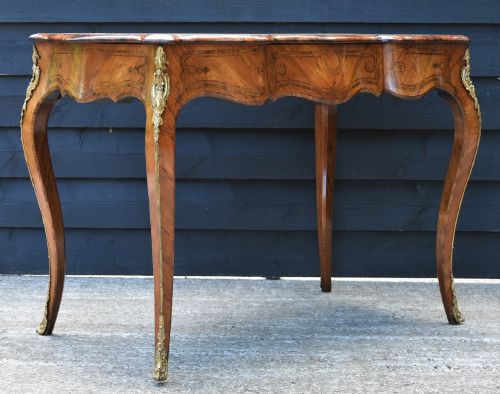
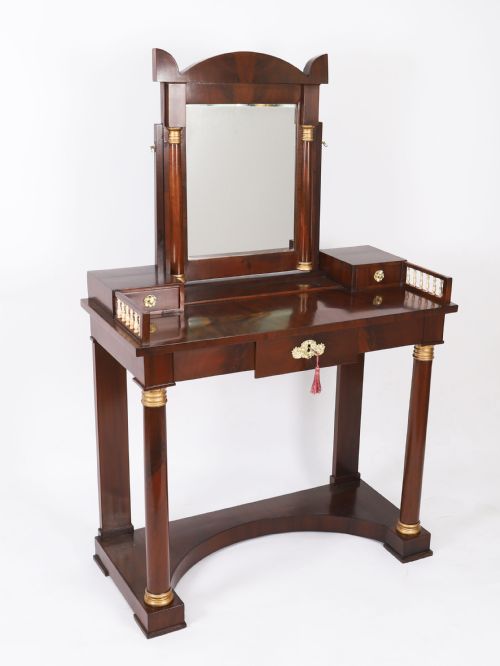
When you search for an ormolu mounted dressing table, you encounter nineteenth century furniture originating from French and Victorian workshops. These pieces combine practical bedroom surfaces with decorative metal mounts, serving as both functional dressing spaces and elaborate display objects.
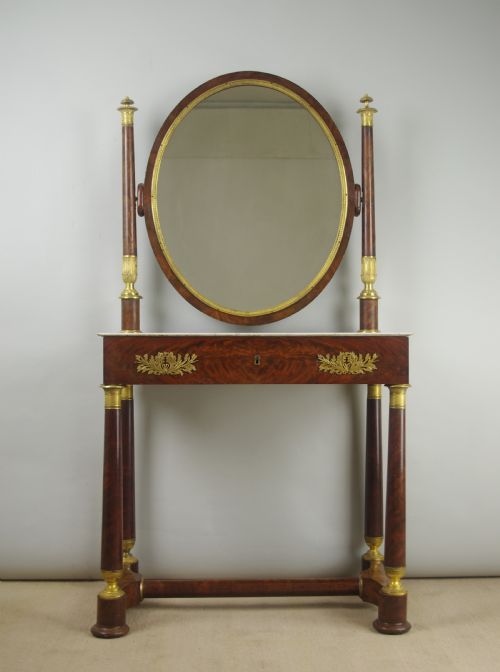
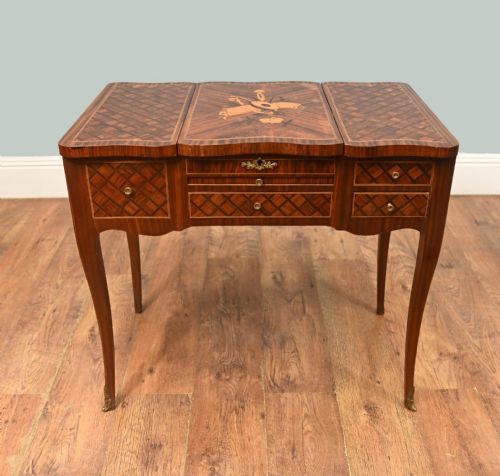
The version you are most likely to meet on this page is a French nineteenth century piece, often styled in the manner of the Louis XVI, French Empire, or Napoleon III periods. These range from full dressing tables with matching mirrors to smaller poudreuses and work tables designed for the boudoir.
Materials and Construction
Cabinet makers utilised dense timber foundations of mahogany, walnut, kingwood, tulipwood, and satinwood, frequently applying elaborate marquetry inlays to the surfaces. Structural frames often incorporate curved serpentine lines and specialised compartments suited for grooming items and correspondence.
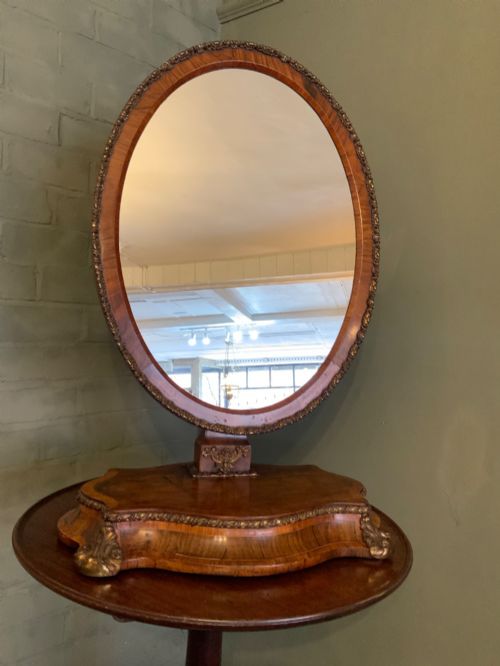
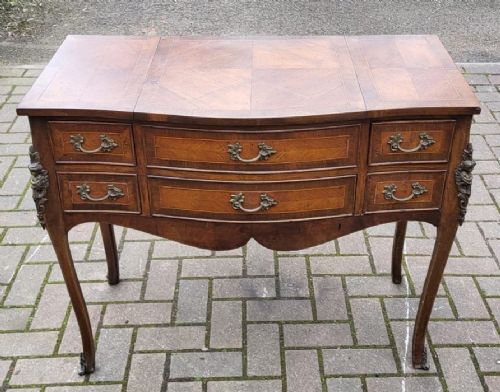
Cast ormolu and gilt bronze mounts decorate the corners, handles, and aprons of the furniture, secured to the wood by pins or screws. Marble tops occasionally complete the surface, while associated toilet mirrors and glass elements integrate with the primary timber chassis.
Listings feature 19th Century, Victorian, and Edwardian periods using mahogany, walnut, kingwood, tulipwood, ormolu, marble, and glass.
Distinctions in Quality
The definition of the ormolu castings dictates the visual success of the piece, separating sharp, hand-chiseled gilt bronze from softer, mass-produced alternatives. The depth and precision of the underlying marquetry inlay, along with the selection of figured veneers such as kingwood and tulipwood, further separate standard examples from finer commissions.
Integration between the metal mounts and the timber body reveals the original maker's skill, where mounts sit flush against curved serpentine surfaces without gaps. The retention of original fitted interiors, associated mirrors, and genuine porcelain plaques adds internal cohesion to the furniture.
Maison Pretot Paris
The Ormolu Mounted Dressing Table Glossary
- Ormolu
- A gilded bronze technique utilising mercury amalgamation or electroplating to achieve a bright gold finish on metal mounts. This material adorns the corners and borders of nineteenth century furniture.
- Poudreuse
- A French dressing table or powder table equipped with folding lids and internal compartments for cosmetics and mirrors. These multi-functional pieces often double as writing desks.
- Marquetry
- The art of applying pieces of veneer to a structure to form decorative patterns and pictorial designs. Cabinet makers utilise contrasting timbers like tulipwood and satinwood for this work.
- Bonheur du Jour
- A light lady's writing desk featuring a small tiered superstructure with drawers and compartments above the main writing surface. These desks appear frequently in nineteenth century French formats.
- Sèvres
- A French porcelain manufactory known for producing decorative plaques inset into nineteenth century furniture. These porcelain inserts frequently feature painted scenes and rich colour grounds.
Ormolu Mounted Dressing Table: Frequently Asked Questions
What is an ormolu mounted dressing table?
An ormolu mounted dressing table is a nineteenth century bedroom or boudoir piece decorated with cast and gilt bronze mounts. These tables often incorporate mirrors, marquetry inlay, and specialised compartments.
They reflect the revival styles popular in French and Victorian workshops, combining utility with decorative metalwork.
How do I identify a French Empire dressing table?
French Empire dressing tables typically feature mahogany timbers, architectural symmetry, and classical ormolu mounts depicting military or mythological motifs. They date primarily from the nineteenth century.
Later Victorian interpretations often adopt Louis XVI revival or Napoleon III characteristics with lighter woods and intricate marquetry.
What is the difference between a poudreuse and a dressing table?
A poudreuse is a specific type of French dressing table featuring hinged top sections that open to reveal a mirror and hidden compartments for cosmetics. Standard dressing tables often rely on separate standing or pivoting tabletop mirrors.
Both forms utilise similar timber veneers and ormolu mounts within nineteenth century domestic interiors.
How should I care for ormolu mounts on antique furniture?
Ormolu mounts require gentle dusting with a soft, dry cloth to prevent the accumulation of dirt within the chased details. Avoid harsh chemical cleaners or abrasive polishes that can strip the original fire gilding.
Maintaining stable humidity levels in the room also protects the underlying wood veneers and marquetry.