


French Empire Vanity
These french empire vanity pieces combine rich mahogany with gleaming ormolu mounts, bringing classic neoclassical elegance directly to your dressing room.
French Empire Vanity
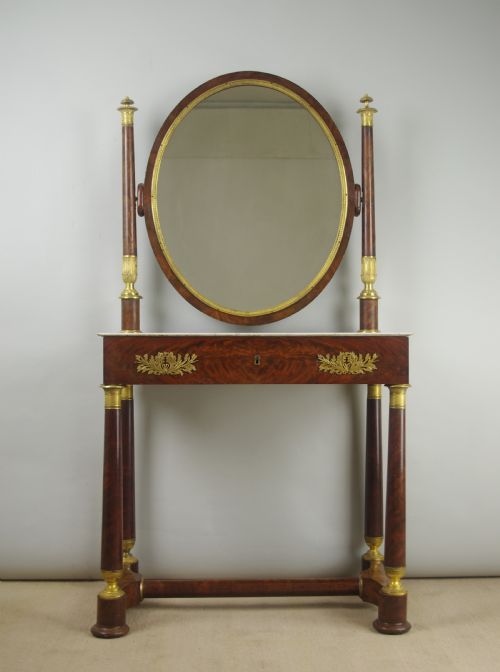
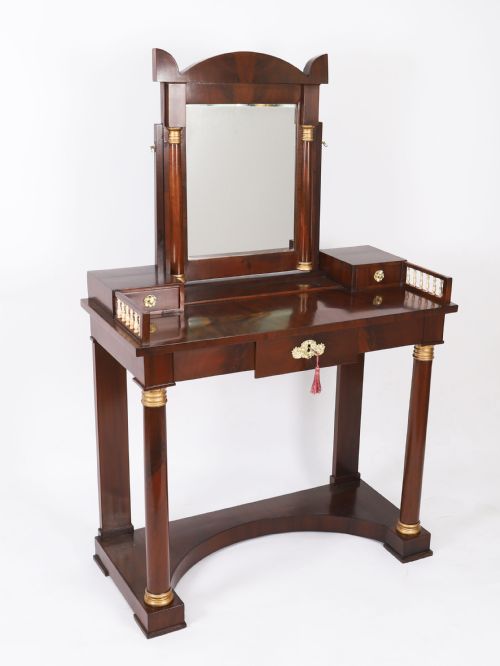
When you search for french empire vanity items, you encounter a selection of dressing tables, adjustable pedestal mirrors, toilet mirrors, and matching X frame stools dating from the nineteenth century. The core of this group centres on mahogany dressing tables embellished with cast ormolu mounts and gleaming marble tops, alongside related bedroom furniture suites and ottomans.
You are most likely to meet nineteenth-century pieces spanning the true Empire period through to the later revival styles of the Victorian era. These pieces range from substantial dressing chests and console tables down to smaller accessories such as gilt bronze scent bottles and cut crystal display boxes.
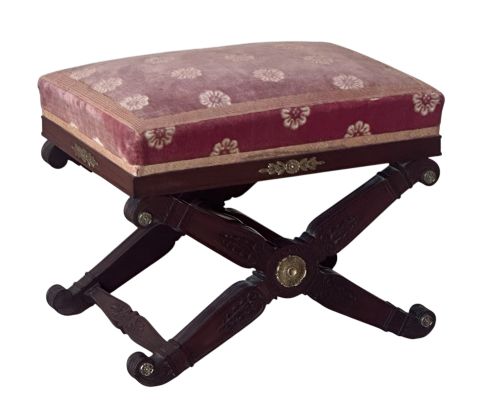
The aesthetic draws heavily on classical neoclassical lines, featuring dark timber surfaces contrasted sharply against bright gilt metal highlights. Stools and window seats often adopt curule or X frame shapes that echo ancient Roman forms favoured during the nineteenth century.
What varies in quality
The calibre of the cast ormolu and gilt bronze mounts dictates much of the visual distinction across these pieces, with finer examples displaying crisp chisel work and deep, even gilding. Superior dressing tables feature heavier bronze elements that are individually chased rather than simply cast and left unrefined.
Timber selection and secondary wood usage also separate standard workshop items from exceptional commissions. Dense, highly figured mahogany veneers paired with solid brass hardware and intact marble tops represent the upper tiers of nineteenth-century production.
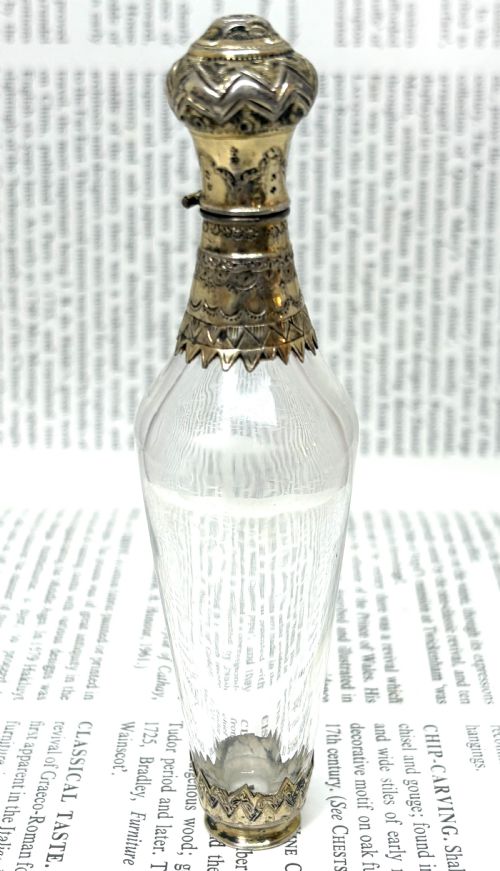
Nineteenth-century dressing habits demanded miniature gilt bronze scent bottles and crystal boxes that sat neatly beside the main vanity mirror.
A.M.E. Fournier
The French Empire Vanity Glossary
- Ormolu
- Gilded bronze used extensively for decorative mounts on furniture and mirrors during the nineteenth century. This technique involves applying a mercury and gold amalgam to cast bronze before heating.
- Curule stool
- An ancient Roman magistrate seat design featuring intersecting curved legs forming an X shape. Nineteenth-century revival seating often adopts this exact configuration.
- Toilet mirror
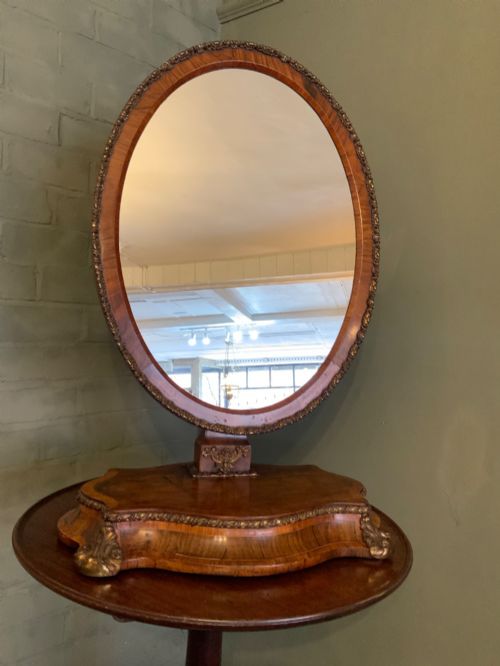
- A smaller tabletop mirror designed to sit atop a dressing chest or table. These often feature adjustable pivot frames mounted on small wooden plinths.
- Neoclassical
- A revival style drawing inspiration from classical antiquity, particularly Greek and Roman architecture and decorative arts. It forms the visual backbone of the nineteenth-century Empire aesthetic.
- X frame stool
- A seat built with crossed supporting legs, mirroring the ancient curule form. These frequently accompany dressing tables in nineteenth-century bedroom suites.
French Empire Vanity: Frequently Asked Questions
What is a french empire vanity?
A french empire vanity typically refers to nineteenth-century dressing tables, console tables, and tabletop mirrors adorned with classical ormolu mounts.
These pieces rely on dark mahogany and walnut timbers contrasted with bright gilt bronze details to achieve a striking neoclassical appearance.
How do you use a toilet mirror?
A toilet mirror sits on top of a larger chest of drawers or a dedicated dressing table to provide a reflective surface for grooming. The frame usually pivots on adjustable brass screws so the angle can be tilted.
These mirrors were essential bedroom accessories before full-length dressing mirrors became common in domestic interiors.
Are these pieces from the actual Empire period?
The pieces span both the original nineteenth-century Empire period and the later revival movements of the Victorian era. Many items date from around eighteen hundred through to eighteen seventy and beyond.
Craftsmen in later decades continued reproducing these classical neoclassical forms with similar materials like mahogany and ormolu.
What wood was used?
Cabinetmakers primarily utilised mahogany, rosewood, walnut, and kingwood as the main structural and veneered timbers. These dark woods provided a stable canvas for bright gilt bronze and brass mounts.
Marble was also frequently incorporated into the tops of dressing tables and console furniture.