


Antique French Vanity Unit
An antique french vanity unit brings refined continental utility to a bedroom, combining practical surfaces with sophisticated design.
Antique French Vanity Unit
When you search for an antique french vanity unit, you encounter a specialised form designed for personal grooming and washing. These pieces bridge the gap between functional sanitation and decorative furniture.
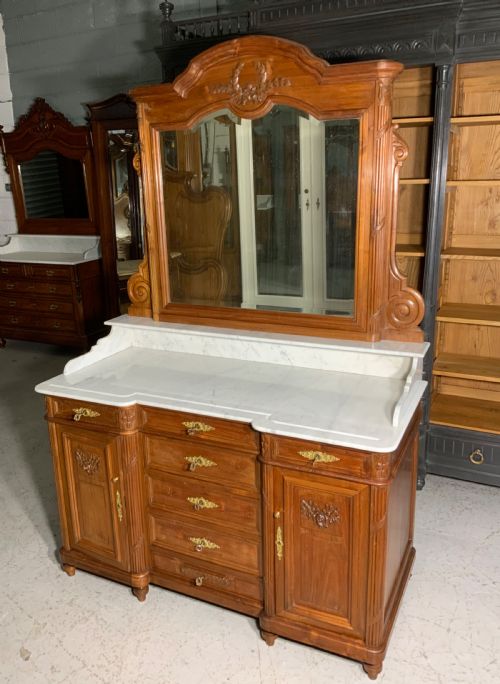
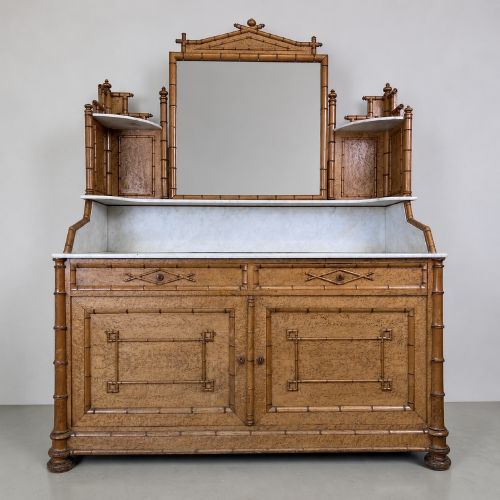
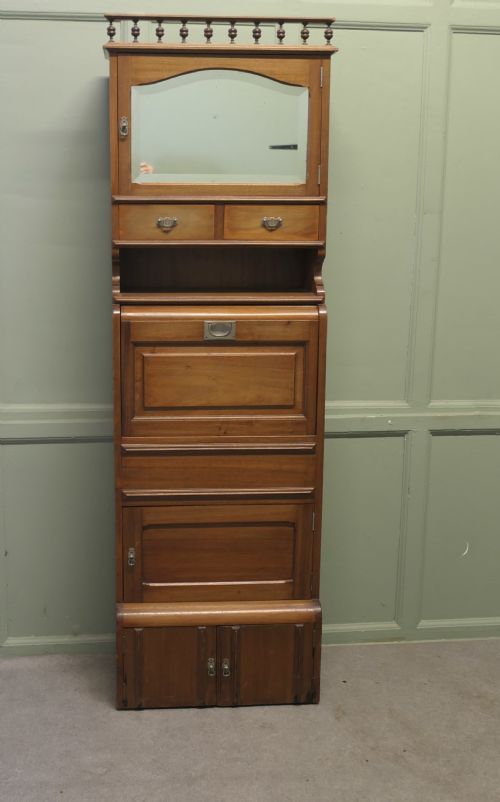
The selection on this page centres primarily on dressing tables and washstands spanning the nineteenth and early twentieth centuries. Pieces range from mahogany and tulipwood dressing tables to marble-topped washstands and yacht-bound marine cabinets.
Makers utilised distinct regional styles including French Rococo Revival, Empire, Art Deco, and Aesthetic Movement designs. Each variation reflects the changing domestic interiors and practical demands of its period.
How they were made
Construction relies heavily on fine timbers such as mahogany, tulipwood, and bird’s-eye maple, often shaped into cabinets and dressing furniture. Artisans paired these structural woods with contrasting decorative veneers.
Surface finish and detailing frequently incorporate marble tops, brass fittings, and cast or gilt ormolu mounts. Forged iron and glass elements also appear in specific utilitarian and decorative washstand forms.
One early marine cabinet was built specifically to handle the roll of a boat while you wash.
What varies in quality
Quality rests in the selection of timber veneers and the precision of the cabinetmaking. Superior examples display harmonious grain matching and well-integrated structural components.
The refinement of decorative hardware, including cast ormolu mounts and brass fittings, separates standard utility pieces from high-status salon furniture. Stone tops also vary significantly in natural figuring and thickness.
The Antique French Vanity Unit Glossary
- Ormolu
- Gilded bronze mounts applied to furniture for decorative effect. This technique was widely utilised in French Empire and revival periods.
- Poudreuse
- A traditional French dressing table fitted with folding lids and internal compartments for cosmetics and powders.
- Bird's-eye maple
- A figured timber showing small circular markings resembling bird eyes. Cabinetmakers prized this wood for decorative veneering.
- Washstand
- A utilitarian piece of furniture designed to hold a basin and jug for personal washing before plumbed bathrooms were common.
Antique French Vanity Unit: Frequently Asked Questions
What is an antique french vanity unit?
These pieces comprise dressing tables and washstands designed for personal grooming and washing in continental bedrooms.
They combine functional storage and surfaces with decorative regional styles spanning the nineteenth and early twentieth centuries.
How were these units used?
Earlier models served for washing with basins or holding cosmetics and grooming powders during the morning routine.
Over time, the form evolved from utilitarian washstands into sophisticated dressing tables placed in principal bedchambers.
How do I live with one?
These units suit contemporary bedrooms and bathrooms as statement surfaces or functional storage furniture.
Care should be taken to protect polished wood and marble surfaces from moisture and direct heat.
How do I identify periods?
Stylistic markers such as heavy empire mounts, rococo curves, or geometric art deco lines help date individual pieces.
Materials like mahogany, tulipwood, and forged iron also correspond to distinct manufacturing decades.