
Ormolu Mounted Bedsides
Ormolu mounted bedsides bring French decorative cabinet-making into the bedroom, offering rich timber surfaces paired with cast metal mounts for small-scale storage.
Ormolu Mounted Bedsides
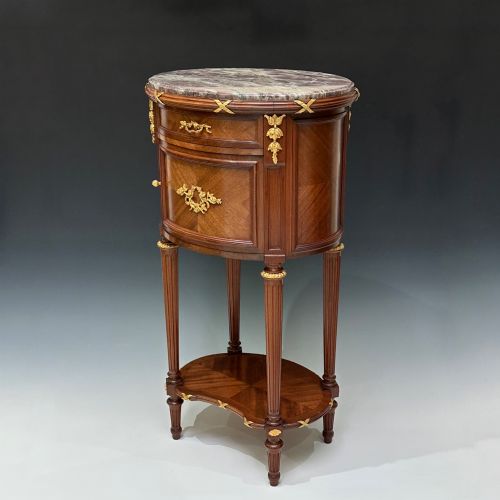
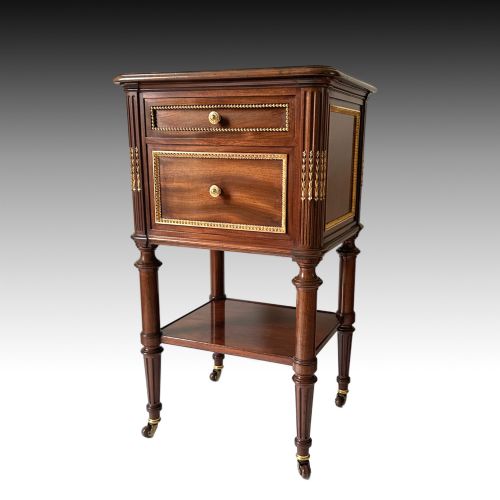
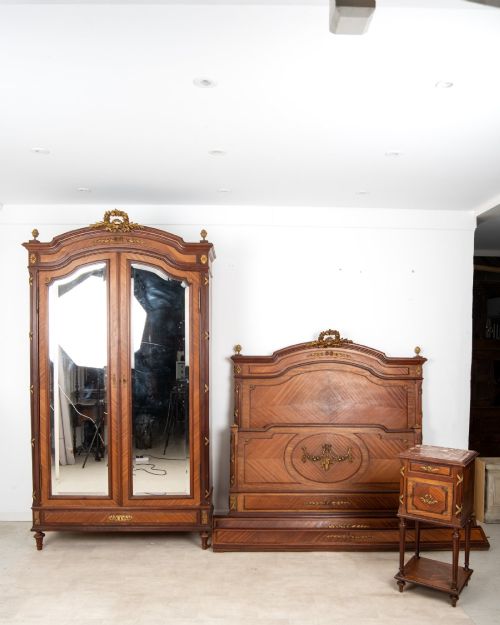
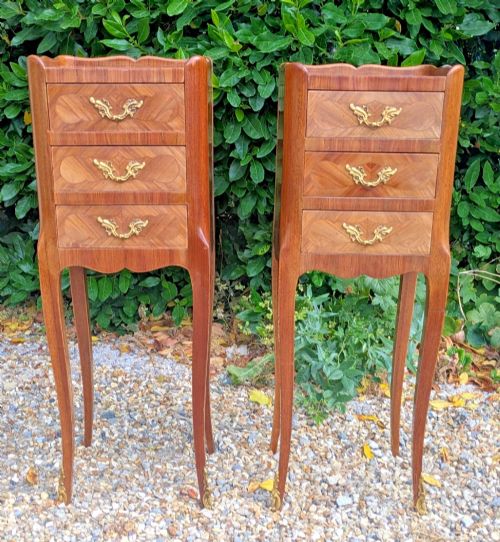
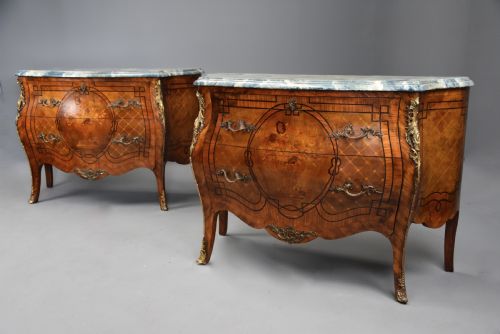
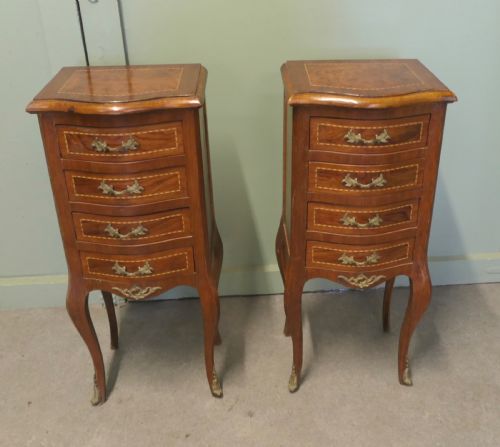
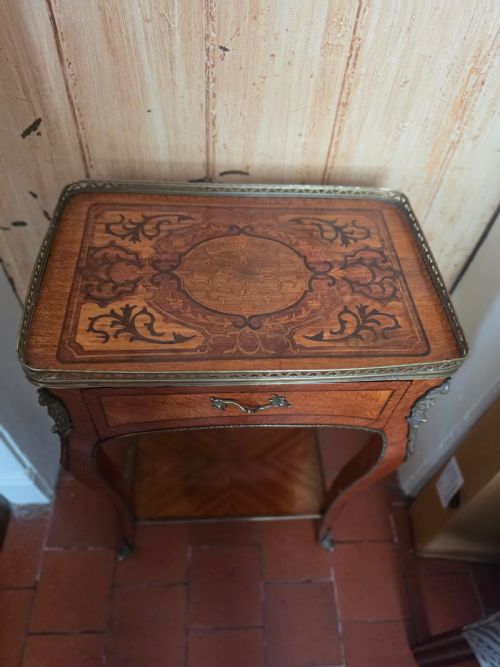
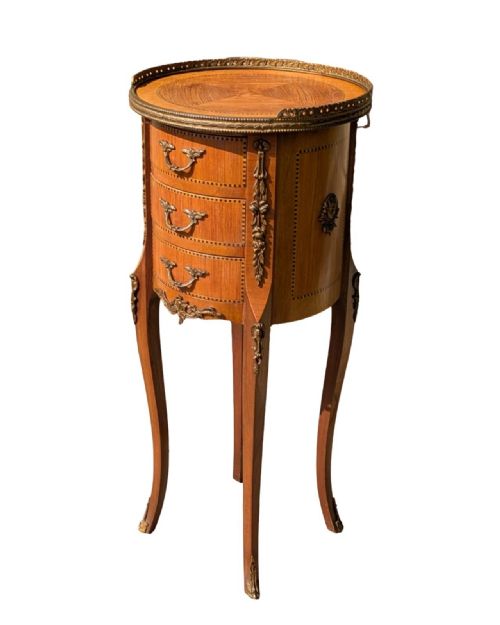
When searching for ormolu mounted bedsides, a buyer is looking at small French cabinets, commodes and lamp tables dating primarily from the nineteenth and early twentieth centuries. These pieces span revivals of Louis XV and Louis XVI styles, reflecting historical taste focused on ornate detailing and compact proportions.
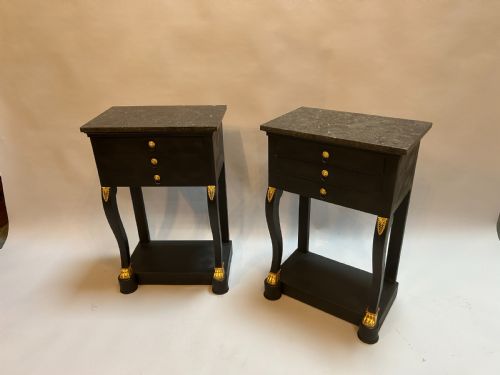
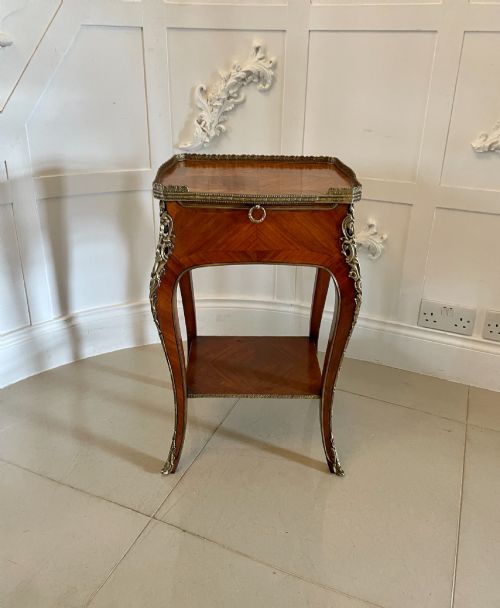
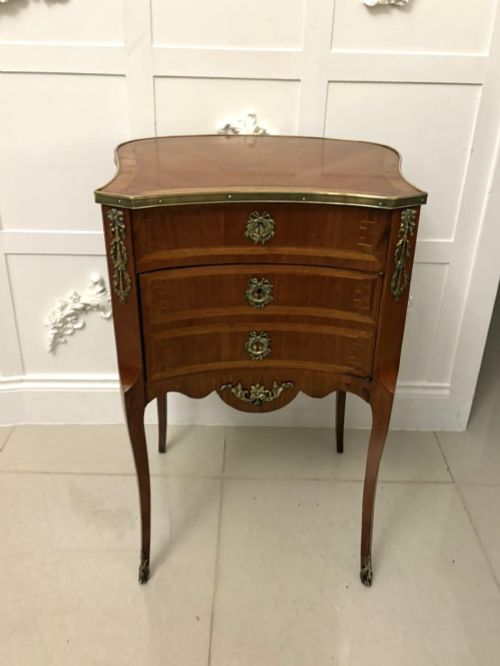
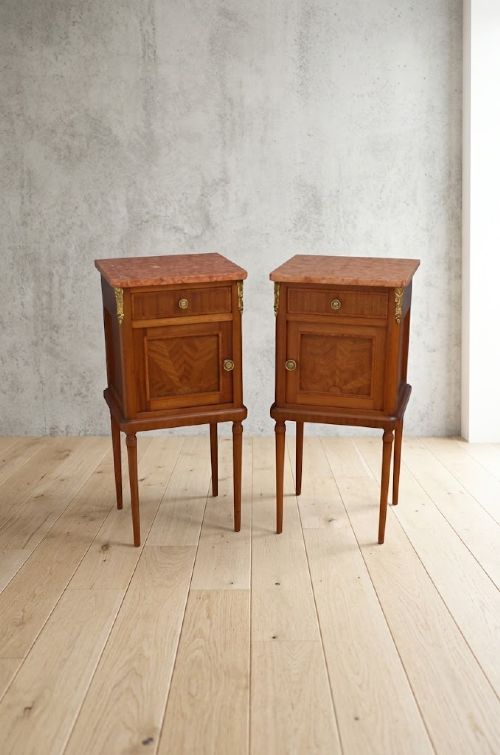
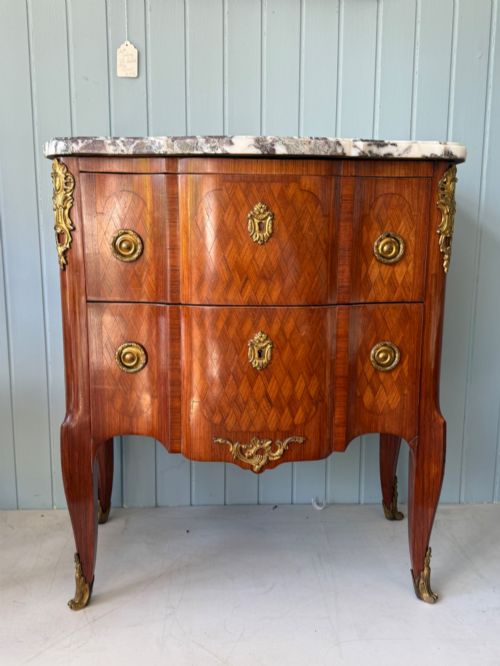
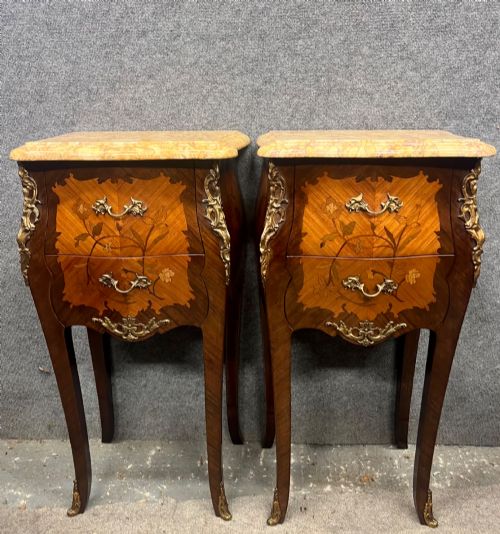
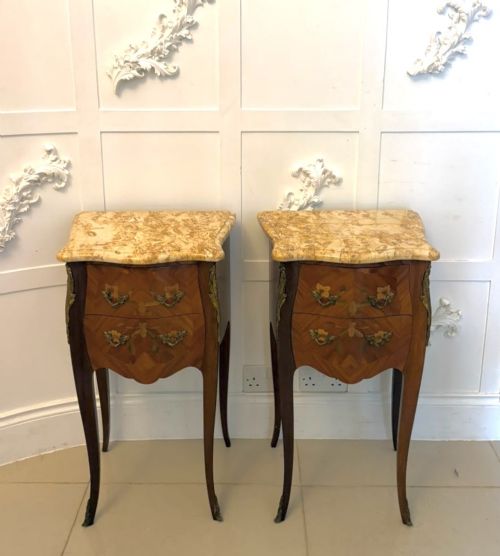
The version most commonly met on this page is the bedside cabinet or small chest featuring marble tops and marquetry veneers. These items combine practical storage with decorative presence, often appearing in matched pairs suitable for flanking a bed.
Materials and Technique
Cabinet-makers constructed carcasses from foundational timbers such as mahogany or walnut, then applied decorative veneers including kingwood, rosewood and satinwood. Marquetry and parquetry patterns created geometric or floral designs across the drawer fronts and side panels.
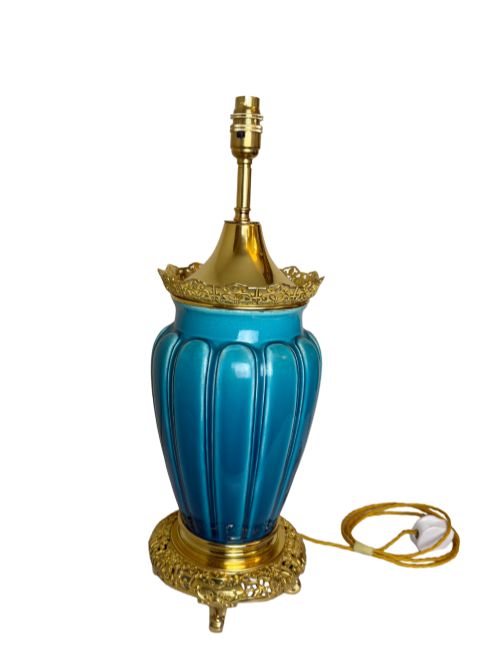
Gilt bronze and ormolu mounts were cast, chased and fire-gilded before being fixed to corners, handles and feet to protect edges and accent the silhouette. Marble slabs, often finished with moulded edges, were fitted to the top surfaces to provide a durable finish.
Materials recur across multiple decades, pairing kingwood and mahogany with marble slabs and cast bronze mounts.
Standard and Execution
Quality rests in the crispness of the bronze casting and the depth of the hand-chasing on the ormolu mounts. Superior pieces display sharp definition in the metalwork and precise fitting where the bronze meets the timber.
The standard of timber selection and the complexity of the veneer work also divide ranges. Fine examples utilise carefully matched grain patterns and intricate marquetry, paired with heavy marble tops and substantial internal drawer construction.
François Linke·E. Kahn·Sormani
The Ormolu Mounted Bedsides Glossary
- Ormolu
- Gilded bronze used for decorative mounts and decorative hardware on furniture. The technique involves applying a gold amalgam to a bronze base and heating it to drive off the mercury.
- Marquetry
- Decorative patterns formed by fitting contrasting pieces of veneer into a wooden background. Craftsmen use various woods to create pictorial or geometric designs.
- Bombe
- A swollen or bulging convex shape characteristic of certain cabinet fronts and sides. This form requires skilled shaping of both the timber carcass and its veneer.
- Chevets
- The French term for bedside tables or small night cabinets. These compact pieces often feature a small drawer and cupboard space.
- Parquetry
- Geometric mosaic woodwork used for surfaces, formed of triangular or square veneer pieces. It creates repeating patterns across table tops and cabinet doors.
Ormolu Mounted Bedsides: Frequently Asked Questions
What is the difference between a commode and a bedside cabinet?
A commode is typically a larger chest of drawers designed for general room storage and display. Bedside cabinets are scaled down specifically to sit alongside a bed.
Both forms share similar decorative vocabularies, utilising the same timber veneers and ormolu mounts across different proportions.
How do I identify Louis XV style from Louis XVI style?
Louis XV style pieces, often linked to the Rococo revival, feature flowing asymmetrical curves, cabriole legs and serpentine fronts. Ormolu mounts emphasise organic scrolls and floral motifs.
Louis XVI style shifts toward neoclassical symmetry, straight tapered legs, fluted columns and geometric framing. Mounts on these pieces take the form of swags, urns and ribbons.
Are marble tops original to these cabinets?
Marble tops on French cabinets of this period were typically fitted during initial production to provide a practical, heat-resistant surface for bedside use. The stone was selected to complement the tone of the underlying kingwood or mahogany.
Edge profiles and thickness match the specific period style of the cabinet frame beneath.
How do I care for ormolu mounts and veneered surfaces?
Ormolu mounts require gentle dusting with a soft brush, avoiding aggressive metal polishes that can strip the historic fire-gilding. Timber veneers benefit from maintaining stable room humidity and occasional application of appropriate furniture wax.
Direct sunlight can fade sensitive timbers like rosewood and kingwood over time, so placement away from direct windows preserves the finish.