
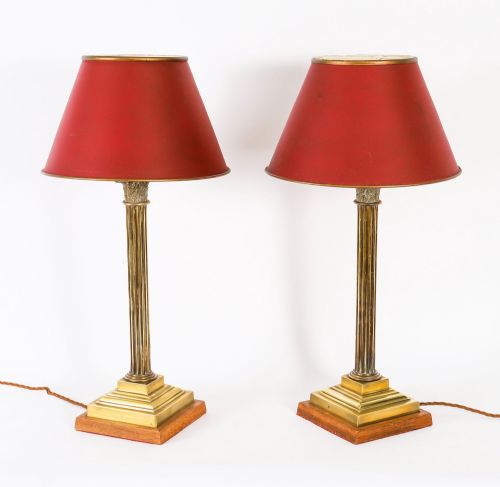
Pair of Bedsides
When you search for a pair of bedsides, you enter a world of matched nightstands, cabinets, and chests designed to sit symmetrically beside a sleeping place.
Pair of Bedsides
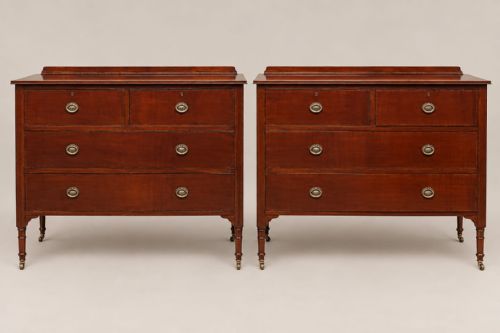
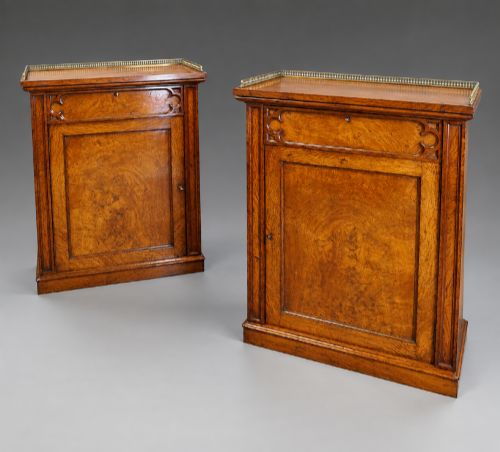
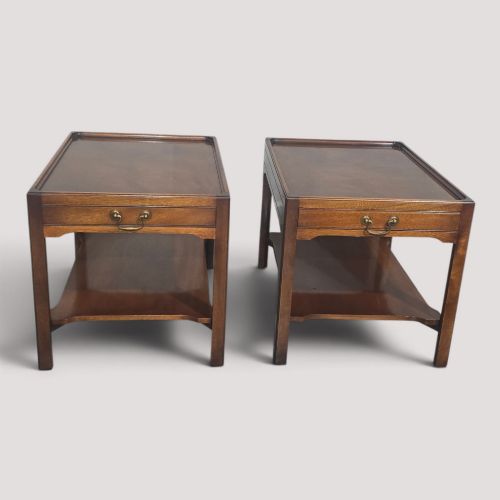
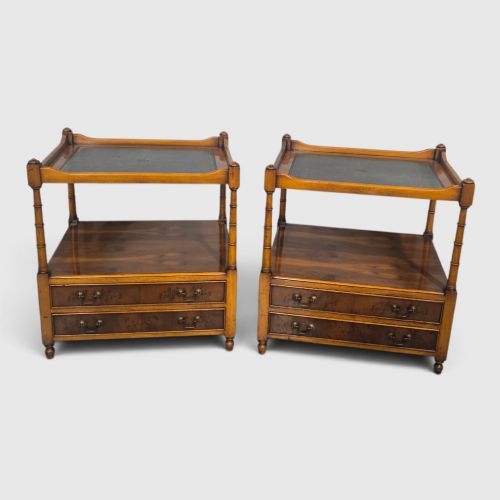
A pair of bedsides provides matching storage and surface space on either side of a bed, taking forms such as small chests of drawers, enclosed cabinets, and open tables.
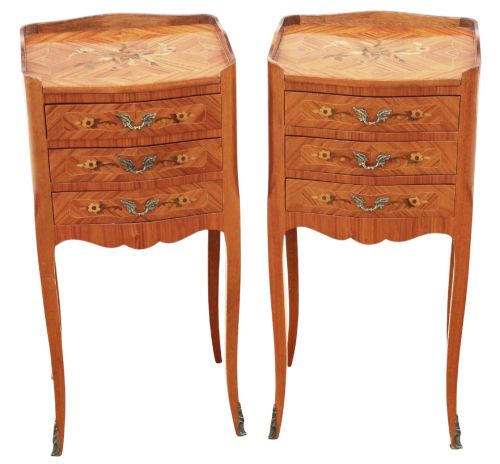
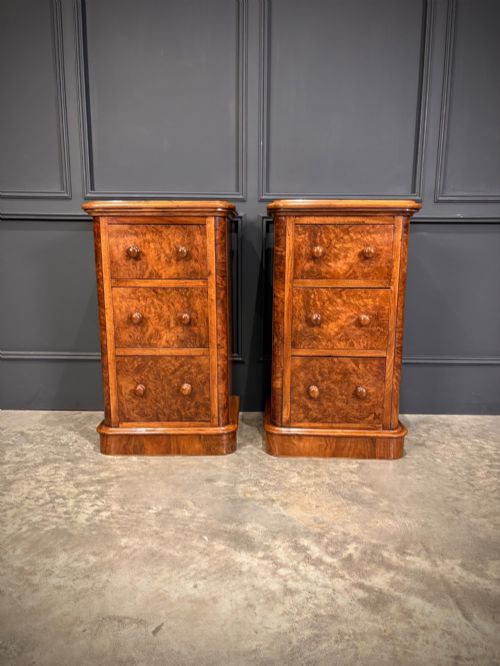
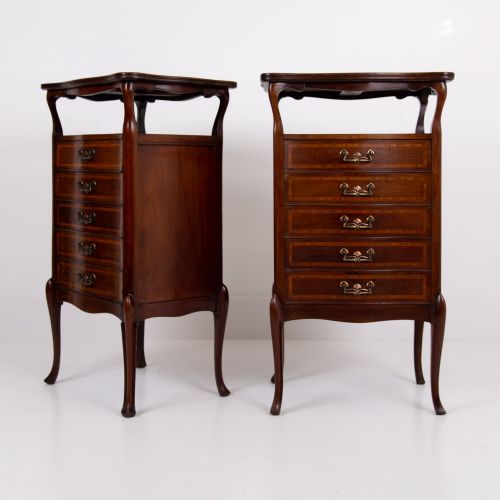
The selections available range from nineteenth-century Victorian mahogany and burr walnut chests to twentieth-century Art Deco walnut nightstands and French marquetry pieces.
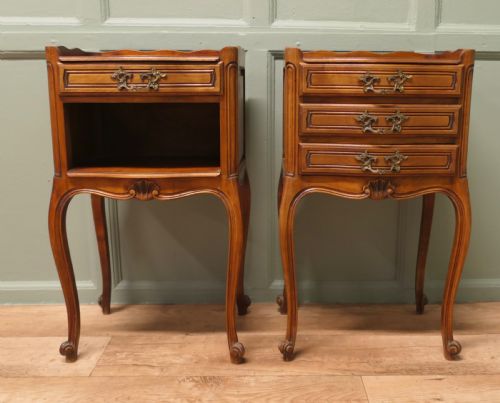
Buyers encounter diverse stylistic influences spanning Georgian proportions, Edwardian utility, and ornate continental revivals like Louis XV and French Provincial.
How they were made
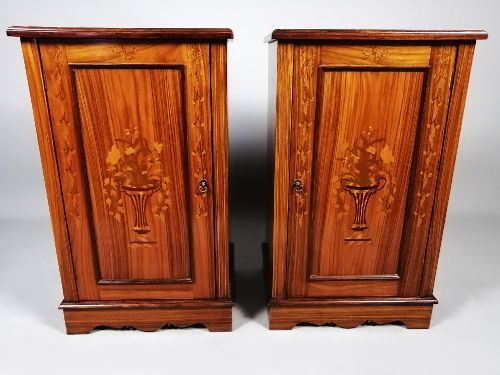
Cabinet makers utilised dense hardwoods such as mahogany, walnut, oak, and satinwood, often applying figured veneers, flame mahogany, or marquetry patterns to create decorative surfaces.
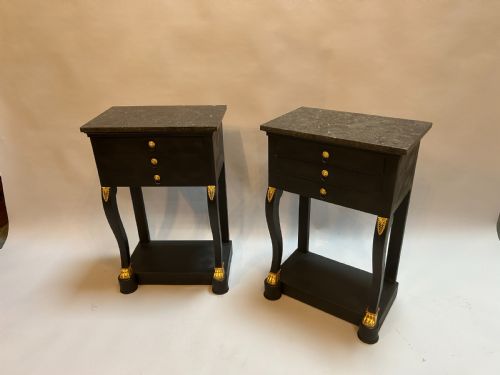
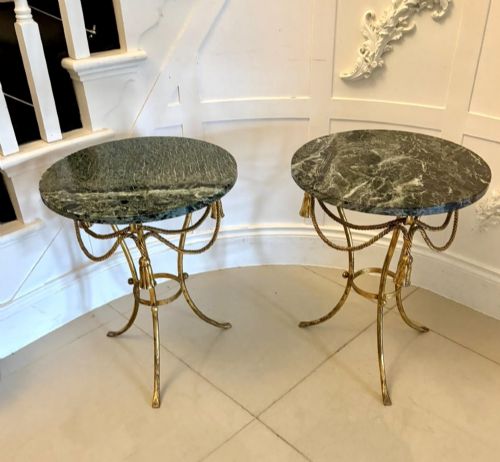
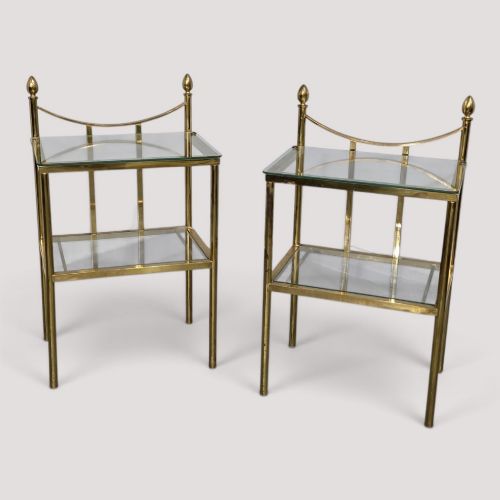
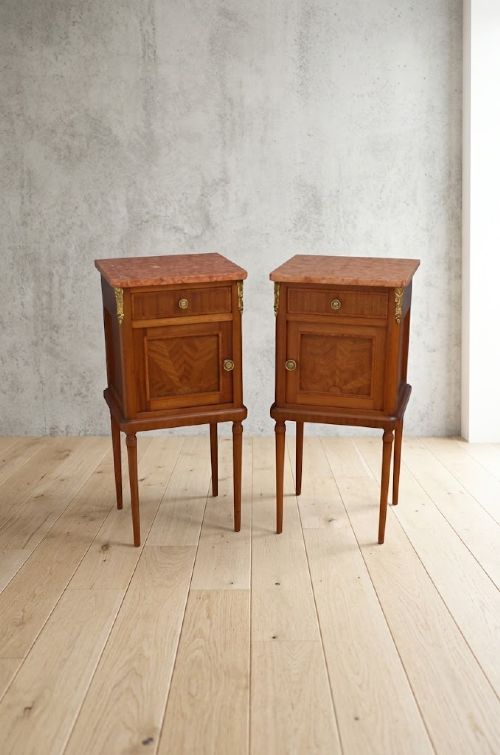
Many examples incorporate inset marble tops in white, sienna, or onyx, alongside brass mounts, handles, and glass or fabric elements.
Construction techniques include multi-drawer joinery, serpentine shaping, and hand-painted or lacquered finishes seen in Chinoiserie and Kashmiri decorative styles.
Listings feature bedside tables, cabinets, and chests spanning the Victorian era through the 1930s in mahogany, walnut, and marble.
What varies in quality
The tier of a piece depends on the choice of timber and the ambition of its veneer work, with figured burr walnut, flame mahogany, and intricate marquetry marking out superior examples.
Construction subtlety dictates the overall standard, distinguishing simple utilitarian cupboards from refined pieces featuring serpentine fronts, integrated secret compartments, and original hardware.
The harmony of the matching pair remains paramount, ensuring that timber grain patterns, proportions, and decorative details align precisely across both items.
Whytock & Reid of Edinburgh·Heal's·E Rousseau
The Pair of Bedsides Glossary
- Marquetry
- Decorative veneer work forming pictures or geometric patterns using various coloured woods. This technique frequently appears on continental bedside cabinets.
- Serpentine front
- A furniture front curved with a convex centre flanked by concave ends. It adds dynamic movement to mahogany and walnut chests.
- Commode
- A low French cabinet or chest containing drawers and doors. Many nineteenth-century sleeping quarters utilised these alongside beds.
Pair of Bedsides: Frequently Asked Questions
What styles are common for bedsides?
The available designs span Victorian mahogany chests, Edwardian cabinets, and twentieth-century Art Deco walnut nightstands with open areas and cupboards.
Continental influences also appear frequently, including French Louis XV revival pieces, marquetry commodes, and provincial oak furniture.
Were these always made as pairs?
Many examples originated as matched pairs intended for either side of a larger bed frame. Some twentieth-century suites integrated the bedsides directly with the bed structure itself.
Craftsmen ensured timber selection and decorative inlays matched symmetrically across both individual units.
What materials did makers use?
Solid woods and veneers form the foundation of these pieces, with mahogany, walnut, oak, and satinwood dominating the nineteenth and twentieth centuries.
Additional materials include inset marble tops, brass handles and mounts, glass surfaces, and occasional fabric or leather accents.
How do I identify a period?
Victorian examples often display heavy mahogany or burr walnut construction with multiple drawers and original wooden or brass handles. Later Edwardian and 1920s pieces introduce lighter satinwood or ash alongside minimalist Art Deco geometric forms.
French pieces from the same eras tend to feature marquetry, kingwood, tulipwood, and serpentine shaping.