


Ormolu Lamp Bases
These ormolu lamp bases bring gilt bronze warmth and classical French styling to a room, offering heavy cast metals and sculptural detail.
Ormolu Lamp Bases
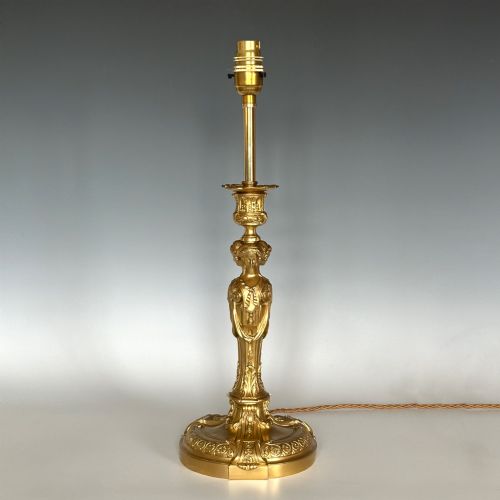
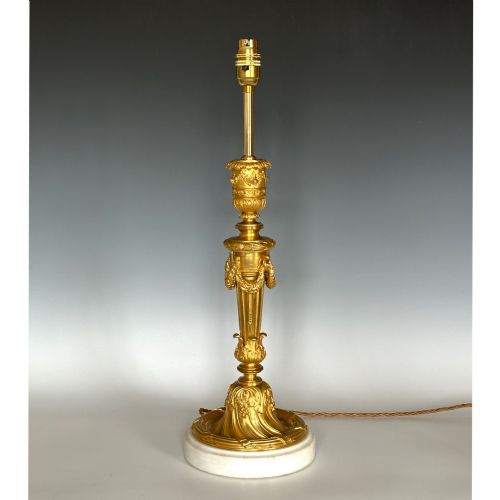
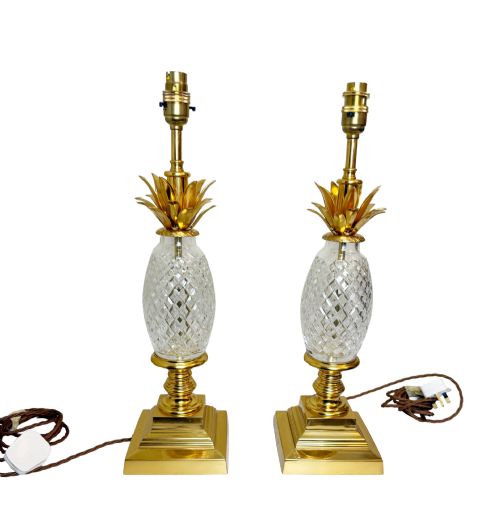
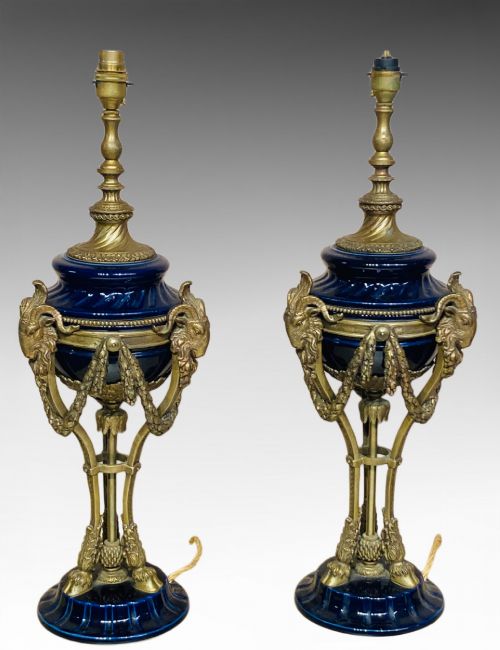
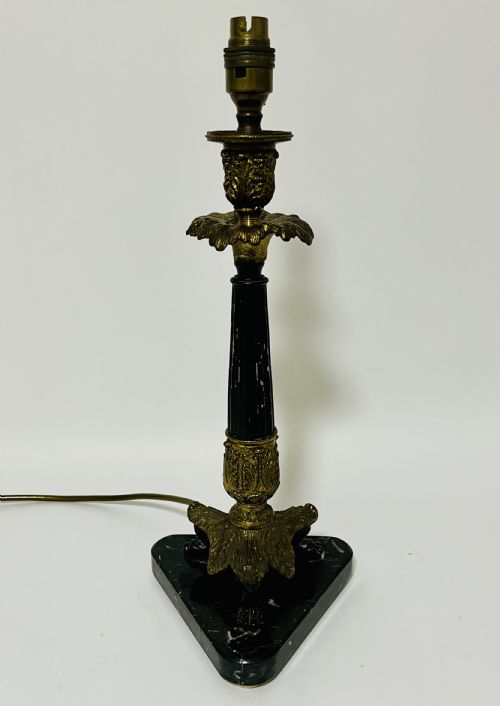
When you search for ormolu lamp bases, you encounter heavy cast metal mounts paired with stone plinths, glass columns or ceramic bodies. The selection on this page leans heavily toward nineteenth-century French pieces, particularly those channeling Louis XVI, Louis XV and Empire styles.
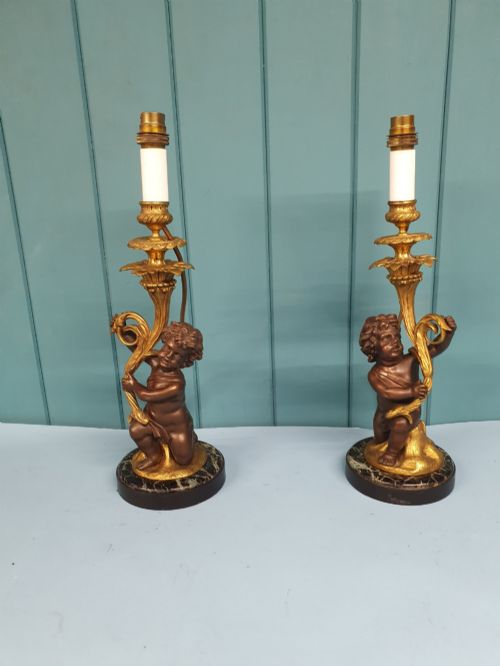
Most examples take the form of table lamps or converted oil lamps and candlesticks. You will find cherub figures, classical urns, Corinthian columns and mythical subjects supporting the central shaft.
Pairs appear frequently alongside single larger statement pieces. These items often combine patinated bronze with bright gilded highlights to create strong tonal contrast.
How they were made
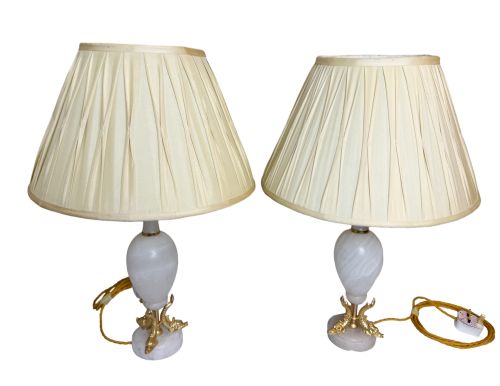
The makers of these pieces relied on bronze casting and mercury gilding or electroplating to achieve the rich golden surface known as ormolu. They integrated this metalwork with materials like white and dark marble, onyx, rock crystal, porcelain and blown glass.
Foundry workers chased and hand-finished the cast bronze details with chisels and punches to sharpen the acanthus leaves, figures and beaded borders. These components were then assembled using threaded rods and screws to secure the stone bases and columns together.
Mermaids holding rock crystal columns and cherubs blowing kisses illuminate nineteenth-century drawing rooms with mythical charm.
What varies in quality
The choice of secondary materials also dictates the standard of the piece. Fine bases incorporate dense, unblemished marble or onyx and substantial bronze gauge weight rather than thin, light metals.
The Ormolu Lamp Bases Glossary
- Ormolu
- Gilt bronze produced by applying an amalgam of gold and mercury to a bronze object, then heating it to drive off the mercury. This technique creates a durable, warm golden finish characteristic of French decorative arts.
- Louis XVI Style
- A neoclassical design vocabulary marked by straight lines, symmetry, and classical motifs such as urns, fluted columns and laurel wreaths. It emerged in eighteenth-century France and saw widespread revival in the nineteenth century.
- Patinated bronze
- Bronze that has been treated chemically or naturally to alter its surface colour, usually resulting in dark brown or greenish tones. It often provides a dark contrast against bright ormolu mounts.
- Tole peinte
- Painted sheet metal used for decorative objects and lamp bodies, frequently decorated with floral motifs or solid colours in nineteenth-century interiors.
- Gueridon
- A small ornamental table, occasionally adapted or styled in ways related to the support structures found on this page.
Ormolu Lamp Bases: Frequently Asked Questions
Are these lamps wired for modern use?
Many antique lamp bases have been rewired at various points in their long history to comply with modern electrical standards. Buyers should inspect the current wiring upon arrival and consult a qualified electrician if replacement is necessary.
Original fittings are rarely preserved intact on nineteenth-century bases due to safety upgrades over the decades. The primary focus remains the antique metalwork and sculptural body rather than the flex or plug.
How do I clean ormolu metalwork?
Gentle dusting with a dry, soft cloth is the safest way to maintain gilt bronze surfaces. Avoid abrasive cleaners, silver dips or harsh chemical polishes that can strip the thin gold layer from the bronze underneath.
If grime accumulates in the crevices of the chasing, a soft-bristled artist brush helps lift the dirt without scratching. Water and moisture should be kept away from any attached marble or fabric elements during cleaning.
Can I find matching pairs?
Pairs appear regularly among nineteenth-century French pieces, particularly those designed as garnitures or candleholders before later conversion into lighting. Symmetrical arrangements are especially common in cherub and columnar designs.
Checking the dimensions and foundry marks, where present, helps confirm that two individual bases originated as a matched set. Slight hand-finished variations remain normal in antique metalwork even within true pairs.