

Empire Style Bronze Lighting
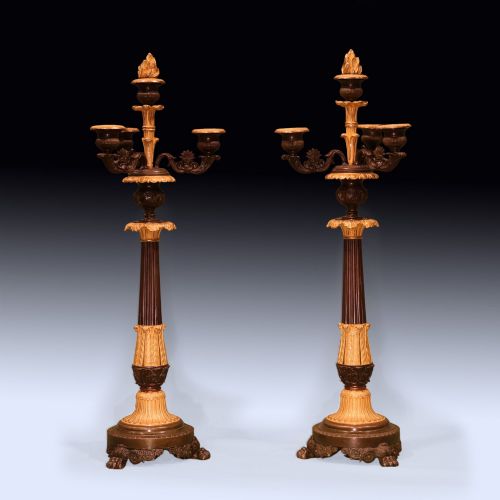
Empire style bronze lighting brings classical weight and golden warmth to a room through heavy candelabra, wall lights and chandeliers.
Empire Style Bronze Lighting
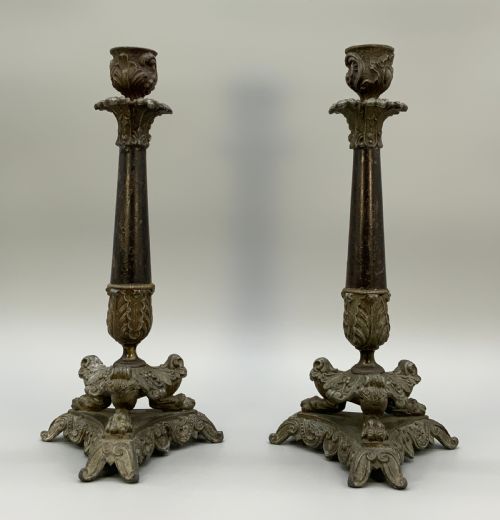
Empire style bronze lighting encompasses grand candelabra, chandeliers, wall lights and table lamps rooted in the 19th century and subsequent revivals. The listings here lean heavily toward French production, alongside English, Swedish and Italian examples.
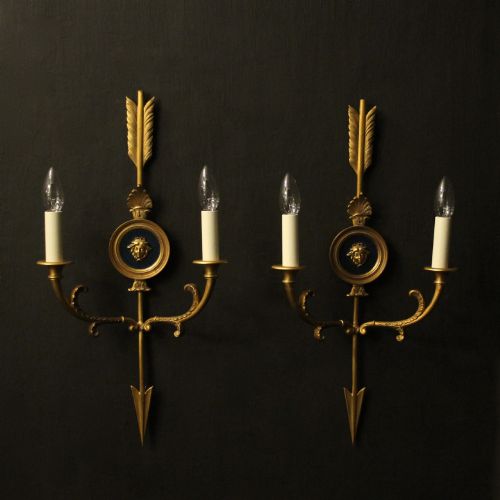
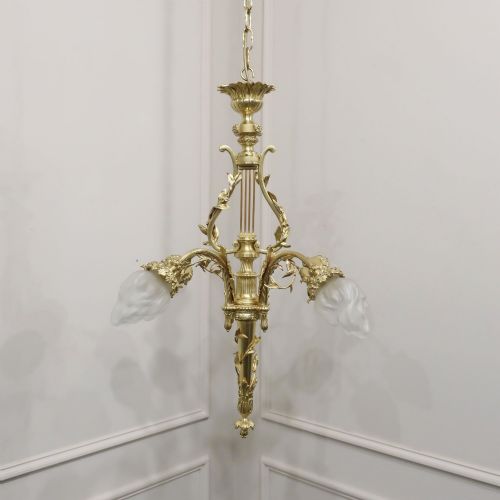
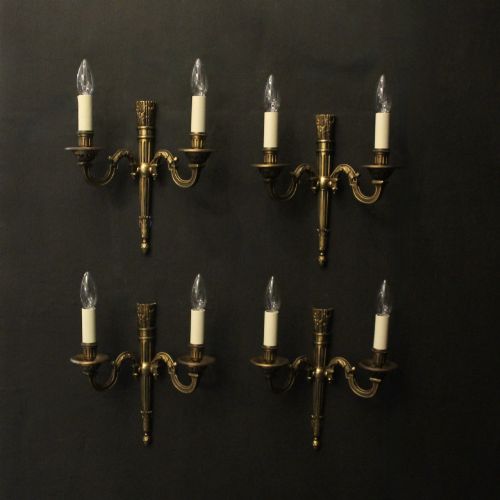
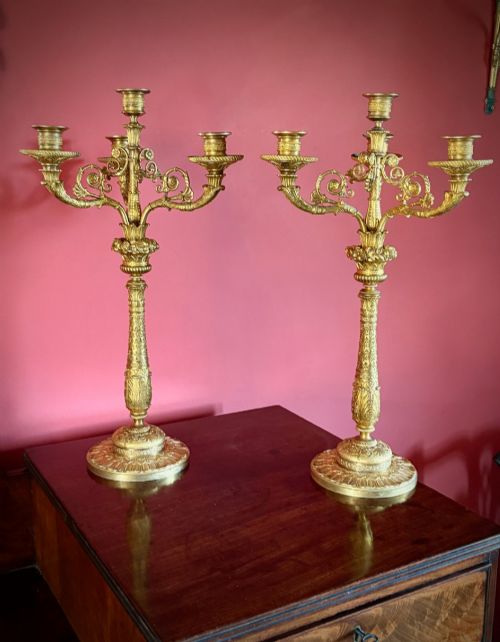
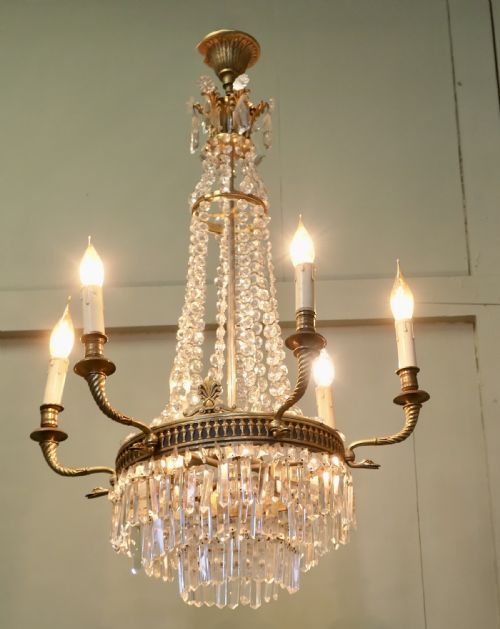
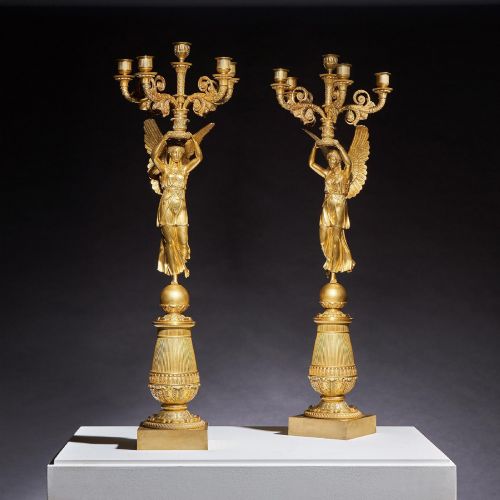
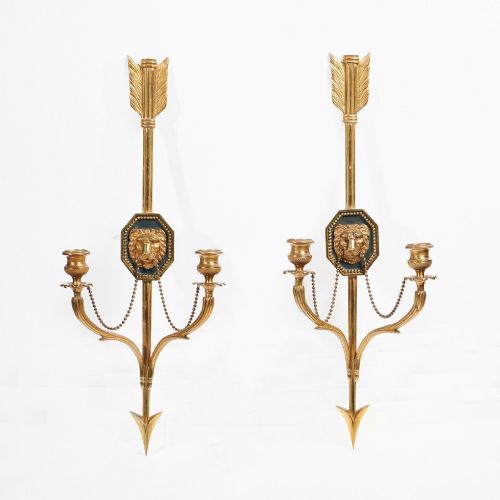
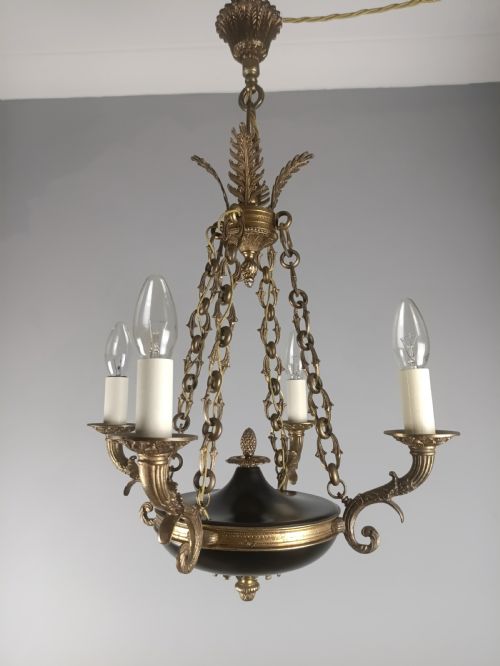
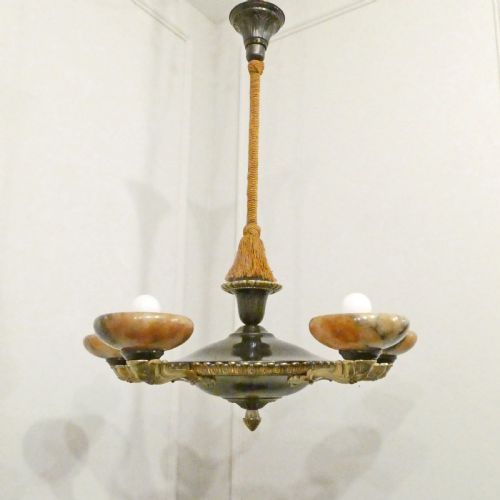
Candelabra and wall lights dominate the selection, often taking four or five branch forms, while chandeliers range from simple single-light baskets to large multi-branch tent and waterfall designs.
Materials and Technique
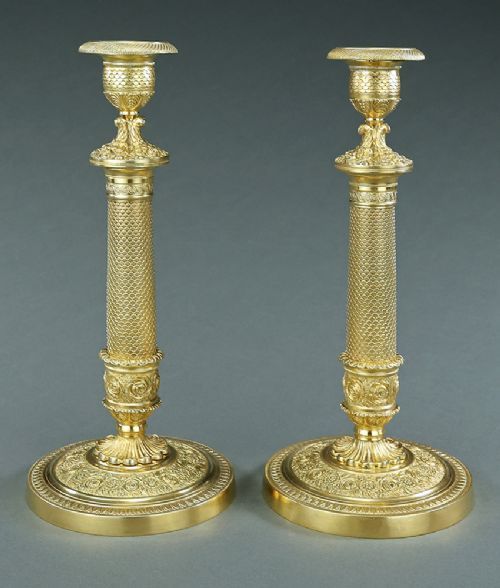
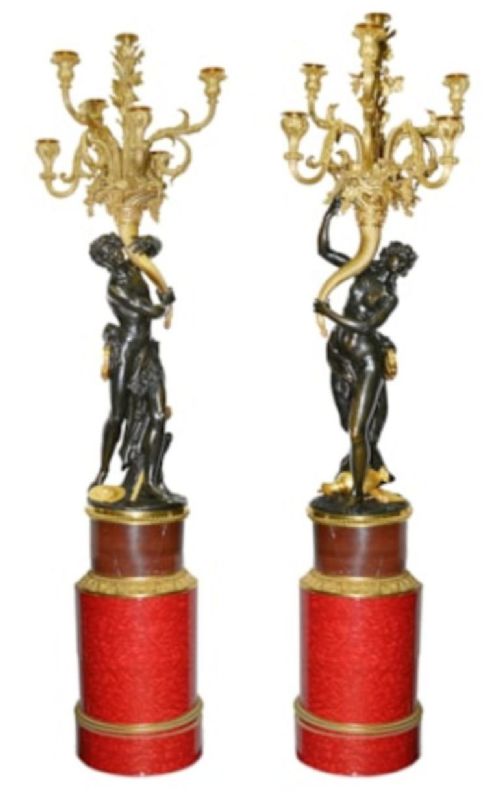
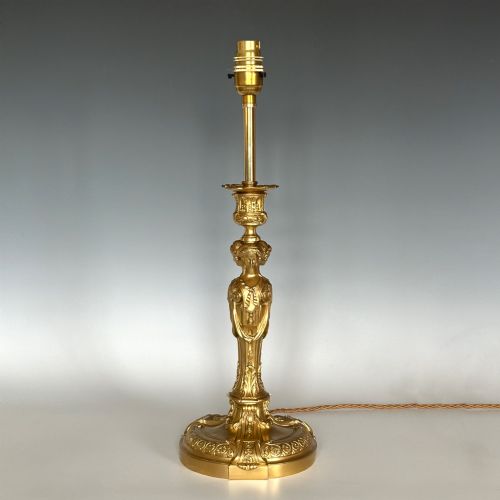
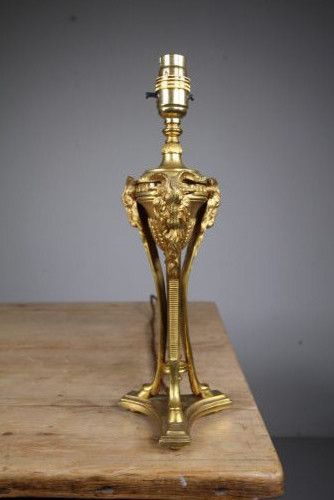
Foundries cast bronze and brass into classical shapes, utilising mercury gilding or ormolu to create a rich golden finish that contrasts with patinated dark bronze. Artisans frequently combined these metals with white marble, crystal glass, alabaster and rock elements.
Mounts and decorative details such as rams' heads, flaming torches and classical columns demonstrate meticulous chasing and assembly, often integrating cut glass drops and crystal beads on larger chandeliers.
Several pieces feature mermen and figures from classical mythology holding candle arms.
Execution and Detail
Quality rests in the crispness of the chasing and the depth of the gilding, where superior pieces retain a sharp, hand-finished definition in foliage and figural work. Softer contours and flat, uniform plating indicate more commercial production.
The integration of secondary materials such as sculpted marble bases and heavy cast mounts distinguishes ambitious commissions from standard workshop output.
Pierre Philippe Thomire
The Empire Style Bronze Lighting Glossary
- Ormolu
- A gilded bronze technique involving an amalgam of mercury and gold applied to a bronze base. The process produces a distinctive golden lustre characteristic of high-end classical lighting.
- Patinated bronze
- Bronze treated to achieve a darkened surface colour, providing a deliberate contrast to gilded or ormolu mounts. It is frequently seen on the bodies of figures and columns.
- Candelabra
- A branched lighting fixture designed to hold multiple candles, often adapted later for electricity. Pairs of these objects frequently anchor mantlepieces and sideboards.
- Applique
- A French term for a wall-mounted light fixture, synonymous with a wall sconce. These pieces project outward to cast light across a wall surface.
Empire Style Bronze Lighting: Frequently Asked Questions
How do I wire antique wall lights?
Most wall lights require professional rewiring by a qualified electrician to meet modern safety standards while preserving original fixings.
Wiring paths usually run through the central bracket or mounting plate to conceal modern cables.
Are these pieces converted from candles?
Many candelabra and chandeliers originated as candle holders and received electrification at later dates, often during the 20th century.
Conversions frequently retain original sockets and drip pans to maintain the historic silhouette.
How do I clean gilt bronze?
Gilt surfaces require only gentle dusting with a soft, dry brush to prevent the accumulation of dirt in recessed chasing.
Moisture and commercial metal polishes strip away thin layers of historical gilding and should be avoided entirely.
What is the difference between Empire and Regency?
Empire style originates from Napoleonic France, drawing heavily on Roman, Greek and Egyptian motifs with strict symmetry and rich ormolu mounts.
Regency style reflects the English parallel, sharing classical inspirations but incorporating local cabinet-making traditions and distinct regional proportions.