



Ormolu Ladies Writing Table
An ormolu ladies writing table brings together delicate timbers and gilt bronze mounts to create a refined workspace.
Ormolu Ladies Writing Table
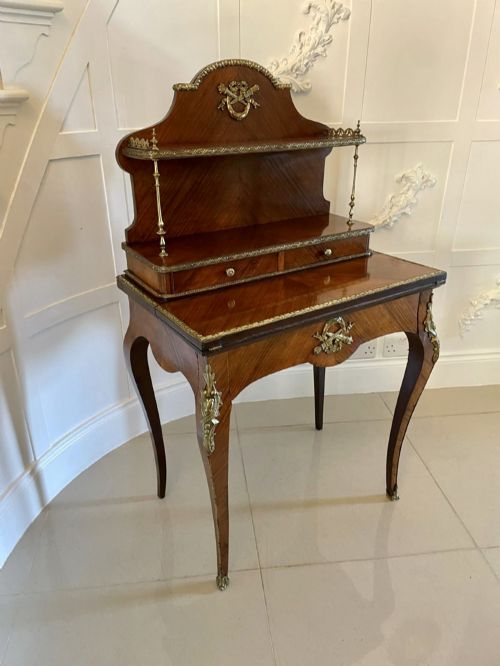
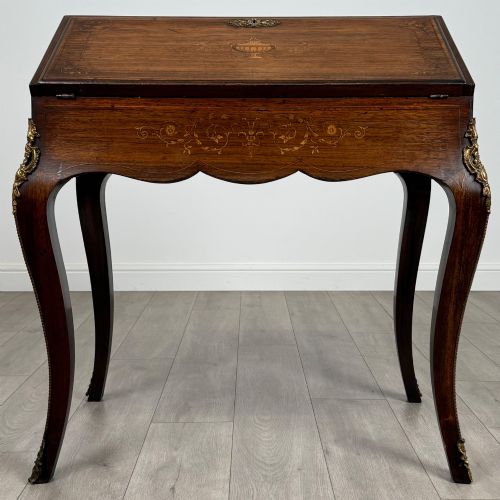
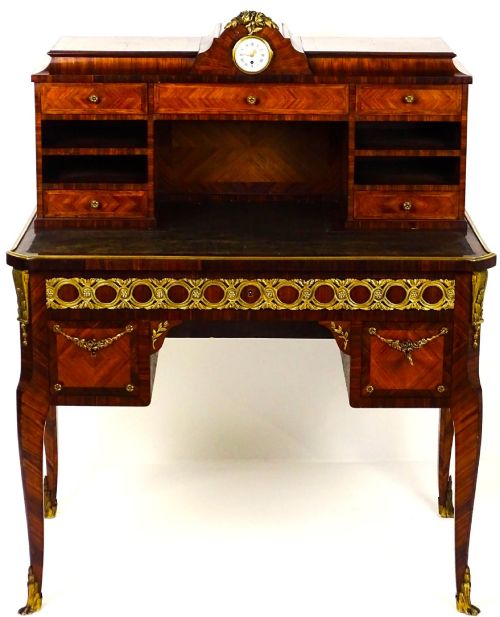
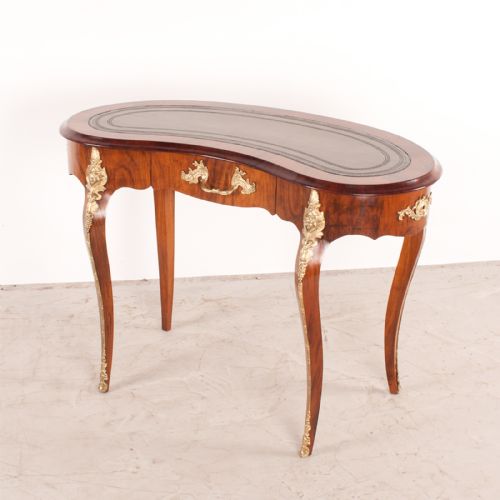
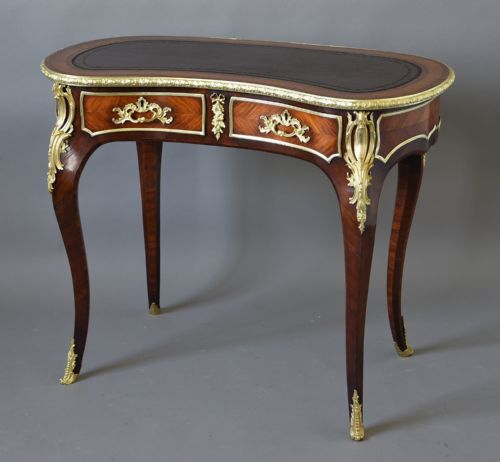
An ormolu ladies writing table is a compact writing desk designed for private correspondence, frequently taking the form of a bonheur du jour, bureau de dame, or kidney-shaped table. These pieces emerge predominantly from the nineteenth century, spanning Victorian Britain and continental French workshops, often adopting Louis XV or Louis XVI revival styles.
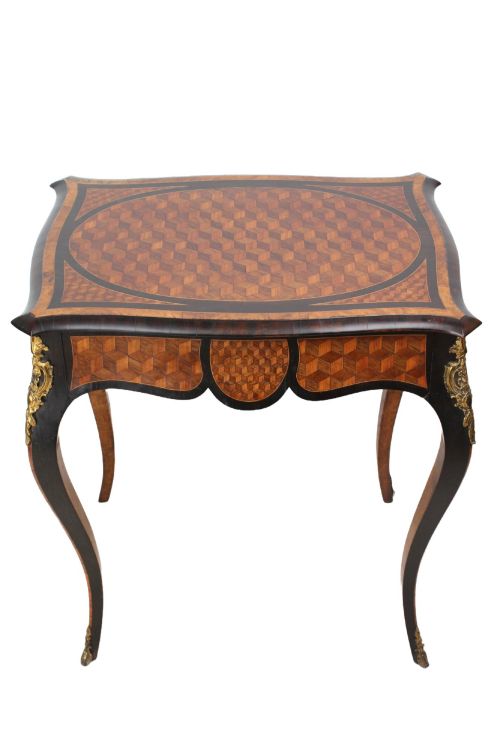
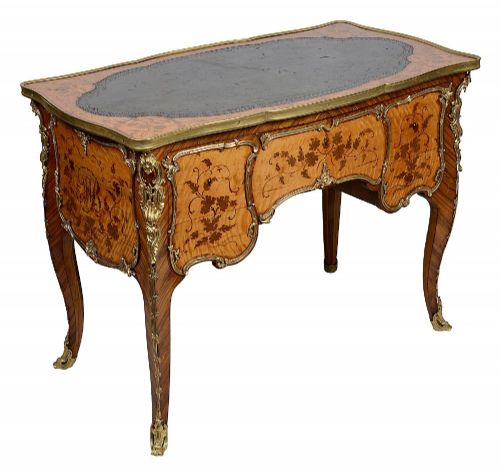
The form encompasses freestanding desks, writing cabinets, and shaped tables equipped with surface inlays and decorative metal mounts. Walnut, kingwood, rosewood, and satinwood form the core wooden structures, complemented by intricate marquetry and parquetry patterns.
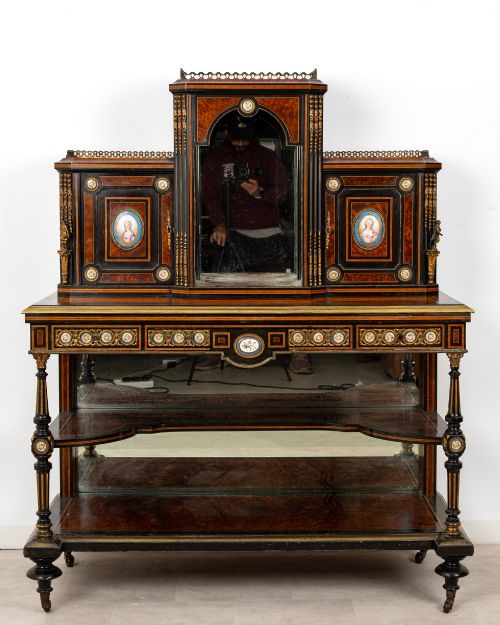
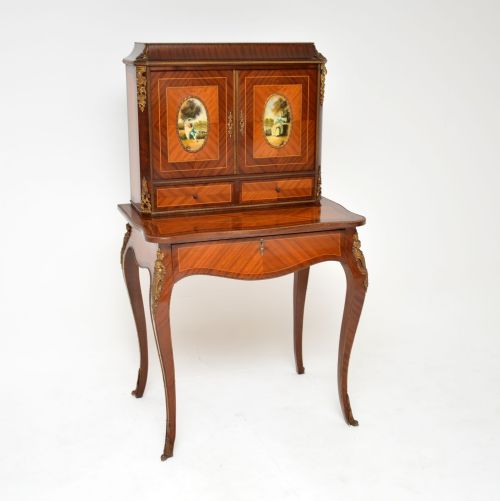
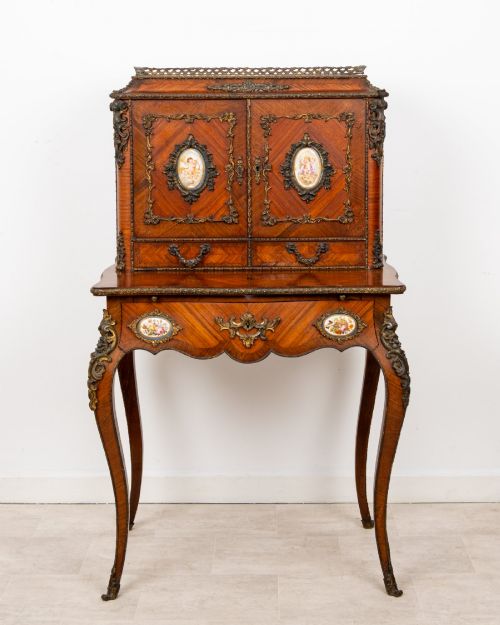
Buyers encountering this phrase find examples ranging from English walnut kidneyshaped tables to elaborate French kingwood cabinets fitted with porcelain plaques. The defining characteristic across these variations remains the union of fine timber with cast ormolu details.
How they were made
Cabinetmakers constructed these desks using dense hardwood carcases of walnut, kingwood, rosewood, or tulipwood, veneered with carefully selected figured timber sections and parquetry or marquetry designs. Writing surfaces frequently incorporated inset leather panels bordered by gilt tooling.
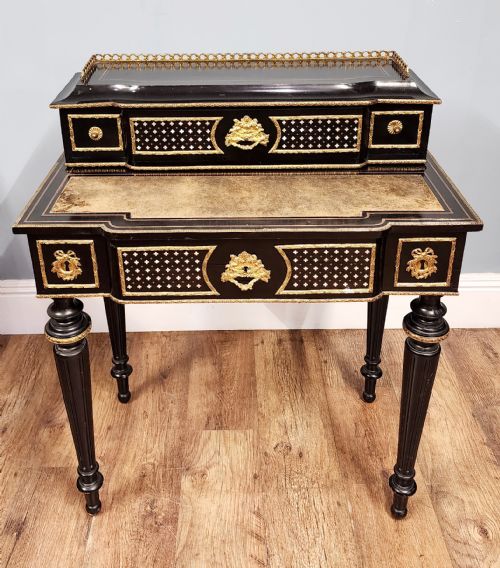
Ormolu mounts, cast in bronze and subsequently gilded, were shaped to accentuate the curves of cabriole legs, desk rims, and drawer fronts, fixed securely with brass screws or pins.
Selected pieces integrated painted porcelain plaques or Vernis Martin panels into the superstructures, requiring precise joinery to house fragile ceramic and glass elements within the wooden framework.
Listings feature nineteenth-century periods, including Victorian, 1860, 1880, and Napoleon III eras.
What varies in quality
The standard of an ormolu ladies writing table rests on the crispness of the bronze casting and the depth of its gilding, where sharper chased details distinguish superior mounts from softer commercial reproductions. Timber selection dictates value, with figured kingwood, amboyna, and burr walnut requiring expert matching across curved surfaces.
Internal construction, including dovetailed drawer boxes and the retention of original brass hardware or fitted stationery compartments, separates workshop pieces from mass-produced items.
The integration of decorative additions, such as Sevres-style porcelain plaques or hand-painted panels, defines the upper tier of design complexity within surviving nineteenth-century examples.
JAS Shoolbred·Paul Sormani
The Ormolu Ladies Writing Table Glossary
- Ormolu
- Gilt bronze mounts applied to furniture for decorative effect. The technique involves coating cast bronze with gold amalgam.
- Bonheur du jour
- A small light ladies writing desk featuring a raised cabinet or super-structure with shelves, drawers, or cupboards above the writing surface.
- Marquetry
- Decorative veneer patterns formed by fitting together contrasting pieces of wood, shell, or ivory into a wooden ground.
- Bureau de dame
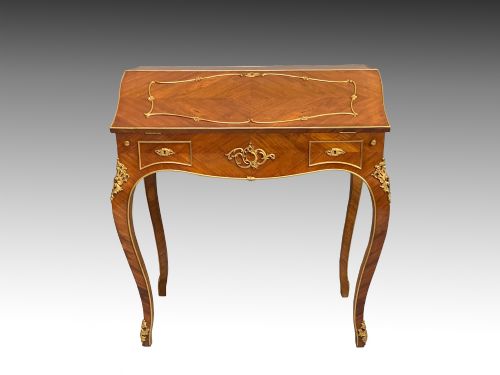
- A feminine slope-front desk or writing cabinet popular in French-influenced nineteenth-century interiors.
- Parquetry
- Geometric wood-mosaic work used for flooring or furniture surfaces, creating repeating triangular, square, or diamond patterns.
- Vernis Martin
- A type of simulated Japanese lacquer developed in eighteenth-century France, known for its translucent and polished finish.
Ormolu Ladies Writing Table: Frequently Asked Questions
What is a bonheur du jour?
A bonheur du jour is a small ladies writing desk featuring a tiered cabinet or super-structure fitted with compartments above the main writing surface.
These pieces were designed for light correspondence and display in private sitting rooms rather than formal libraries.
How do I identify French revival styles?
French revival styles on these desks are identified through characteristic cabriole legs, serpentine outlines, and extensive use of floral marquetry.
Craftsmen drew inspiration from eighteenth-century court furniture during the Victorian and Napoleon III periods to recreate these decorative forms.
Were these desks used for daily writing?
These tables served primarily for personal letter writing, keeping journals, and managing private household accounts.
The inclusion of small drawers and pigeonholes allowed owners to store stationery, inkwells, and correspondence securely.
What timbers were commonly used?
Cabinetmakers utilised exotic and native hardwoods including kingwood, walnut, rosewood, satinwood, and tulipwood for both structural frames and decorative veneers.
Burr walnut and amboyna were frequently chosen for their distinct natural grain patterns on tabletops and writing flaps.