

Ormolu Glazed Vitrine
An ormolu glazed vitrine brings together fine cabinet timbers, glass panes, and cast gilt mounts to display treasured objects.
Ormolu Glazed Vitrine
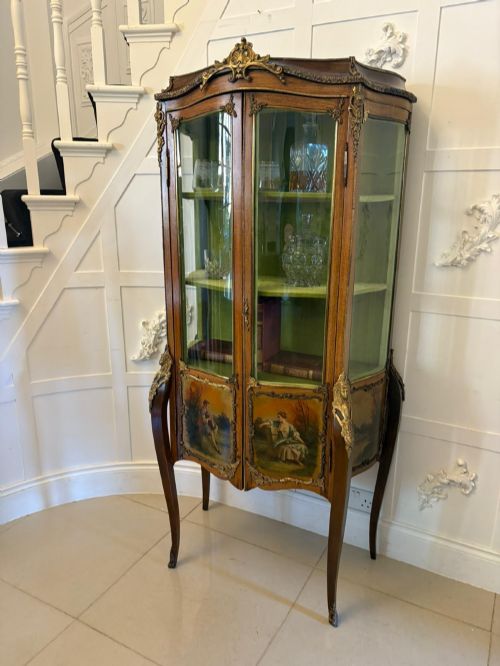
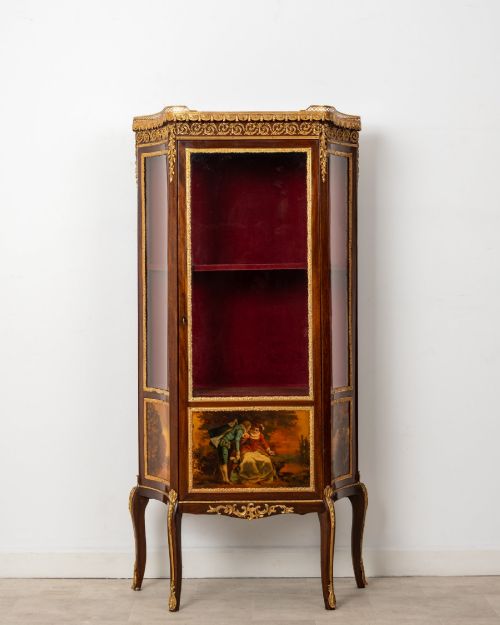
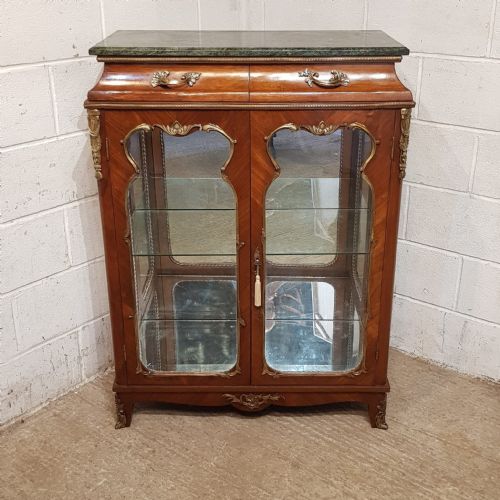
An ormolu glazed vitrine functions primarily as a display cabinet for fragile ornaments and porcelain, combining transparent glass panels with decorative woodwork. These pieces appear frequently in nineteenth-century French and Victorian forms, drawing heavily on Louis XV and Louis XVI Revival aesthetics.
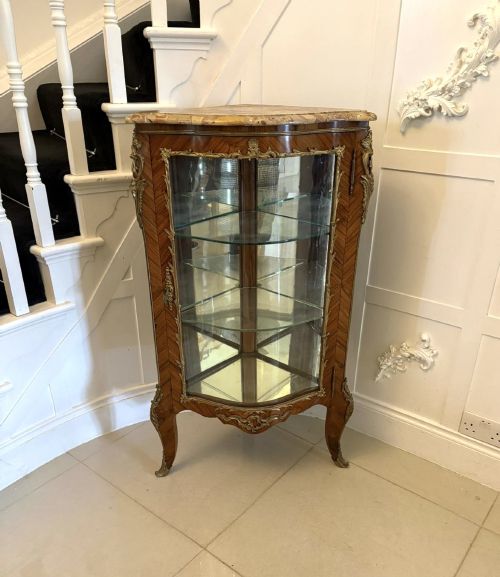
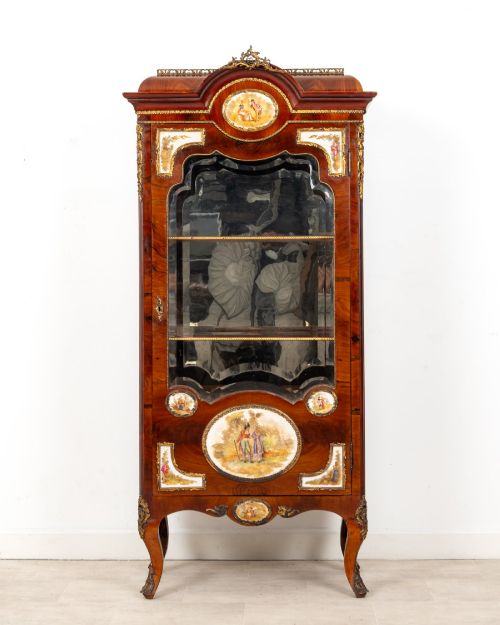
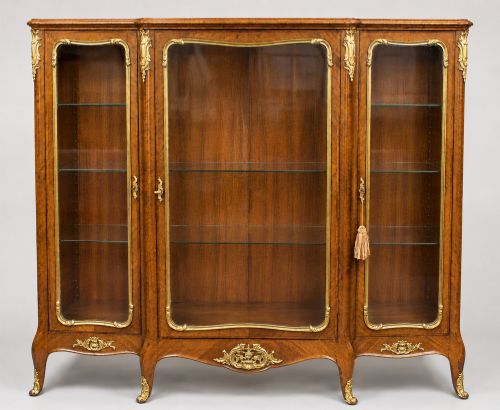
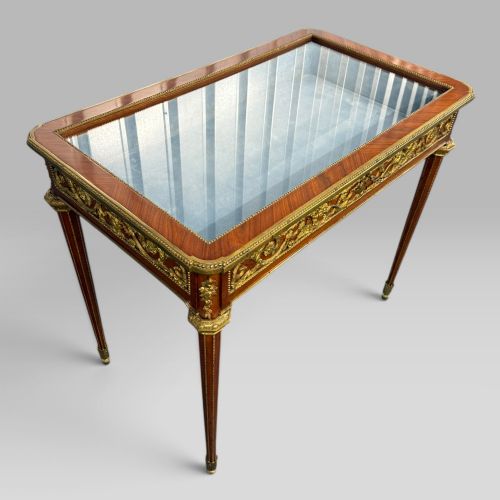
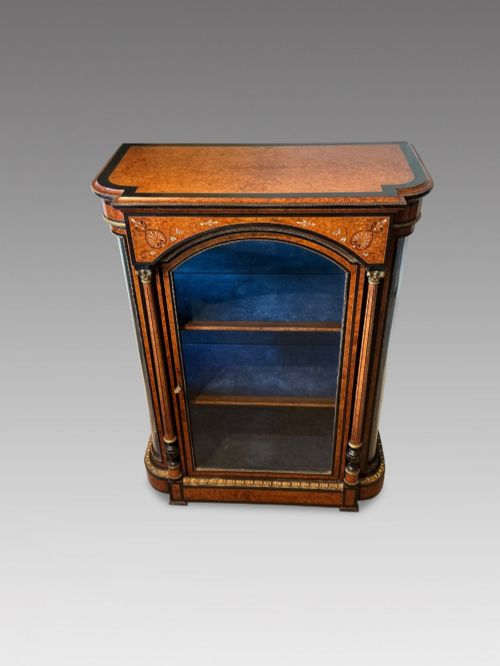
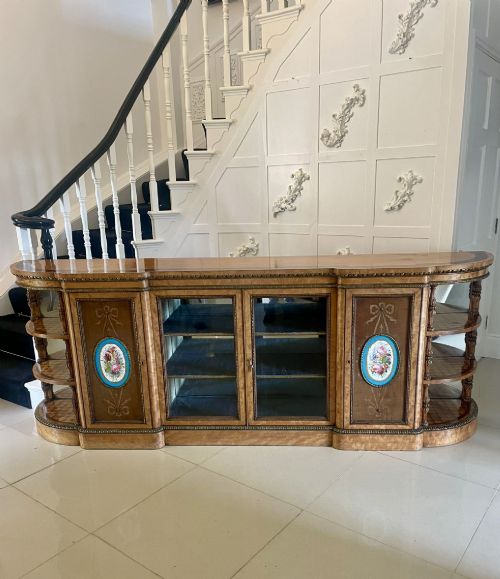
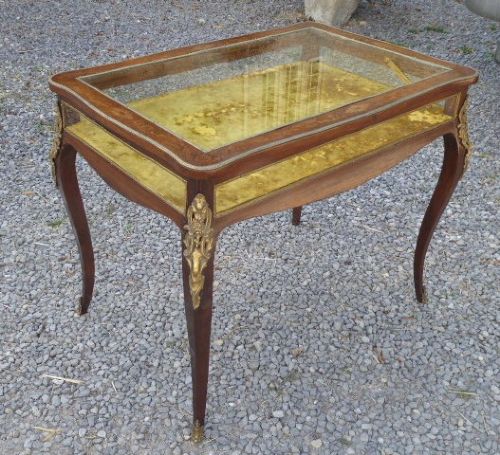
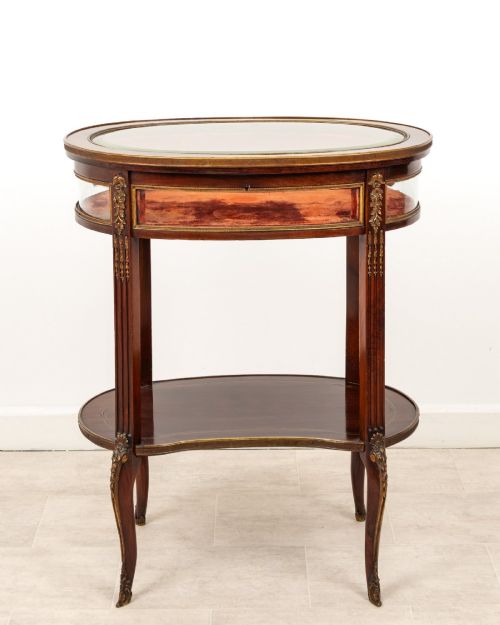
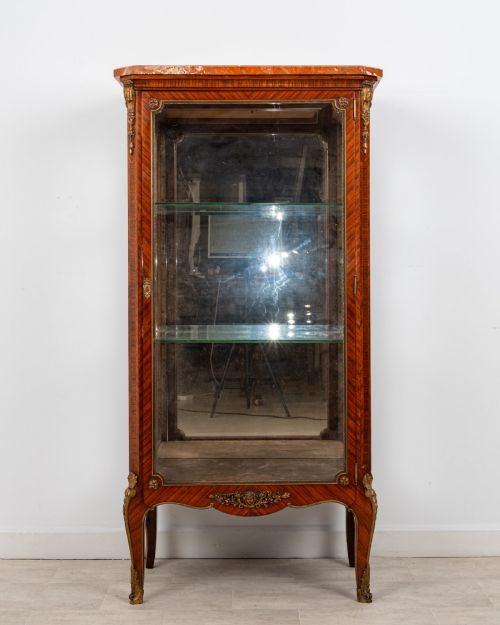
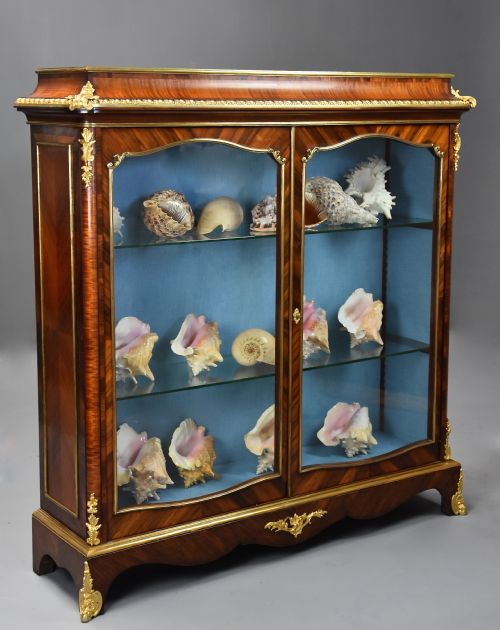
Makers constructed these cabinets in various formats, ranging from serpentine corner units and freestanding vitrines to table-top bijouterie pieces and large credenzas. The primary purpose remains the curation and protection of small collections within a domestic interior.
How they were made
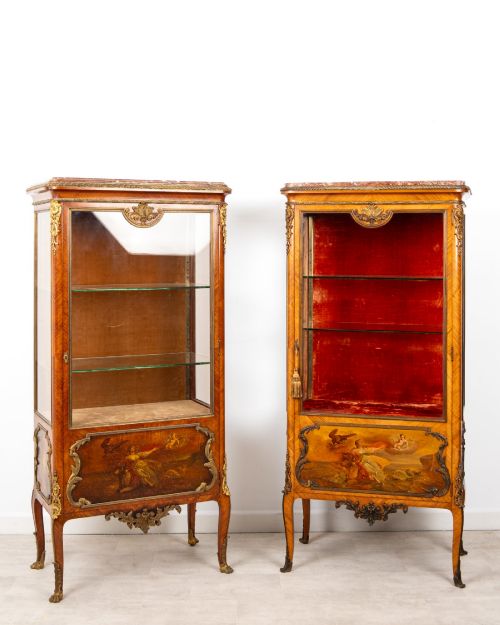
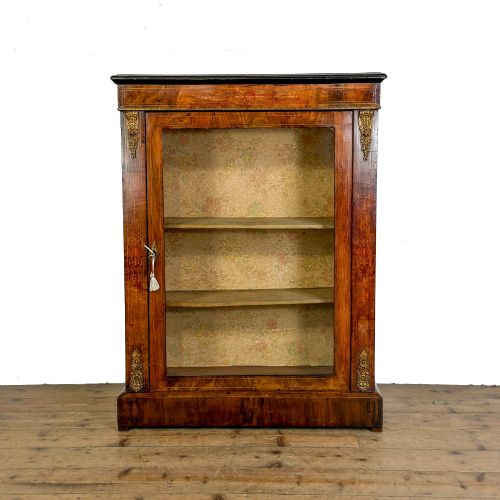
Craftsmen built carcass structures using hardwoods such as mahogany, walnut, and kingwood, frequently applying elaborate veneers and marquetry patterns. Marble tops and velvet-lined interiors appear regularly across the French and Victorian pieces recorded here.
Gilt bronze or ormolu mounts provide decorative framing along edges and feet, complemented by glazed doors and side panels that allow maximum light to reach the interior shelves.
Listings feature eighteenth and nineteenth-century revival styles, predominantly French Louis XV and Louis XVI designs executed in kingwood, mahogany, and walnut.
What varies in quality
The refinement of the cast ormolu mounts separates standard cabinet work from exceptional examples, where chased detailing and weight indicate superior foundry output. Cabinetmakers who achieved crisper marquetry patterns and more complex serpentine contours produced pieces that command greater appreciation.
The choice of timber veneers, the smoothness of the glass, and the integration of painted Vernis Martin panels or porcelain plaques also distinguish the execution of individual vitrines.
François Linke·Paul Sormani
The Ormolu Glazed Vitrine Glossary
- Ormolu
- Gilded bronze ornamentation applied to furniture. This technique involves coating bronze elements with a mercury and gold amalgam before firing.
- Vitrine
- A glass-fronted cabinet designed for displaying objects. These display pieces often feature glazed sides to illuminate the interior contents.
- Vernis Martin
- A type of decorative lacquer developed in France. Artisans applied multiple layers of varnish to imitate Asian lacquer work, often incorporating painted scenes.
- Boulle
- A form of marquetry employing brass and tortoiseshell. Named after French cabinetmaker André-Charles Boulle, it creates intricate contrasting surface patterns.
Ormolu Glazed Vitrine: Frequently Asked Questions
Where should I place an ormolu glazed vitrine?
These cabinets suit reception rooms and drawing rooms where natural light can pass through the glass panels to illuminate the interior shelves. Positioning them away from direct sunlight protects both the polished wood surfaces and any textiles inside.
Sufficient floor space is necessary to allow the doors to open fully without obstruction, particularly with serpentine or corner models.
How do I clean the ormolu mounts?
Maintenance requires only a soft, dry cloth to remove dust from the gilt bronze surfaces. Moisture and abrasive chemical cleaners can damage the historic gilding.
Professional restoration is advisable if tarnishing or surface grime becomes heavy over decades.
What items can I display inside?
Interior shelves accommodate porcelain figures, small glassware, silver pieces, and miniature collectibles. The velvet-lined bases cushion delicate items against hard impacts.
Overloading the shelves risks bowing the timber and straining the internal supports.
How do I distinguish French revival styles?
Louis XV Revival pieces display asymmetric curves, naturalistic floral ormolu mounts, and bombe shaping. Louis XVI Revival examples introduce straighter lines, symmetrical neoclassical motifs, and fluted columns.
Comparing the mount quality and timber choice helps identify the specific period influence.