
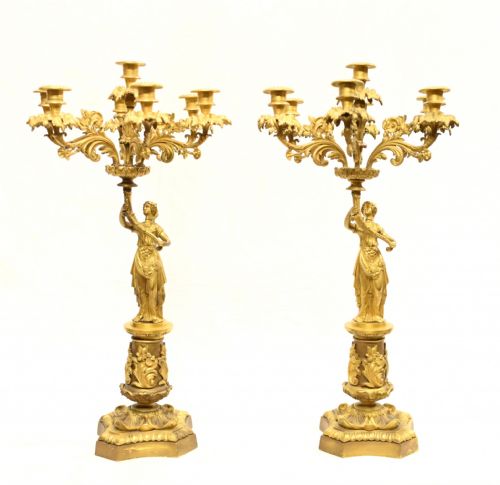


Ormolu Figural Candelabra
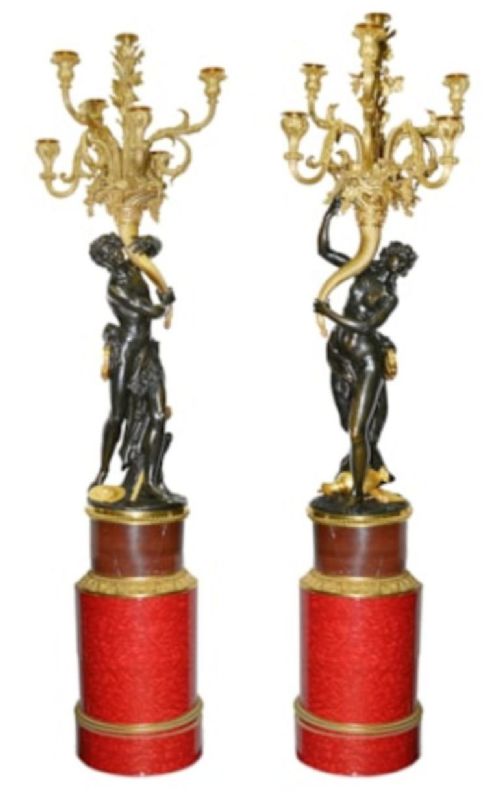
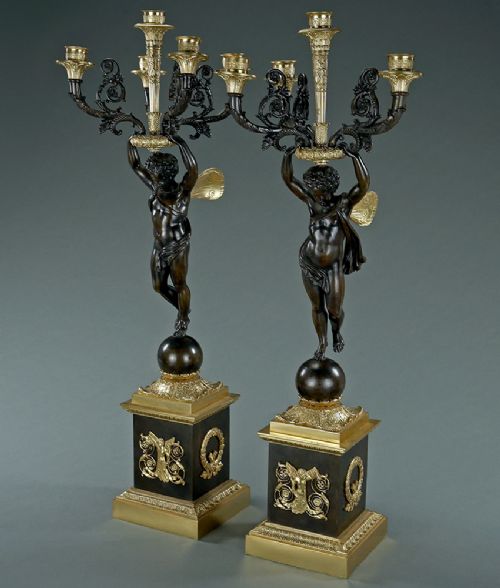
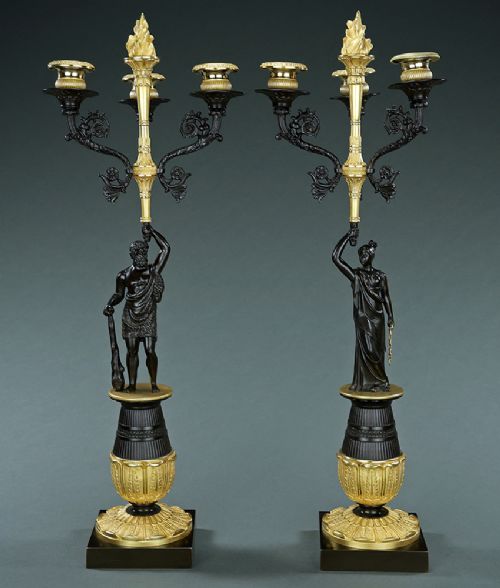
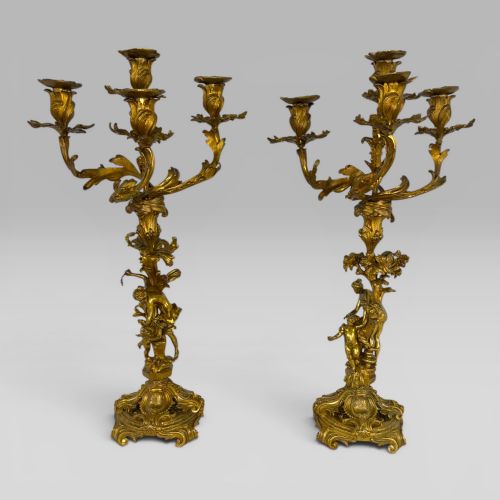
These ormolu figural candelabra bring undeniable nineteenth-century presence to a mantelpiece, combining gilt bronze figures with functional branched light.
Ormolu Figural Candelabra
When you search for ormolu figural candelabra, you encounter grand nineteenth-century French lighting designed to anchor a room with sculptural presence. The pieces listed here span the nineteenth century, including specific dates such as 1860 and 1880, alongside broader nineteenth-century attributions.
You will most commonly meet pairs, from monumental pairs to mantel clock sets that incorporate candelabra alongside central horological elements. The forms range from classical cherubs and maidens to Hercules and Hesione, Egyptian figures, and 'Au Bon Sauvage' lustre candlesticks.
Stylistically, these items draw heavily upon French Empire, Louis XVI, and Rococo revivals, alongside Egyptian and Renaissance revival movements. They function primarily as decorative focal points that double as candleholders, reflecting the nineteenth-century taste for historicism and lavish interior ornamentation.
How they were made
The makers of these candelabra relied primarily on cast bronze, applying mercury gilding to create the characteristic bright ormolu surface alongside contrasting patinated bronze elements. This combination of gilt and dark patination gives the figural components their depth and visual distinction.
Many examples incorporate carved bases or decorative plinths in white or coloured marble, onyx, and occasionally cut crystal or enamel details. These mixed media constructions required the collaborative skills of bronze founders, chasers, and lapidaries to assemble the complex multi-branched structures.
Some nineteenth-century makers could not resist mixing mythologies, pairing cherubs with Egyptian revival motifs and Rococo scrolls on a single branch.
What varies in quality
The distinction between ordinary and exceptional candelabra lies chiefly in the crispness of the bronze chasing and the depth of the mercury gilding. Superior examples exhibit finely articulated facial expressions, hair, and drapery on the figures, whereas lesser pieces display softer, more generalised casting details.
The integration of materials also determines the standing of a piece, particularly the quality of the marble bases and the weight of the bronze components. Heavier castings with secure, well-fitted joinery across the detachable branches command greater appreciation than lighter, more loosely assembled counterparts.
The Ormolu Figural Candelabra Glossary
- Ormolu
- Gilded bronze, produced by applying a mercury and gold amalgam to a bronze base and heating it until the mercury evaporates. This technique creates a durable, golden surface characteristic of fine nineteenth-century French metalwork.
- Patinated bronze
- Bronze treated with chemical solutions to produce a dark, uniform surface colour. It provides a striking visual contrast to the bright gilt ormolu figures.
- Grand Tour
- The nineteenth-century practice where wealthy travellers collected classical antiquities and souvenirs across Europe. Pieces from this context often incorporate Egyptian or classical revival motifs.
- Lustre
- A type of candlestick or candelabra fitted with glass pendants or prisms that refract candlelight. These elements enhance the visual sparkle of the piece when illuminated.
Ormolu Figural Candelabra: Frequently Asked Questions
Are these candelabra wired for electricity?
Most nineteenth-century examples survive in their original form designed specifically for wax candles. Conversions to electricity do occur, but many collectors prefer untouched examples that retain their original drip pans and socket configurations.
If you choose to use candles, ensure the pieces stand on a stable, heat-resistant surface away from draughts. Drip pans catch melted wax and protect the delicate ormolu and marble components below.
How do I distinguish Louis XVI style from Empire?
Louis XVI style candelabra generally feature neoclassical restraint, incorporating ribbons, urns, cherubs, and symmetrical scrollwork derived from eighteenth-century French design. The overall aesthetic feels lighter and more classically proportioned.
French Empire pieces, by contrast, display heavier military, heroic, or Egyptian motifs inspired by Napoleonic campaigns. Figures like Hercules or classical maidens often appear alongside bolder geometric mounts and darker patinated bronze bodies.
Where should I place a pair in my home?
These large candelabra naturally suit prominent locations such as mantelpieces, console tables, or large sideboards where their height and sculptural detail can be appreciated from a distance. Pairing them with a central mirror or mantel clock creates a traditional decorative symmetry.
Keep them away from direct sunlight and excessive humidity to protect the integrity of the marble, onyx, and gilded surfaces over time.