
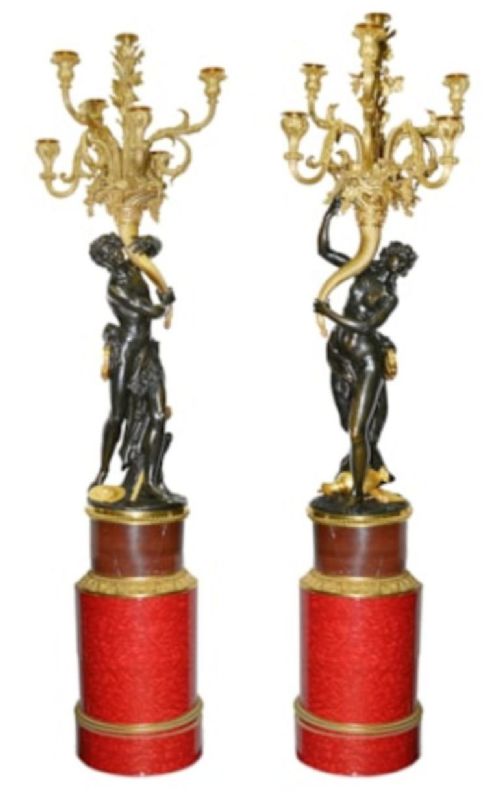
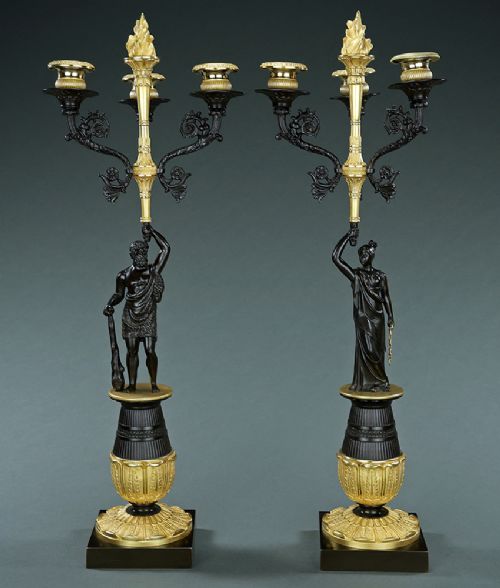


Classical Figural Candelabra
Classical figural candelabra are sculptural metal light fittings depicting figures that bring architectural presence and soft illumination to a room.
Classical Figural Candelabra
Classical figural candelabra combine sculptural human or mythological subjects with candle branches, creating functional pieces that also serve as prominent decorative objects. The examples encountered here span the Regency and 19th Century periods, incorporating French Empire, Neoclassical, and Louis XVI styles.
Most pieces on this page take the form of paired candelabra, torcheres, or figural lamps featuring cherubs, putti, and classical figures like Hercules and Hesione. These objects typically stand upon marble, onyx, or china bases, uniting metalwork with substantial stone or ceramic plinths.
How they were made
The primary metals utilised in these pieces are bronze and brass, frequently finished with patination, parcel gilding, or full gilt bronze treatments to create contrasting surface textures. Artisans combined these cast metal components with turned and polished bases of marble or onyx.
Makers integrated glass elements and china bases into specific designs, employing metal-casting and stone-working techniques standard to nineteenth-century workshops in France and Britain.
Object types span candelabra, table lamps, torcheres, mantel clocks, and floor lamps.
What varies in quality
Quality in these figural pieces rests upon the crispness of the bronze casting and the nuance of the hand-finishing, where sharper facial expressions and detailed drapery distinguish finer examples. The selection of materials also dictates the tier, with dense marbles and heavy patinated bronze creating a more substantial presence than lighter alloys or simpler china bases.
The integration of the figural sculpture with the structural candle branches or lamp fittings shows varying degrees of sculptural ambition, ranging from straightforward decorative pairs to large compositions by known artists.
Humphrey Hopper·François Christophe Armand Toussaint
The Classical Figural Candelabra Glossary
- Patinated bronze
- Bronze that has been chemically treated to produce a darkened surface colour, which highlights the underlying chased details of the sculpture.
- Gilt bronze
- Bronze coated with a thin layer of gold, providing a bright reflective finish that was characteristic of luxury French metalwork.
- Torchere
- A tall ornamental stand or candelabrum designed to hold a light source, often taking a figural form in the classical repertoire.
- Putto
- A plump, naked male child figure frequently depicted in classical art, commonly appearing on nineteenth-century candelabra and lamps.
Classical Figural Candelabra: Frequently Asked Questions
What periods do these candelabra come from?
The listings on this page originate predominantly from the nineteenth century, including specific items attributed to the Regency period and the 1880s.
Later examples extend into the early twentieth century around 1910 and 1920, maintaining classical figural motifs across these decades.
Are these candelabra wired for electricity?
Some pieces on this page are designated as lamps or torchere lamps, indicating they were adapted or constructed for electrical use.
Others remain configured as traditional candle holders or candelabra, holding multiple candles rather than bulbs.
What materials support these metal figures?
The figural bronze and brass sculptures are typically mounted upon solid plinths made of marble or onyx.
Certain pieces utilise alternative foundations, including china bases or glass elements that complement the metalwork.
Which design styles appear most often?
French styles dominate the selection, featuring Louis XVI style, French Empire, Neoclassical, and French Rococo Revival designs.
English Regency pieces also feature, alongside French Neo-Grec and general mid-nineteenth-century French aesthetics.