
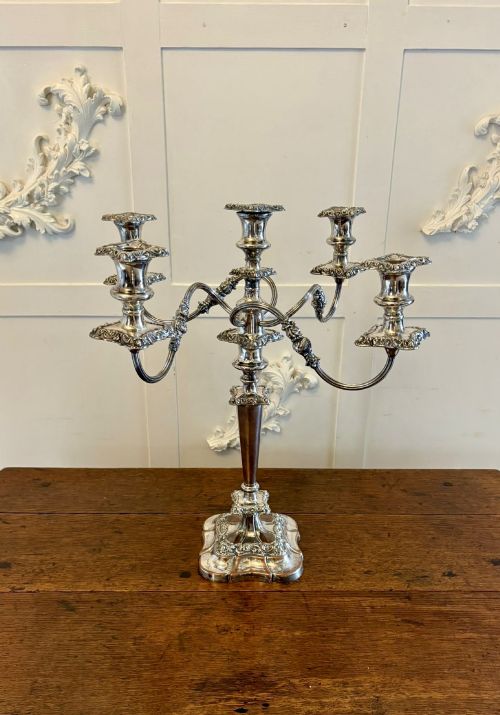
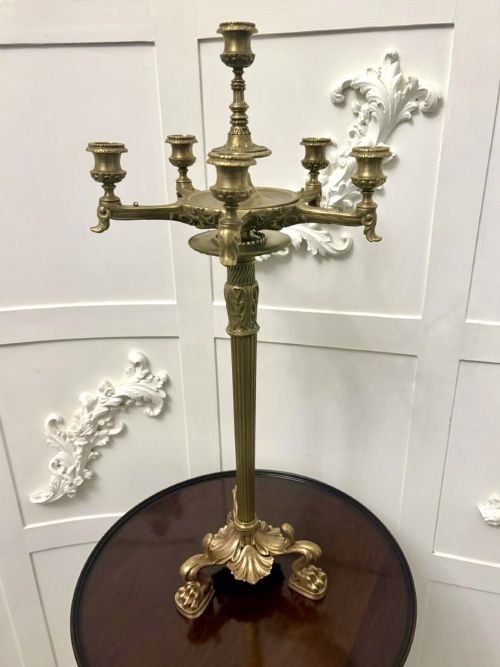
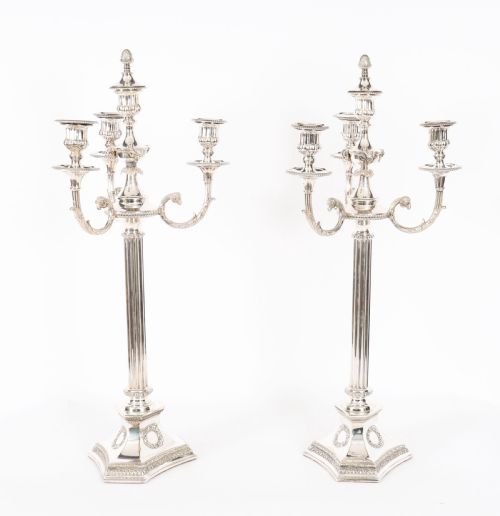
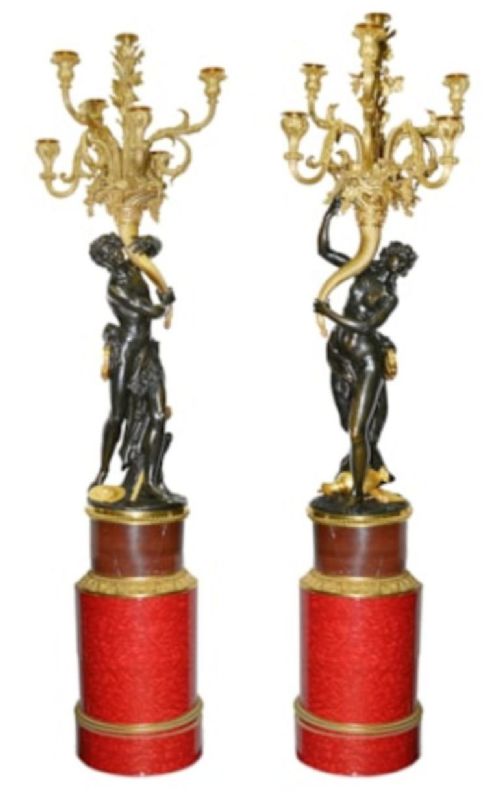

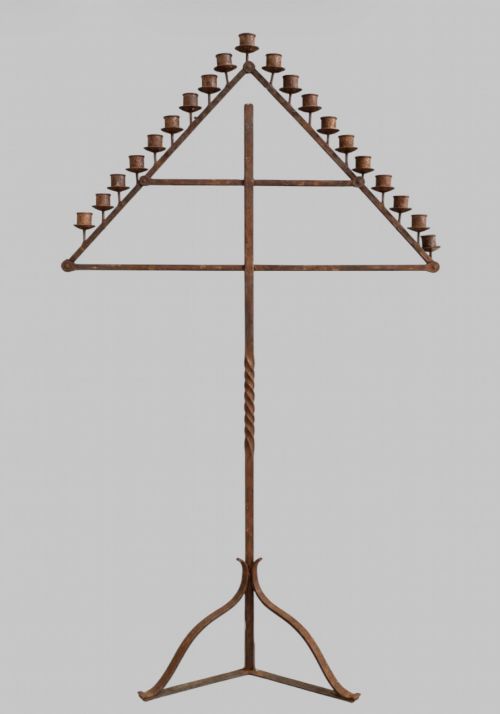


Large Candelabra
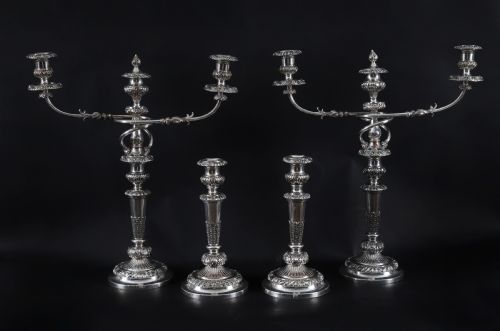
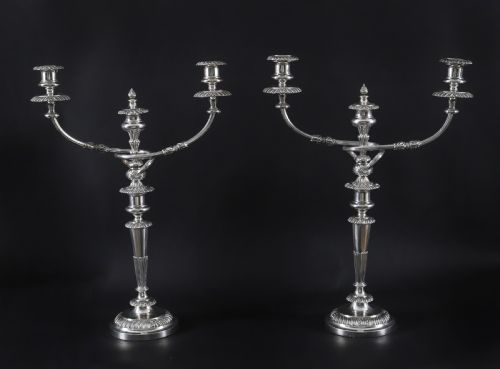
Large antique candelabra bring undeniable presence to a dining table or mantelpiece, offering multiple candle arms shaped through centuries of metalwork.
Large Candelabra
When searching for large antique candelabra, buyers encounter substantial multi-branched lighting pieces designed to hold several candles simultaneously. These objects originate predominantly from the nineteenth century, reflecting periods such as the Victorian era and French Empire styles.
The selections on this page commonly appear as paired sets, often cast in bronze, brass, or silver plate. Alongside standard candelabra forms, the inventory includes related table pieces such as clock garniture sets and architectural floor stands.
How they were made
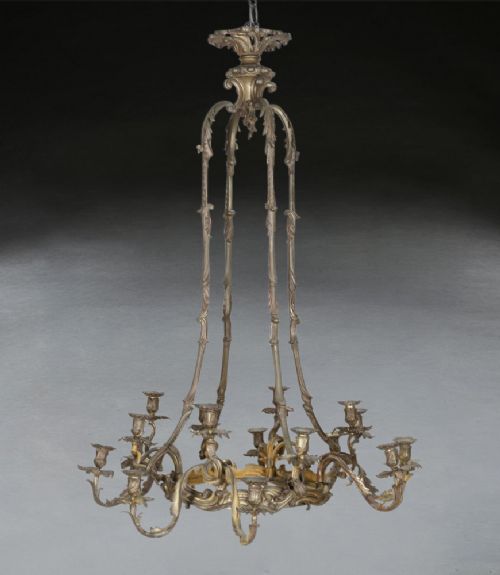
Foundry workers utilised bronze, brass, and ormolu through traditional casting methods, often combining gilt and patinated finishes to create textural contrast. Silver-plated and Sheffield plate items involve fusing silver layers onto base metals, whilst porcelain, marble, and crystal drops frequently augment the metal structures.
Many French and English workshops employed skilled chasers to hand-finish the cast details, ensuring intricate scrollwork, cherubs, and acanthus leaves appeared crisp before final assembly.
Listings feature eighteenth and nineteenth-century pieces alongside mid-twentieth-century silver-plated items, utilising materials from marble and crystal to wrought iron.
What varies in quality
The distinction between standard examples and superior pieces rests largely on the crispness of the casting and the depth of the hand-chasing applied to the metal surfaces. Higher quality items display sharply rendered figural elements, balanced proportions across multiple candle arms, and secure structural joins.
Secondary factors include the richness of the gilding, the retention of original components such as detachable sconces, and the harmonious integration of auxiliary materials like marble bases or cut glass drops.
Matthew Boulton·Elkington·Mappin & Webb·Walker & Hall·Japy Freres·Samuel Marti·Raingo Fres
The Large Candelabra Glossary
- Candelabra
- A branched candlestick holder designed to support multiple candles from a single base. These pieces often feature removable top sections for easier cleaning.
- Ormolu
- Finely ground high-carat gold applied to a bronze base using a mercury amalgamation technique, common in French decorative arts. This finish provides a warm, enduring golden lustre.
- Sconce
- The small pan or cup at the top of a candle arm that catches melting wax. Detachable versions simplify the maintenance of larger table pieces.
- Garniture set
- A coordinated group of ornamental objects, typically comprising a central mantel clock flanked by matching candelabra or vases. These suites created symmetrical focal points on nineteenth-century mantelpieces.
- Patinated bronze
- Bronze that has been chemically treated to produce a dark, weathered surface tone. This technique highlights brighter gilt elements placed nearby.
Large Candelabra: Frequently Asked Questions
How do I clean large antique candelabra?
Dust metal surfaces gently with a soft, dry microfibre cloth to remove everyday particles without disturbing the finish. Avoid commercial chemical dips or abrasive polishes, which can strip away thin layers of silver plate or antique gilding.
For pieces with crystal drops or porcelain inserts, wipe those specific areas with a damp cloth while keeping moisture away from joined metal parts. Regular, gentle maintenance preserves the original patination far better than aggressive cleaning.
Were these originally electrified?
Almost all pieces listed under this search phrase were originally designed exclusively for wax candles. Workshops built them with hollow stems and removable sconces to handle melted wax rather than wiring.
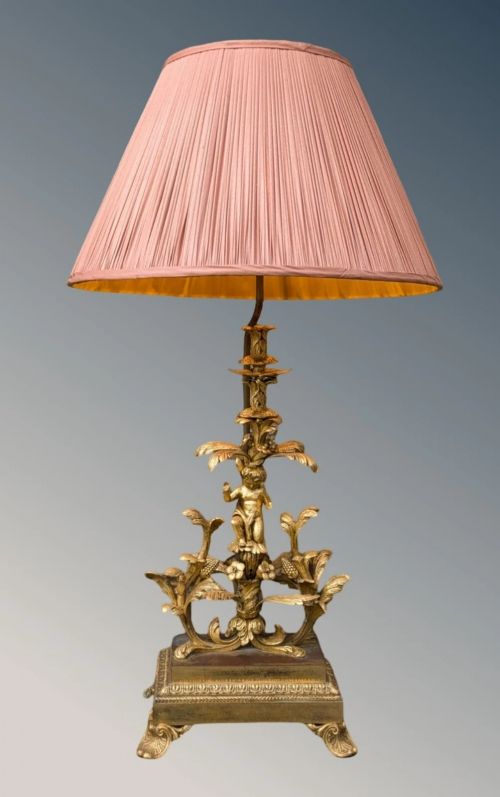
Over subsequent decades, owners occasionally converted individual examples into electric lamps or table fixtures. Check the wiring history of any candidate piece if original candle use is a priority for your interior.
Can I mix matched pairs on a table?
Pairing distinct candelabra together on a large dining table requires careful attention to scale, metal tone, and period style. Mismatched heights can disrupt the visual balance of a formal setting.
Sticking to matched sets originating from the same workshop ensures uniform casting quality and harmonious proportions across the display space.
How do I identify French Empire style?
French Empire pieces typically exhibit neoclassical motifs, including architectural columns, laurel wreaths, and classical figures. The metals often combine dark patinated bronze with bright ormolu highlights to create strong visual contrast.
This aesthetic, popular during the early nineteenth century, emphasises military and classical authority through rigorous symmetry and clean geometric lines.