

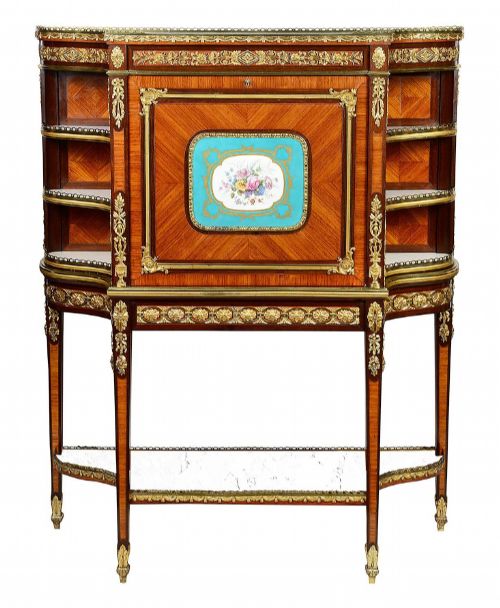


Ormolu Fall Front Desk
An ormolu fall front desk brings magnificent French revival style and practical writing space into a room through rich timber and gilded mounts.
Ormolu Fall Front Desk
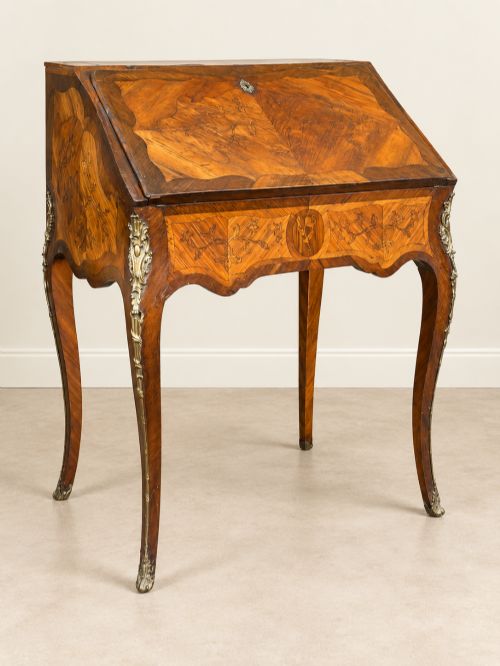
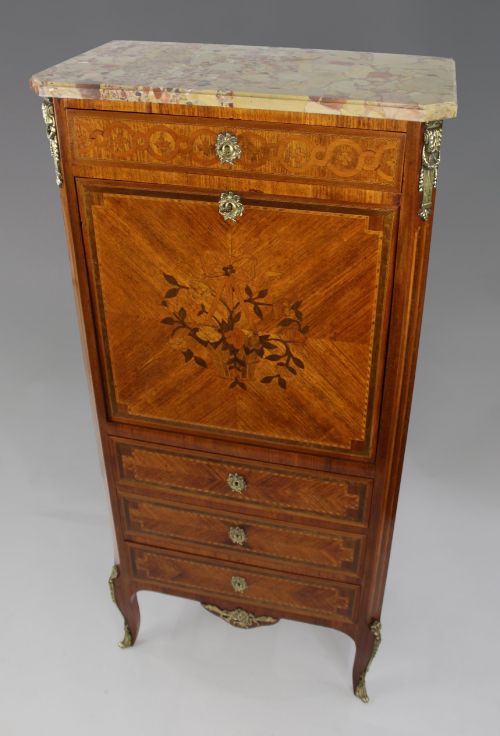
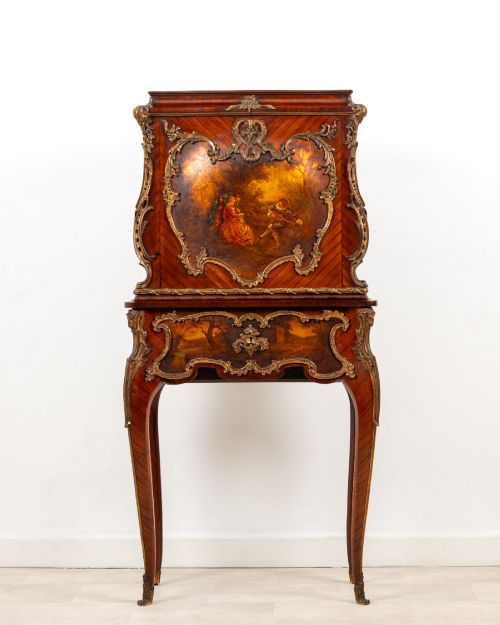
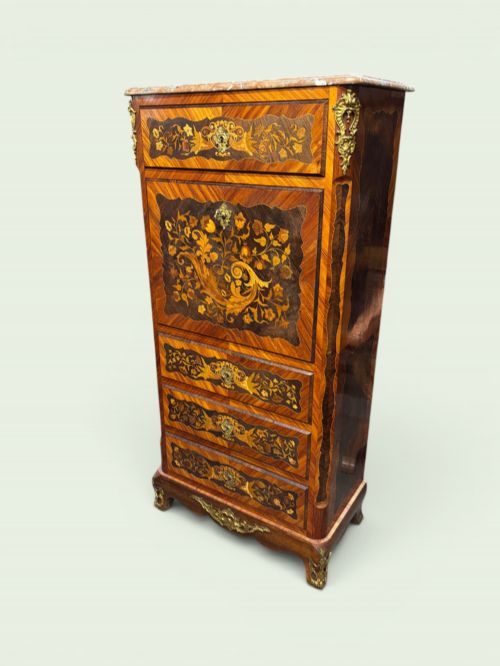
An ormolu fall front desk centres on a vertical writing cabinet where a hinged panel drops forward to create a writing surface. Buyers searching for an ormolu fall front desk will encounter sophisticated French forms such as the secrétaire à abattant and bureau de dame.
The pieces appearing in this category span the nineteenth century, including Victorian examples alongside items from the eighteen eighties and eighteen nineties. These desks often display Revival aesthetics, drawing heavily on Louis XV, Louis XVI, and French Empire styles.
Most variations originate from French workshops or British makers influenced by continental cabinet-making traditions. Timbercarving, parquetry, and marquetry frequently accompany the signature fall front mechanism and gilded metal mounts.
Materials and construction
Cabinet-makers built the carcasses using dense hardwoods like mahogany, walnut, kingwood, and rosewood, often applying intricate marquetry or parquetry veneers across the surface. Many examples incorporate polished marble tops that sit directly above the fall front compartment.
Gilt bronze and ormolu mounts are cast and chased to accentuate corners, escutcheons, and legs, adding bright metallic contrast to the dark or figured timbers. Brass details and porcelain plaques occasionally appear alongside the primary gilt bronze ornamentation.
Secret spring-loaded catches inside some fall fronts reward inquisitive writers with hidden compartments for concealing genuine love letters.
Judging quality and craftsmanship
The distinction between standard and exceptional pieces rests upon the precision of the veneer work and the depth of the metal chasing. Finely hand-chased ormolu mounts display crisp detail and secure attachment, whereas lesser versions appear flat and cast with minimal definition.
Internal drawer construction, the smoothness of the fall front hinge mechanism, and the selection of figured timbers like kingwood or marquetry panels indicate the level of care invested by the original maker.
Blake London
The Ormolu Fall Front Desk Glossary
- Ormolu
- Gilded bronze applied as decorative mounts on furniture. The technique involves treating bronze with a mixture of gold and mercury.
- Secrétaire à abattant
- A tall, vertical writing cabinet featuring a drop-down front panel that conceals a fitted interior of small drawers and compartments.
- Marquetry
- The art of applying pieces of veneer to a structure to form decorative patterns and pictorial designs. Cabinet-makers utilise various exotic timbers to achieve tonal contrast.
- Parquetry
- Geometric wood-mosaic work used for ornamenting floors and furniture surfaces. It creates orderly repeating patterns like cubes or chequers.
- Bureau de dame
- A lady's small writing desk popular during the nineteenth century. These pieces often feature delicate cabriole legs and elaborate veneer work.
Ormolu Fall Front Desk: Frequently Asked Questions
What is a fall front desk?
A fall front desk is a cabinet where the writing surface hinges downward from a vertical position. This design keeps writing materials concealed behind a locked panel when not in use.
Inside, these desks typically contain a collection of small pigeonholes and subsidiary drawers for letters and stationery.
How do I identify the period?
Dating relies on timber choices, revival styles, and construction methods. Nineteenth-century pieces frequently adopt Louis XV or Empire aesthetics.
Examination of the secondary woods inside the drawers and the style of the ormolu mounts helps narrow down the decade of production.
Where were these desks placed?
These pieces suited formal reception rooms, private libraries, and boudoirs. Their vertical proportions made them space-efficient alternatives to traditional kneehole writing tables.
The finished backs on certain models allowed them to stand away from the wall within a room.
How do I care for the surface?
Maintenance requires gentle dusting with a dry lint-free cloth and avoiding silicone-based polishes. Wax can be applied sparingly to nourish the timber veneers.
Protecting the marble top from acidic spills prevents permanent staining to the polished stone surface.