


Rosewood Fall Front Bureau
A rosewood fall front bureau combines refined cabinetry with a practical writing surface, offering a handsome workspace that conceals correspondence neatly.
Rosewood Fall Front Bureau
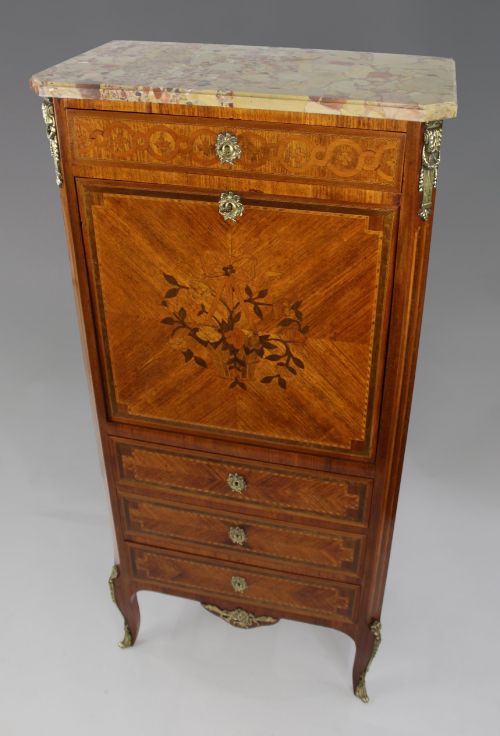
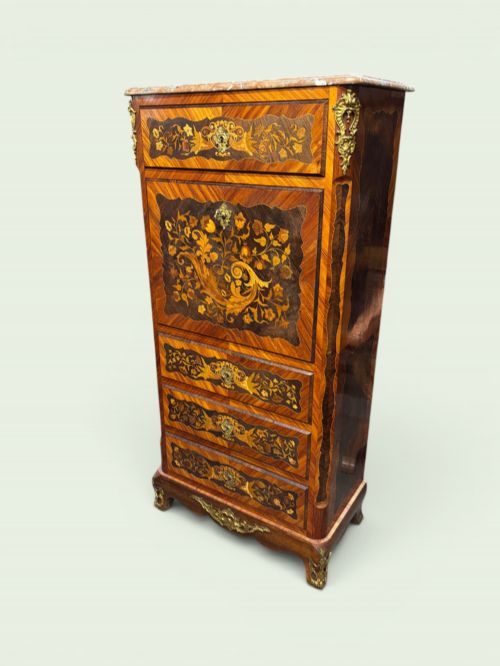
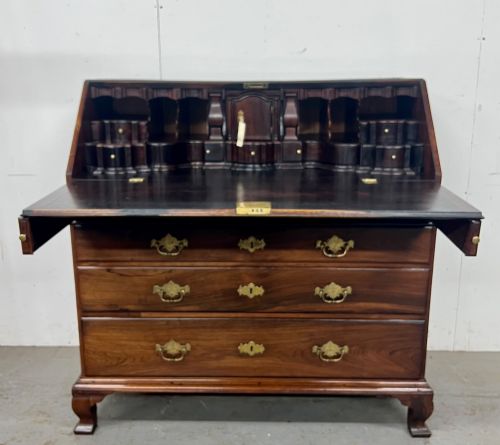
A rosewood fall front bureau takes several distinct forms across the selection, ranging from compact bureau de dame examples to taller secretaire abattant cabinets and bureau bookcases.
The pieces emerge from various periods, including the Regency era, Victorian decades, the eighteenth century, and later nineteenth-century revival movements.
Continental ateliers heavily influence the offerings, with French Louis XV style marquetry and Rococo Revival pieces appearing alongside Portuguese solid Brazilian rosewood and Anglo-Indian variants.
How they were made
Cabinet makers utilised dense rosewood as the primary timber, frequently supplementing the construction with kingwood, walnut, or mahogany.
Surface decoration often involves intricate marquetry patterns and contrasting brass inlay, reflecting the high standards of nineteenth-century and earlier workshops.
Mounts in ormolu and original marble tops add architectural weight to specific French and continental writing cabinets.
Secret drawers within these bureaux often require pressing hidden spring catches to reveal compartments designed for love letters.
What varies in quality
The finesse of the marquetry and the precision of the brass inlay distinguish standard cabinet work from exceptional artistic production.
Hardware selection, such as the inclusion of heavy ormolu mounts and authentic marble tops, elevates certain pieces above simpler domestic desks.
The structural integrity of the fall front mechanism and the subtlety of internal drawer arrangements reflect the original maker's skill.
The Rosewood Fall Front Bureau Glossary
- Fall front
- A hinged writing flap that drops down to create a horizontal desk surface. When closed, it conceals the inner compartments and drawers.
- Secretaire abattant
- A tall vertical cabinet featuring a drop-front writing surface. This form maximises vertical storage whilst providing a dedicated writing space.
- Marquetry
- Decorative veneer work arranged in pictorial or geometric patterns. Artisans apply thin slices of diverse woods to create elaborate surface designs.
- Ormolu
- Gilt bronze mounts applied to furniture for decorative accent. This technique became prominent in French cabinet making during the eighteenth and nineteenth centuries.
- Bureau de dame
- A small ladies writing desk, often freestanding and delicately proportioned. These pieces frequently incorporate internal drawers and compartments.
Rosewood Fall Front Bureau: Frequently Asked Questions
How do I maintain the rosewood finish?
Keep the timber away from direct sunlight and excessive heat sources to prevent the wood from drying out or fading. Apply a suitable wax polish sparingly to nourish the surface.
Avoid using modern liquid sprays or silicone-based cleaners, as these can damage the polished grain over time. Regular gentle dusting with a soft cloth is usually sufficient.
Where were these bureaux typically placed?
These writing cabinets served private domestic spaces such as drawing rooms, boudoirs, or libraries. Their finished backs and compact footprints allow several examples to stand freely within a room.
The drop-front design kept personal correspondence and documents securely stored away from view when not in active use.
How can I distinguish French revival pieces?
French revival pieces often display characteristic Louis XV or Rococo influence through curved cabriole lines and elaborate floral marquetry. The incorporation of ormolu mounts and marble tops points strongly to continental workshops.
English and Regency examples tend to rely more on strict geometry, brass stringing, and tonal wood contrasts rather than heavy gilt bronze.
What is the difference between an escritoire and a bureau?
An escritoire generally refers to a writing cabinet with a fall front or sloping lid, often associated with French or continental design. A bureau traditionally describes a desk with an angled or vertical flap covering pigeonholes and small drawers.
Both terms describe furniture created for private correspondence, though regional naming conventions often dictate the preferred vocabulary.