

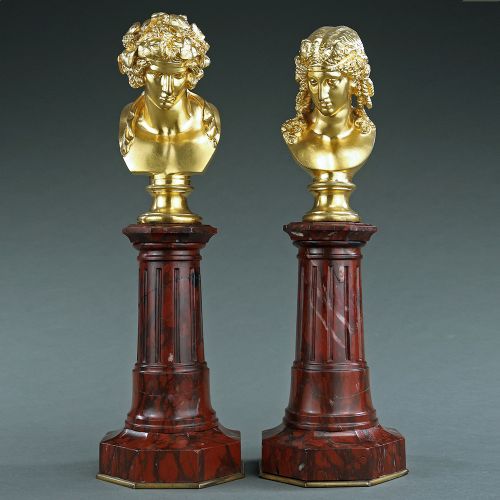
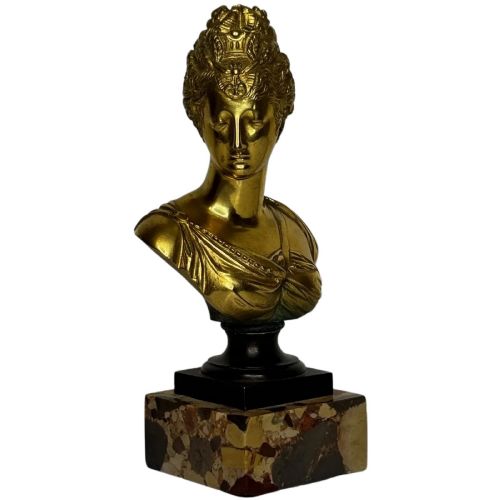


Ormolu Classical Busts
These ormolu classical busts bring the quiet gravity of antiquity straight to a mantel or pedestal.
Ormolu Classical Busts
Ormolu classical busts combine cast metal with carved stone to portray figures from mythology and history. When searching for ormolu classical busts, a buyer finds subjects ranging from Greek deities to notable historical figures mounted upon fine plinths.
The pieces appearing on this page span the nineteenth century, including Victorian interpretations and Regency designs. Alongside portrait busts, the selection includes related items such as mantel clocks, pedestals, and decorative stands adorned with similar metal mounts.
How they were made
Craftsmen built these works using gilt bronze and ormolu alongside carved marble and onyx for the primary sculptural elements and columns. Metal components received fine gilding to create a bright, enduring surface contrast against darker stone.
Makers integrated cast bronze and gilt metal mounts directly into stone pedestals and clock cases, securing them with precision. Mahogany and brass also appear in the broader furniture and support pieces that house these sculptures.
Ormolu Classical Busts Retail Price Guide 2026
Typical asking prices for ormolu classical busts among the pieces listed under this phrase on Sellingantiques today, from the lower quarter to the upper quarter. They describe what is for sale here now, not the wider market.
Listings feature marble, onyx, and mahogany paired with gilt bronze across the nineteenth century.
What varies in quality
The selection of the underlying stone material also alters the character of the piece. Dense, well-figured marble and unblemished onyx provide a more substantial presence than simpler secondary woods or lesser metals.
G.V. Vaerenbergh·P.H Mourey
The Ormolu Classical Busts Glossary
- Ormolu
- Gilded bronze, typically produced by applying a mercury and gold amalgam to a bronze base and heating it. This technique creates a rich, metallic finish characteristic of nineteenth-century decorative arts.
- Neoclassical
- A style drawing inspiration from the art and culture of classical antiquity. It emphasises proportion, restraint, and classical motifs across sculpture and furniture.
- Grand Tour
- A traditional trip through Europe undertaken by upper-class young men in the eighteenth and nineteenth centuries. Travellers frequently acquired bronzes and small sculptures as mementos.
- Gueridon
- A small circular table on a central pillar, often utilised for displaying ornaments or busts. Examples in this tradition incorporate classical proportions and fine wood or stone.
- Patinated
- The surface appearance acquired by bronze or other metals through age and chemical treatment. It provides subtle tonal depth distinct from bright gilding.
Ormolu Classical Busts: Frequently Asked Questions
What periods do these pieces represent?
The listings span the nineteenth century, encompassing Regency, Victorian, and Edwardian eras. French Empire and Neoclassical styles dominate the aesthetic of the period.
Maker signatures and specific decades like the 1870s and 1880s help narrow down the exact manufacturing window for individual works.
How were these busts displayed originally?
Sculptures of this scale sat upon mantelpieces, side tables, or dedicated marble and onyx columns. They served as focal points in drawing rooms and libraries.
Matching stands and plinths elevated the works to eye level within grand domestic interiors.
What materials make up the mounts?
Mounts utilise gilt bronze, ormolu, and gilt metal to provide decorative framing and structural collars. These metals contrast against white marble and translucent onyx.
Secondary materials such as mahogany and brass support larger pieces like pedestals and clock cases.
How do clocks incorporate these sculptures?
Clock makers integrated bronze busts directly into the upper casing of mantel clocks. The timepiece acts as an architectural plinth for the portrait above.
Movements like single chain fusee mechanisms provide the internal engineering behind the decorative facade.