




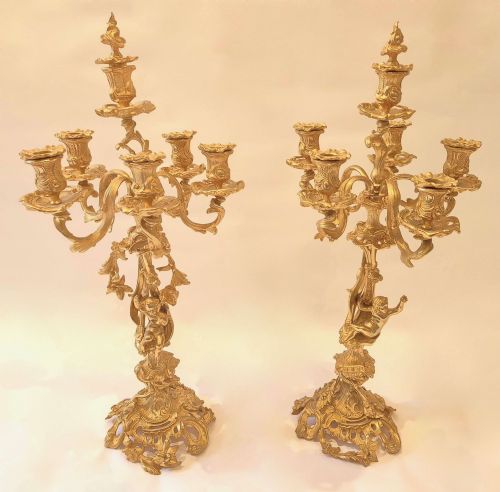


Ormolu Cherub Candlesticks
Ormolu cherub candlesticks bring classical figures and gilt metal together into decorative lighting that defines nineteenth-century French interiors.
Ormolu Cherub Candlesticks
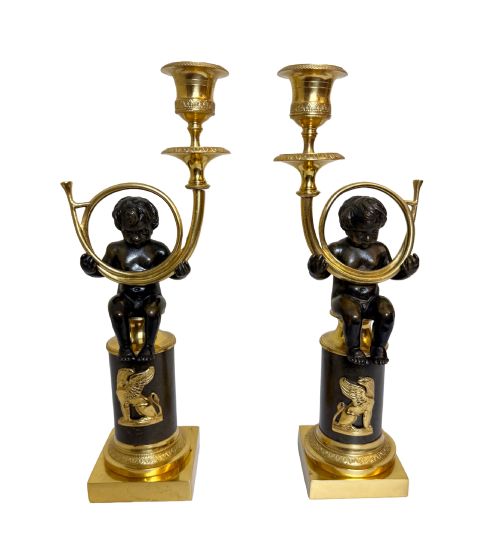
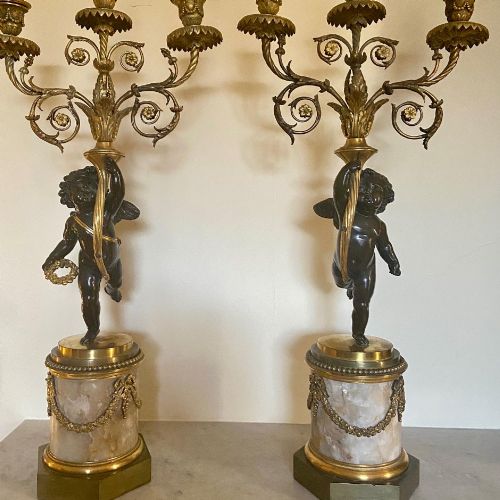
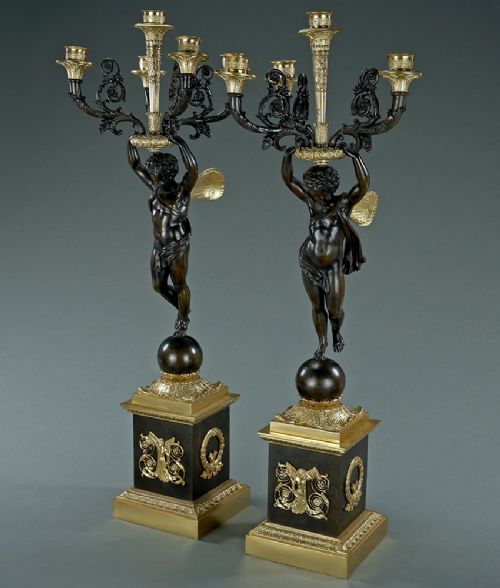
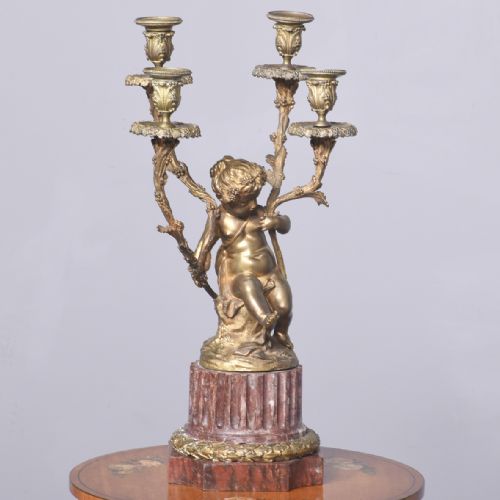
Ormolu cherub candlesticks combine figural sculpture with functional lighting, featuring winged putti or cherubs holding or supporting candle sockets. These objects emerge frequently in nineteenth-century French designs spanning the Regency, Victorian, and Napoleon III periods, alongside earlier eighteenth-century influences.
Materials and technique
The construction relies heavily on cast bronze, finished with either fire-gilt ormolu or dark patination to create textural contrast between the figural elements and the structural mounts. Many examples incorporate polished stone elements such as marble or fluorspar for the bases, anchoring the weight of the metalwork.
The figures themselves are cast in bronze before undergoing detailed chasing and gilding processes to achieve sharp definition in the wings, hair, and drapery. Assemblages are secured with threaded rods and screws, uniting the bronze components with stone plinths.
Ormolu Cherub Candlesticks Retail Price Guide 2026
Typical asking prices for ormolu cherub candlesticks among the pieces listed under this phrase on Sellingantiques today, from the lower quarter to the upper quarter. They describe what is for sale here now, not the wider market.
Several cherubs appear caught mid-flight, balancing multi-armed candelabra branches as if performing acrobatic feats for your mantelpiece.
Variations in quality
The integration of materials also dictates standing, with well-balanced marble plinths and tight joints separating finer workshop productions from standard commercial output. The articulation of the cherub anatomy and the weight of the cast bronze indicate the level of craftsmanship invested in the object.
Francois Redmond·Claude Clodion
The Ormolu Cherub Candlesticks Glossary
- Ormolu
- Gilded bronze produced by applying a mercury and gold amalgam to a bronze base and heating it to vaporise the mercury. This technique creates a durable, warm metallic finish characteristic of fine French decorative arts.
- Putti
- Representations of small, winged infants derived from classical art that form the central figural motif of these candlesticks. They often appear interacting with floral garlands or supporting candle nozzles.
- Patinated bronze
- Bronze treated with chemical solutions to produce a darkened surface colour, providing a contrast to bright gilt elements. It highlights the modelling of the figures.
- Fluorspar
- A colourful mineral occasionally utilised for decorative bases beneath the metalwork. Its natural banding adds visual complexity to the composition.
- Candelabra
- A branched candlestick holding multiple lights from a single base. These examples often feature two, three, or five branches extending from the central figure.
Ormolu Cherub Candlesticks: Frequently Asked Questions
How were ormolu cherub candlesticks used?
These pieces functioned primarily as decorative lighting on mantelpieces, dining tables, and sideboards within affluent nineteenth-century homes. Their reflective surfaces amplified candlelight during evening gatherings.
Beyond illumination, they served as sculptural ornaments that displayed the owner's taste for classical French aesthetics and fine metalwork.
What periods do these candlesticks represent?
The listings span the eighteenth century through the nineteenth century, with strong representation from the Regency, Victorian, and Napoleon III eras. Many pieces draw directly on earlier Louis XVI styles and French Empire revivals.
Distinguishing between genuine eighteenth-century production and nineteenth-century revival work depends on examining the casting technology, fastener types, and wear patterns on the gilt surfaces.
How do I care for ormolu and bronze?
Maintenance requires gentle dusting with a soft, dry cloth to prevent the accumulation of grit in the recesses of the chasing. Moisture and chemical polishes must be avoided entirely, as they strip the historic gilding and damage patination.
Handling the pieces by their solid stone bases rather than fragile arms or wings prevents structural strain on the threaded internal joints.
Why are marble bases used?
Marble provides essential weight and stability to counterbalance the heavy bronze figural groups and candle branches. The dense stone prevents the tall objects from tipping over during use.
Additionally, the cool tones of white, black, or variegated marble contrast effectively with the warm glow of the ormolu and the dark patination of the bronze figures.