



Ormolu Bronze Inkwell
An ormolu bronze inkwell sits upon a desk as a masterclass in nineteenth-century metalwork, combining gilded surfaces with heavy stone bases to anchor a room.
Ormolu Bronze Inkwell
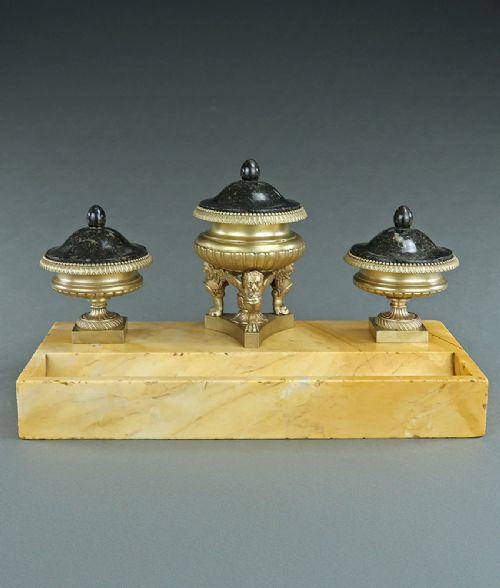
When you search for an ormolu bronze inkwell, you encounter desk accessories that pair cast metal with bases of Sienna marble, vert marble, onyx, and mahogany. These pieces span the nineteenth century, including Victorian examples and French Empire, Second Empire, Neoclassical, and Art Nouveau styles.
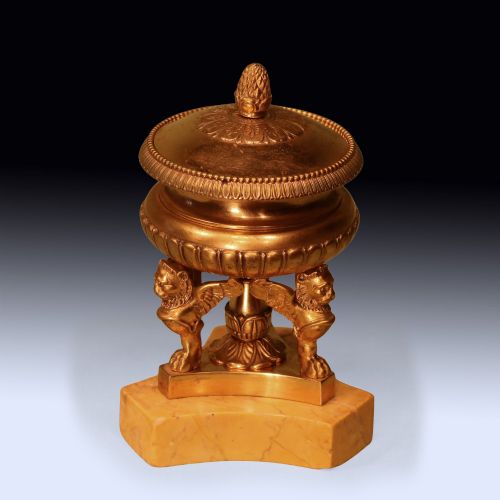
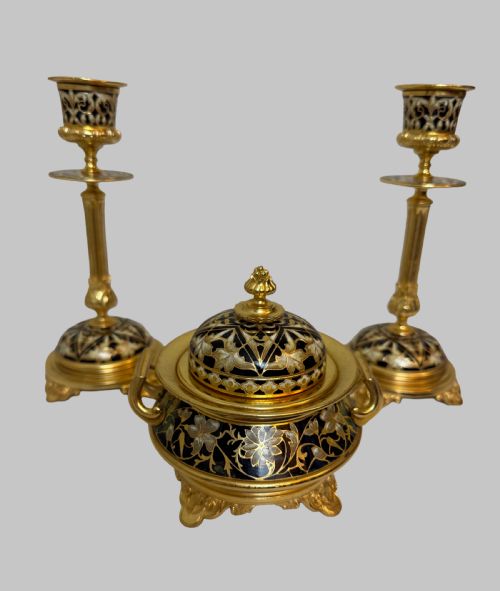
You are most likely to meet French desk stands and inkstands featuring gilt bronze, patinated bronze, and champleve enamel mounted on stone plinths. The forms range from simple single wells to elaborate desk sets complete with candlesticks, desk clocks, and figural models of lions, cats, and emus.
These items served both a practical purpose for correspondence and a decorative role in studies and salons. The domestic workspace of the period relied on such heavy, stable materials to manage ink and quills without tipping.
How they were made
The construction of these pieces relies on the union of cast bronze and fire-gilt ormolu surfaces mounted onto shaped stone or timber bases. Makers combined patinated bronze elements with bright gilded highlights to create contrast across figures and floral mounts.
Stonework such as Sienna marble, vert marble, and onyx was cut and polished to form heavy plinths that supported the metal inkwells and covers. Wood elements like mahogany and coromandel-wood also appear as foundations for desk stands.
Detailed casting methods allowed for sculptural subjects, from naturalistic animals to architectural Neoclassical motifs. Champleve enamel and glass inserts were incorporated into the metal frameworks to complete the functional ink containers.
Desk sets occasionally abandon formal dignity entirely to depict playing cats and kittens wrestling on the bronze base.
What varies in quality
The refinement of the casting and chasing separates the top tier from simpler production. Crisp detail in the bronze figures and foliage demonstrates the skill of the original workshop.
The choice and preparation of the mounting materials also mark the difference between standard and exceptional pieces. Dense, richly coloured marbles and heavy gilt bronze indicate high-end nineteenth-century manufacture.
Albert Marionnet·A. Marionnet·Moser
The Ormolu Bronze Inkwell Glossary
- Ormolu
- A method of applying finely ground high-carat gold to a bronze object using a mercury amalgam, then fired to leave a rich golden finish. It provides the bright, metallic lustre seen on nineteenth-century mounts.
- Encrier
- A French term for an inkstand or inkwell set designed for a desk. These pieces often incorporate pen trays and covered ink containers upon a shared base.
- Champleve
- An enamelling technique where troughs or cells are hollowed out of the metal surface and filled with vitreous enamel before firing. It decorates the bronze framework of specific Victorian and French desk sets.
- Sienna marble
- A yellow-hued, highly figured ornamental marble quarried in Italy. It forms the striking yellow and brown bases found on several Neoclassical desk pieces.
- Patinated bronze
- Metal that has been treated chemically or thermally to produce a dark, aged surface tone. This dark finish contrasts with the bright sections of gilt ormolu.
Ormolu Bronze Inkwell: Frequently Asked Questions
What materials make up an ormolu bronze inkwell?
These desk accessories combine cast bronze with fire-gilt ormolu surfaces, often paired with heavy stone bases. Materials like Sienna marble, vert marble, onyx, mahogany, glass, and champleve enamel frequently appear in the construction.
The metal components use both bright gilded finishes and darker patinated bronze to create visual contrast. Stone plinths provide the substantial weight needed to anchor the inkwells on a writing desk.
Where were these inkstands made?
The majority of these desk sets originate from France during the nineteenth century. Workshops in Paris produced pieces reflecting French Empire, Second Empire, Neoclassical, and Art Nouveau aesthetics.
English Victorian manufacturers also produced similar desk accessories, frequently adopting continental styling trends. The influence of French design remains strong across the entire selection.
How do I date an ormolu bronze inkwell?
Dating relies on stylistic clues, such as the classical symmetry of early nineteenth-century Empire pieces versus the organic, flowing lines of later Art Nouveau examples. The choice of marble base and the complexity of the cast bronze work also point to specific decades.
Makers' signatures or specific mechanical elements, like chaff-cutter escapements in desk clocks, help narrow the timeline. Most surviving examples date from the mid to late nineteenth century.
What is the difference between an inkwell and a desk set?
An inkwell is typically a single vessel designed specifically to hold ink for writing. A desk set or inkstand is a larger desk accessory that incorporates one or more inkwells alongside pen trays, candlesticks, or desk clocks upon a shared base.
Desk sets provided a comprehensive station for correspondence, combining multiple writing tools into a single matching ensemble. Both forms utilised similar bronze and marble materials.