



Ormolu Brass Desk Clock
An ormolu brass desk clock brings rich nineteenth-century gilding and precise mechanical movement to a room, offering both decorative presence and dependable timekeeping.
Ormolu Brass Desk Clock
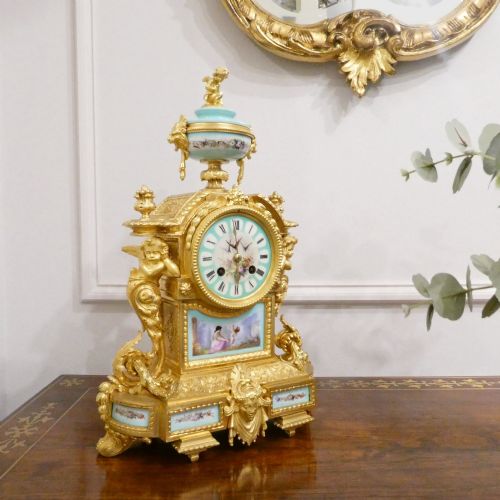
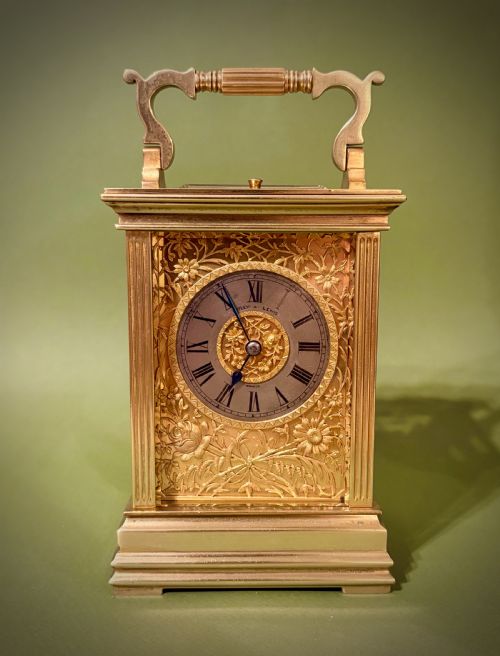
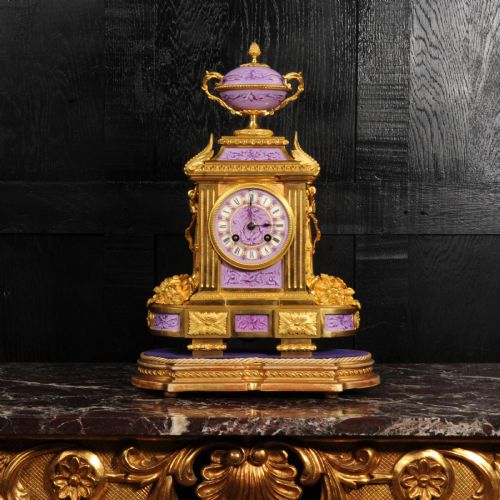
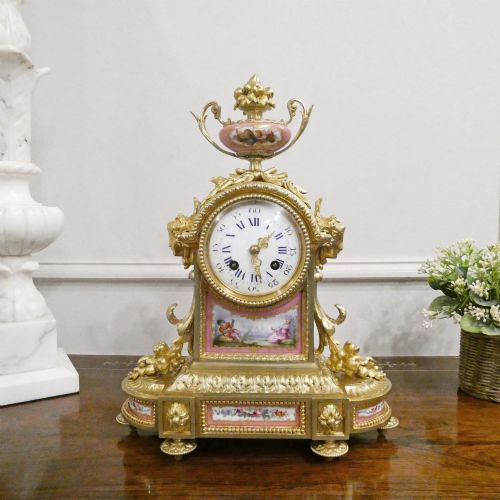
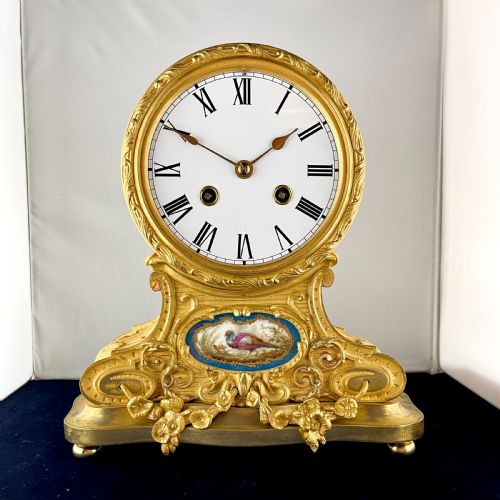
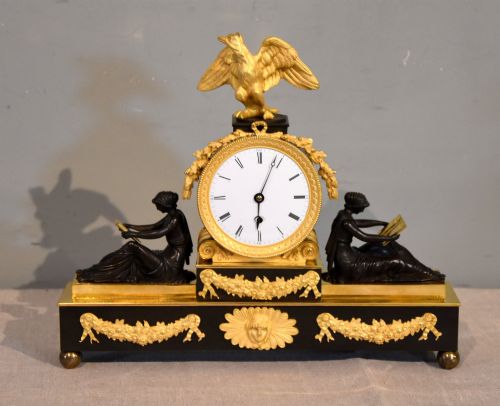
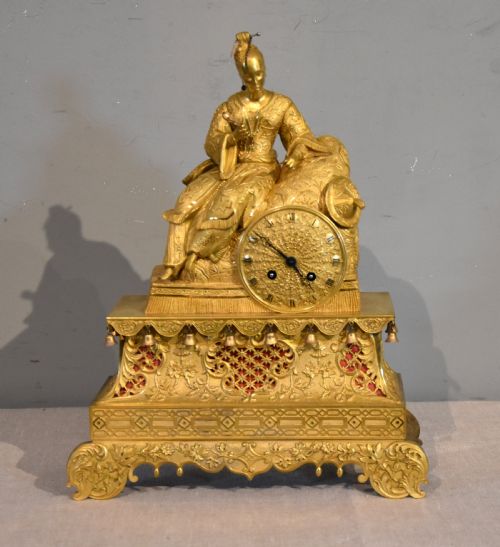
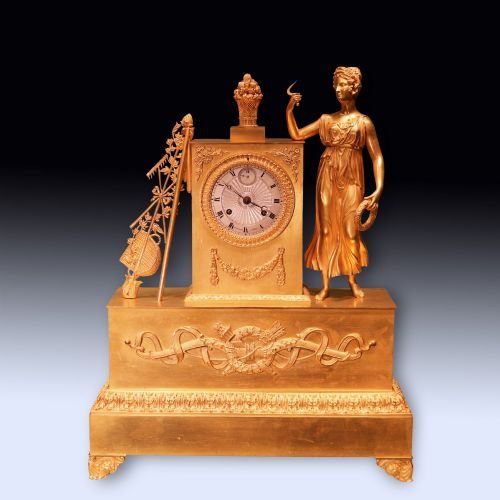
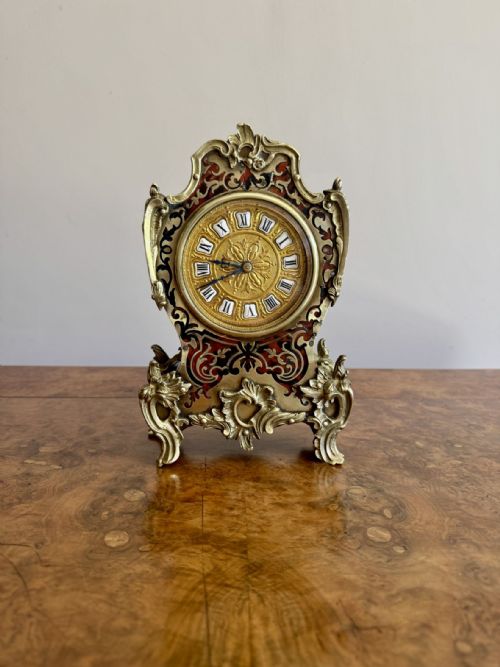
When searching for an ormolu brass desk clock, buyers encounter nineteenth-century timepieces shaped by French and English horology. These objects include mantel clocks, clock garniture sets, and smaller table pieces designed for domestic interiors.
The pieces appearing on this page stem predominantly from Victorian and Regency periods, spanning decades from eighteen-fifty to nineteen-hundred. French workshops dominate the selection, bringing ornate revival styles into view.
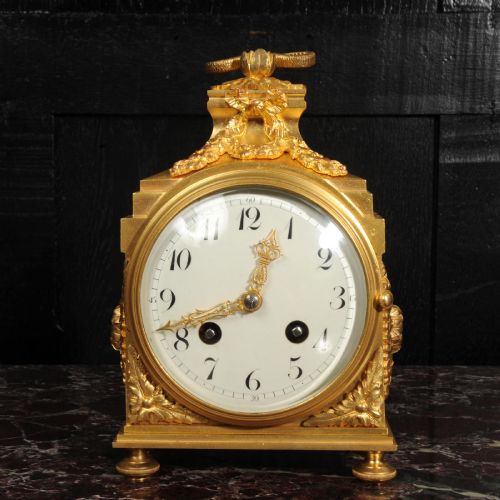
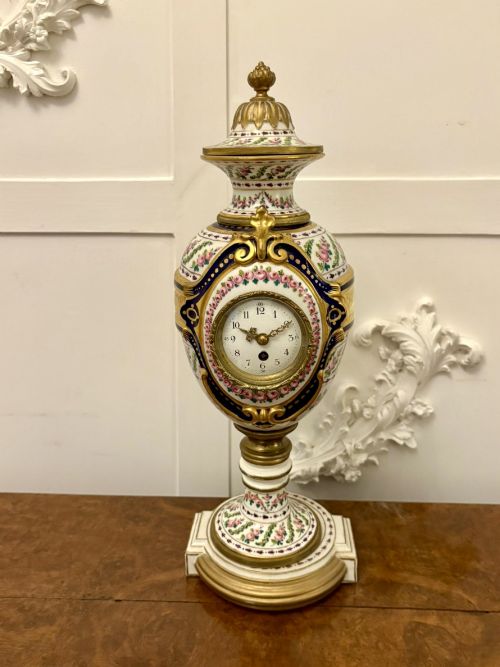
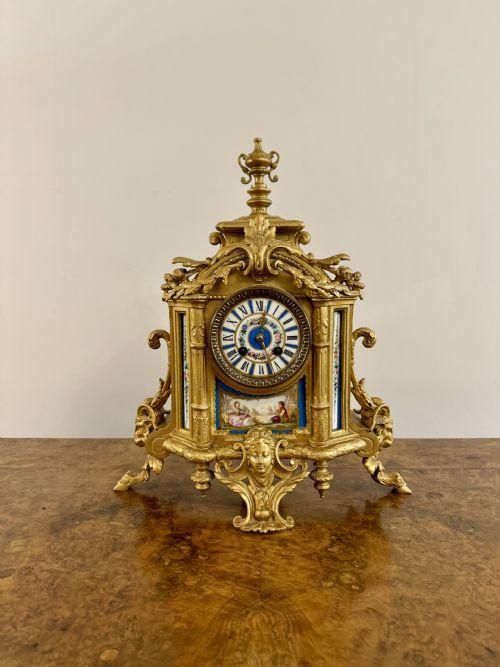
Forms vary from drumhead mantel clocks and portico designs to urn-shaped porcelain mounts and figural models. Each format serves as both a functional timepiece and a sculptural centrepiece for a desk or mantel.
How they were made
Maker workshops combined cast ormolu, gilt bronze, and brass with contrasting materials like marble, porcelain, and glass. Gilding techniques applied gold layers over base metals to produce a lasting, warm metallic lustre.
Clock movements relied on precise brass gear trains, often incorporating enamel dials with hand-painted numerals. Cabinetry combined metal mounts with wooden carcases, tortoiseshell, or champleve enamel decoration.
Materials recorded across the selection include gilt bronze, ormolu, champleve enamel, and hand-painted porcelain.
What varies in quality
Quality separates standard production timepieces from works bearing signature marks of notable makers like Japy Freres or Samuel Marti. Castings show varying depth and sharpness in their ornamental detail.
The refinement of the hand-painted porcelain panels and the crispness of the gilt bronze chasing define the visual standard. Movement complexity, such as repeating mechanisms or fusee gear trains, further distinguishes superior examples.
Achille Brocot·Japy Freres·Le Roy Paris·Samuel Marti·John Barwise of London
The Ormolu Brass Desk Clock Glossary
- Ormolu
- Gilded bronze produced by applying a gold amalgam to a bronze base and heating it. This technique creates a rich golden finish characteristic of nineteenth-century decorative objects.
- Fusee
- A conical pulley used in clock movements to maintain even tension on the chain as the mainspring unwinds. This mechanism improves timekeeping accuracy across the power reserve.
- Garniture
- A set consisting of a central clock flanked by matching decorative objects such as urns or vases. These matched groups decorated mantelpieces in nineteenth-century interiors.
- Champleve
- An enamelling technique where troughs are dug into a metal surface and filled with vitreous enamel before firing. It creates colourful geometric or floral patterns on clock cases.
- Pendule d'Officier
- A portable French military-style desk or travel clock featuring a distinctive top handle. These pieces combined robust brass cases with precise movement.
Ormolu Brass Desk Clock: Frequently Asked Questions
How do I wind an antique clock?
Use the designated key on the dial face to turn the winding arbors gently until resistance is felt. Care must be taken not to overwind the mainspring.
Moving the hands requires following the specific instructions for the movement type to avoid damaging the internal gear train.
Where should I place my desk clock?
Position the timepiece on a stable, level surface away from direct sunlight, drafts, and sources of excessive heat or moisture. Mantelpieces and sturdy desks provide suitable support.
Ensuring the surface is level helps the pendulum swing evenly and keeps the escapement working accurately.
How do I identify the period?
Examine the stylistic motifs, such as Louis XVI revival scrolls or Empire symmetry, alongside the materials and dial construction. Maker signatures stamped on the backplate offer precise chronological clues.
Dates often correlate with Victorian manufacturing decades or specific Regency design traits recorded in the maker records.
Do these clocks require professional servicing?
Periodic cleaning and oiling by a qualified horologist ensure the brass gears and pivots continue to function smoothly over time. Accumulated dust and dried oil cause friction in older movements.
Professional restoration preserves the original mechanical integrity without altering the historic character of the brass and ormolu casing.