





Ormolu and Marble Candlesticks
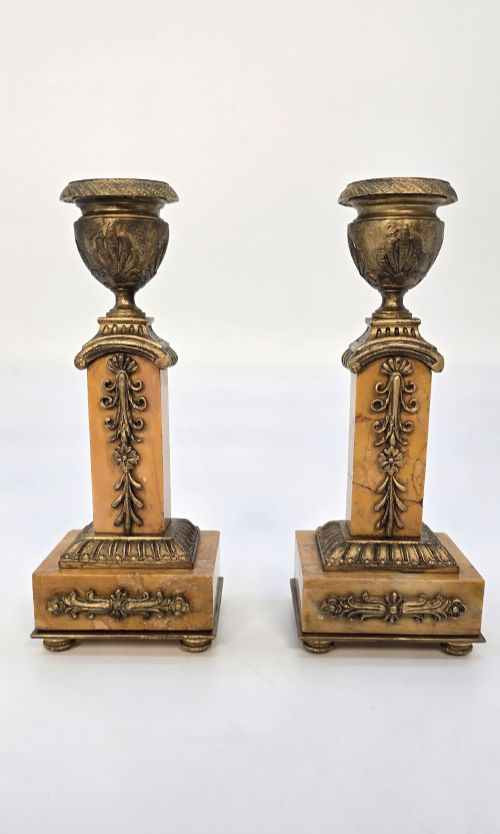
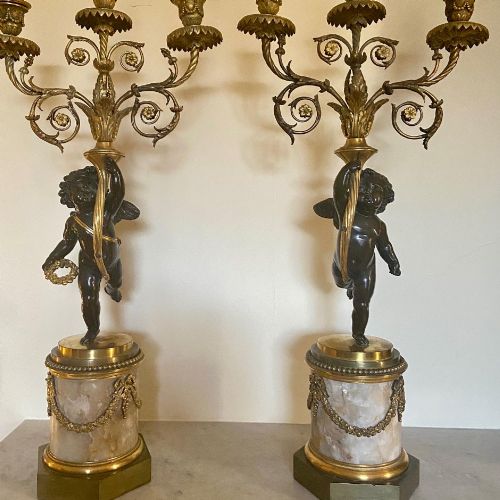
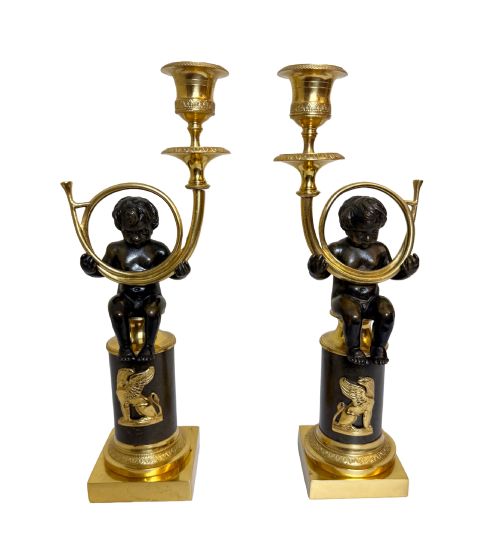
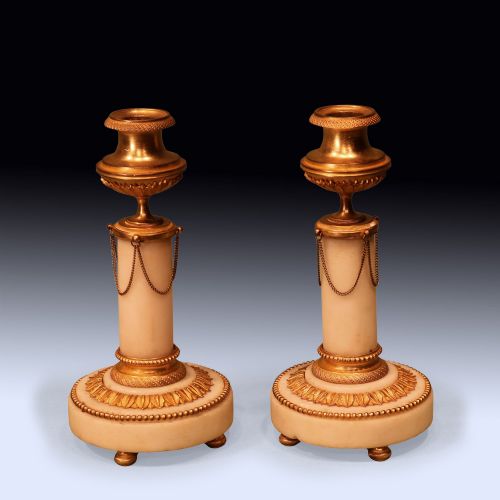
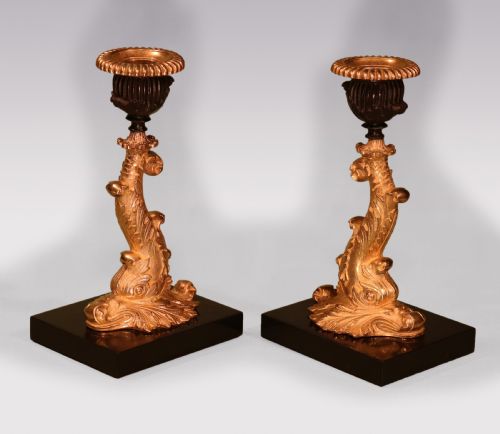
These ormolu and marble candlesticks combine bright gilt metal with cool stone to bring architectural weight and rich contrast to a room.
Ormolu and Marble Candlesticks
When you search for ormolu and marble candlesticks, you encounter formal lighting fixtures that combine cast metal components with solid stone bases, predominantly originating from nineteenth-century France. The selection spans neoclassical designs, French Empire pieces, and later Victorian interpretations that lean into Louis XVI styles.
Most examples appear as matched pairs configured either as single candlesticks or branch candelabra, frequently featuring figural elements such as cherubs, putti, and dolphins. The forms range from compact tabletop holders to large multi-light candelabra designed for prominent placement on mantelpieces and sideboards.
Materials and construction
The construction relies on the pairing of heavy stone bases, including white marble, Carrara marble, and rouge marble, paired with cast metal elements in ormolu, gilt-bronze, patinated bronze, and brass. Artisans shaped the stone through turning and polishing before mounting the cast and gilded metalwork directly to the plinths.
Ormolu application involved mercury gilding or modern electrogilding onto bronze bases to create a bright, durable golden surface that contrasted against the dark or pale stone. Individual components were often pinned or screwed together, incorporating structural brass elements to secure the branches and sconces.
Ormolu and Marble Candlesticks Retail Price Guide 2026
Typical asking prices for ormolu and marble candlesticks among the pieces listed under this phrase on Sellingantiques today, from the lower quarter to the upper quarter. They describe what is for sale here now, not the wider market.
Materials recorded across the inventory include Carrara marble, rouge marble, white marble, ormolu, patinated bronze, and brass.
Judging quality and craftsmanship
The selection of the marble base also dictates overall grade, with superior examples utilising solid, well-veined stone blocks that fit flush against the metal mounts without gaps. The balance of the piece, the thickness of the cast bronze branches, and the weight of the stone demonstrate the maker's original investment in materials.
Francois Redmond·Claude Clodion·Thomas Hope
The Ormolu and Marble Candlesticks Glossary
- Ormolu
- Gilt bronze produced by applying an amalgam of gold and mercury to a bronze object, which was then heated to drive off the mercury. This historic technique creates a warm, enduring golden lustre.
- Candelabra
- A branched candlestick holding multiple lights or candles on a single base. These fixtures often feature removable nozzle inserts for catching wax drips.
- Putti
- Depictions of chubby male infants, frequently winged, used widely as decorative supports in neoclassical and nineteenth-century design. They appear holding sconces or embracing the central shaft.
- Patinated bronze
- Metal treated chemically to produce a dark brown, green, or black surface finish on the bronze components. This dark tone provides a visual anchor against bright ormolu and pale marble.
Ormolu and Marble Candlesticks: Frequently Asked Questions
How do I clean ormolu and marble candlesticks?
Dust the surfaces gently with a soft, dry brush to prevent dirt accumulation in the recessed cast details. Avoid harsh commercial metal cleaners or acidic solutions that can strip the historic gilt surface or etch the polished stone base.
Water and harsh soaps will ruin patinated bronze and discolour unsealed marble. Consult a specialist restorer if the metal requires deep cleaning or if the stone mounts need re-securing.
Can these antique candlesticks be converted into table lamps?
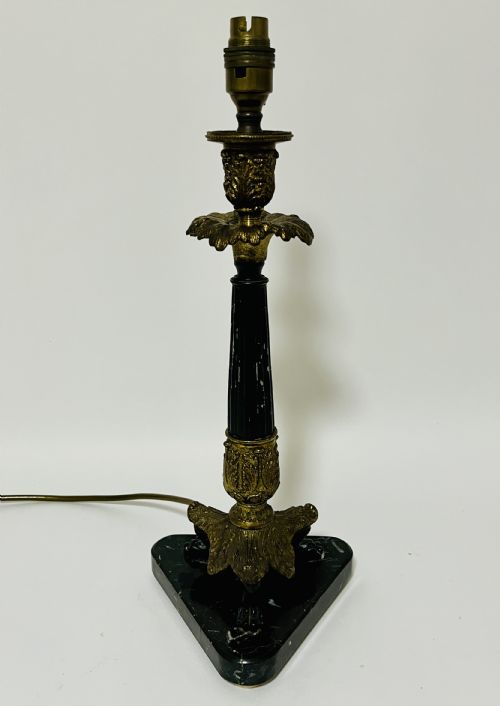
Many historical examples have been adapted over time to function as electric table lamps by running wiring through the central core. This conversion is often reversible if the original sconces and fittings are retained during the wiring process.
When evaluating a converted piece, check whether the original candle cups and drip pans remain intact alongside the lamp hardware. Unaltered examples generally hold closer ties to their original decorative function.
How do I tell an 18th-century piece from a 19th-century copy?
Nineteenth-century makers frequently reproduced neoclassical and Louis XVI styles, adopting earlier motifs such as putti and acanthus leaves. Close inspection of the casting seams, fixing screws, and the wear patterns on the gilding helps determine the actual period of manufacture.
Hand-chased details tend to be sharper on earlier pieces, whereas mass production in the later nineteenth century introduced machine-tooled elements and standardised fixings.
Where should I display large candelabra at home?
Large multi-light candelabra require stable, heavy furniture such as a sideboard, mantelpiece, or console table where their weight and height can be appreciated. Keep them away from direct heat sources and high-traffic edges where accidental knocks might dislodge the heavy stone bases.
Pair them with a large wall mirror to reflect the gilt surfaces and amplify the ambient light in a formal room setting.