
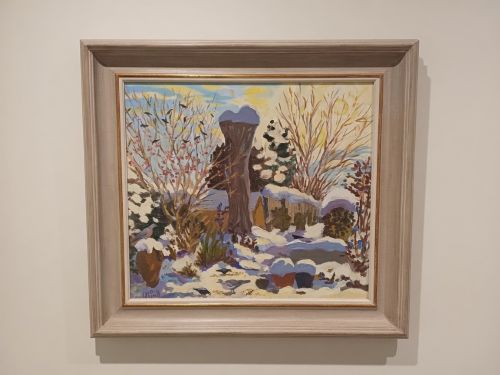
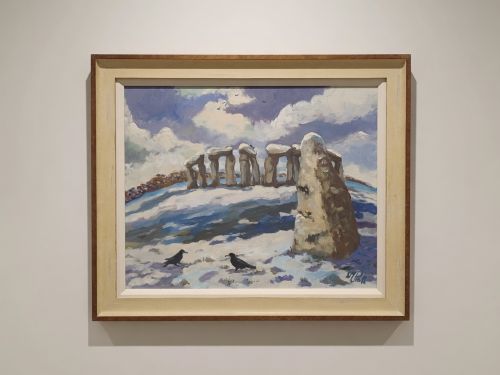
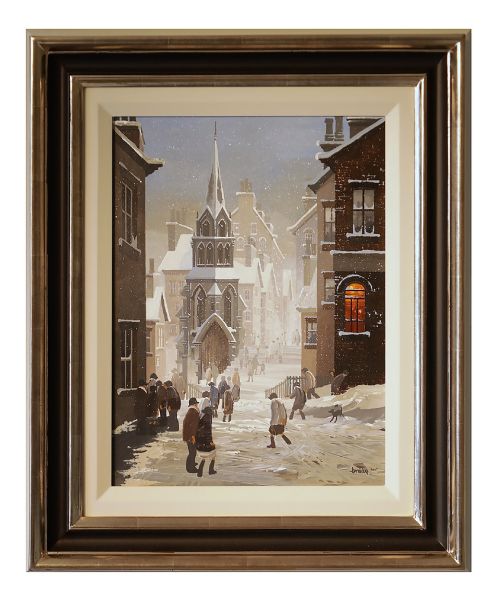
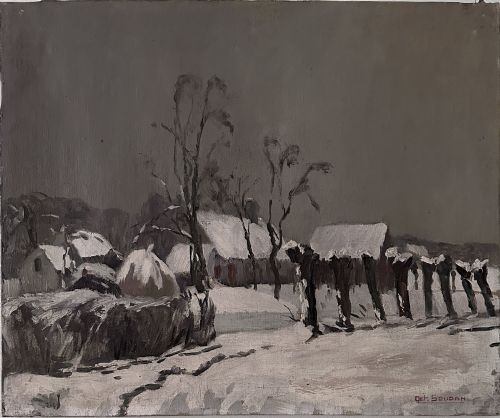


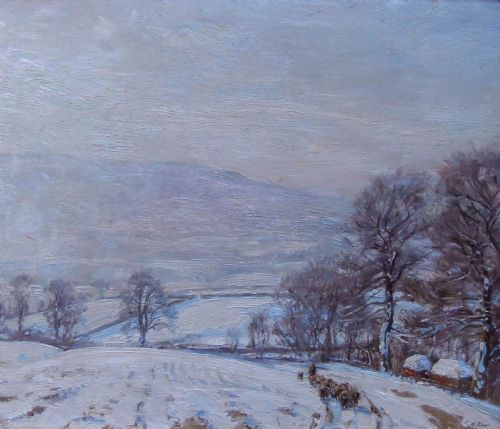
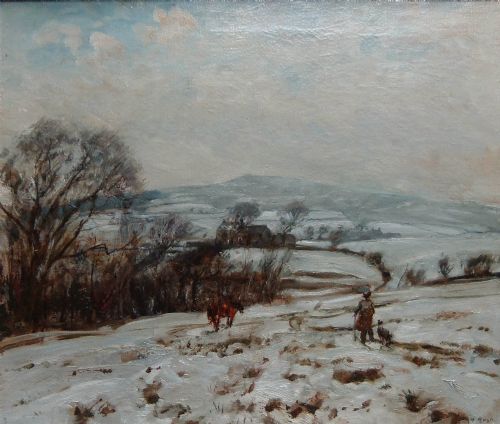


Original Winter Landscape Oil
An original winter landscape oil captures the quiet stillness of snow and frost through brushwork that retains its vitality decades after it was laid down.
Original Winter Landscape Oil
When you search for an original winter landscape oil, you encounter depictions of rural snow scenes, frozen rivers, and frost-covered valleys spanning from the nineteenth century into the later twentieth century.
The selections on this page range from nineteenth-century American realism and British impressionism to German expressionism, showing how different eras interpreted cold weather and bare trees.
Many works focus on specific regional locations, such as Yorkshire dales, Dutch waterways, and snowy village streets, rendered directly onto canvas, wood panel, board, or card.
Materials and construction
Artists relied primarily on oil paint applied to prepared canvas, wooden panels, or stiff card, building up textures to describe snow and frozen ground.
The physical support often dictates the survival and character of the piece, with wood panels and card offering a rigid foundation while canvas provides traditional flexibility.
Listings feature works created across eight distinct decades, spanning from the nineteenth century into the later twentieth century.
Distinctions in execution
Quality rests in the handling of light across white surfaces and the artist's ability to suggest atmosphere and temperature without overworking the pigments.
Stronger examples demonstrate confident tonal control in shadows and skies, whereas weaker pieces rely on formulaic application and static composition.
Brian Shields Braaq·Arthur Winter Shaw·Herbert Royle·Ernest Higgins Rigg·William Greaves
The Original Winter Landscape Oil Glossary
- Canvas
- A heavy woven fabric stretched across a wooden frame to serve as a painting surface. It provides the traditional ground for most oil works.
- Wood Panel
- A rigid wooden support used by artists instead of canvas. It offers a smooth, stable surface that frequently appears in nineteenth-century works.
- Impressionism
- A style focused on accurate depiction of light and its shifting qualities. Painters working in this manner use visible brushstrokes rather than smooth blending.
Original Winter Landscape Oil: Frequently Asked Questions
How do I care for an oil painting?
Keep the piece away from direct sunlight and fluctuating humidity to protect the canvas and wooden frame. Dust the surface gently with a soft, dry brush without applying pressure.
Avoid using liquid cleaners or abrasive cloths on the paint layer. Professional conservation is recommended if the surface accumulates stubborn grime.
What periods do these paintings cover?
The available selection spans from the nineteenth century through the 1920s, 1930s, and into the later decades of the twentieth century. Each era brings distinct stylistic approaches to winter scenes.
Earlier pieces often lean towards traditional realism, while mid-century works introduce impressionist and expressionist interpretations of snow and light.
Are these works painted on canvas?
While canvas is common, artists also utilised wood panels, board, and stiff card as supports for their winter compositions. The choice of material often reflects the period and the painter's personal preference.
Wood and card supports frequently appear in nineteenth-century and early twentieth-century examples, offering a different texture to traditional woven fabric.
How can I identify the region of a landscape?
Many titles and signatures reference specific locations, such as Yorkshire dales, Dutch lakes, or American river valleys. Examining the topography and architectural details in the background often reveals the setting.
Local records and artist biographies help confirm where a painter worked during specific decades of their career.