
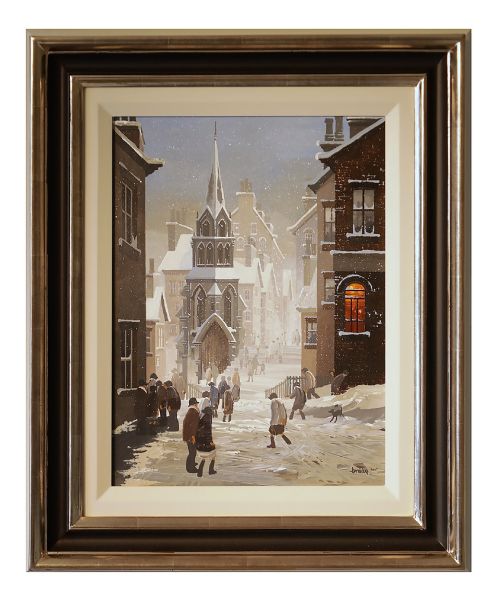
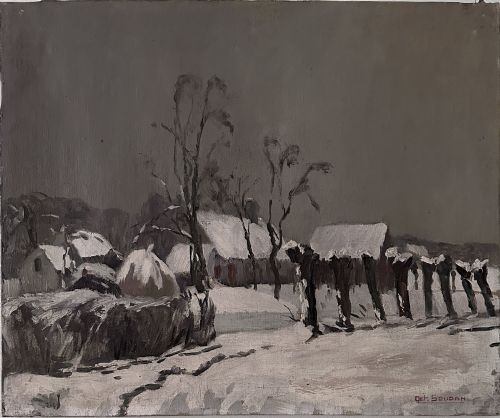
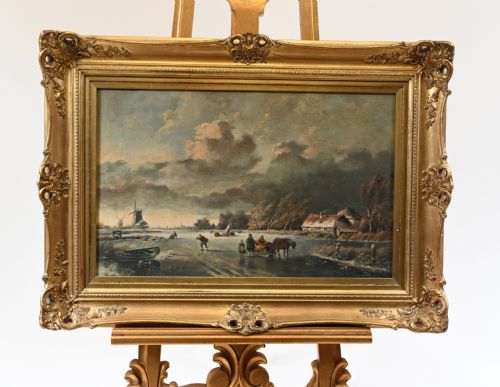


Oil Canvas Winter Landscape
An oil canvas winter landscape captures frost, snow, and bare trees through the rich texture and enduring depth of oil paint applied to woven fabric.
Oil Canvas Winter Landscape
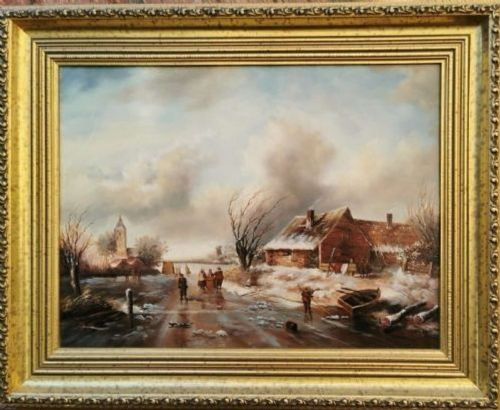
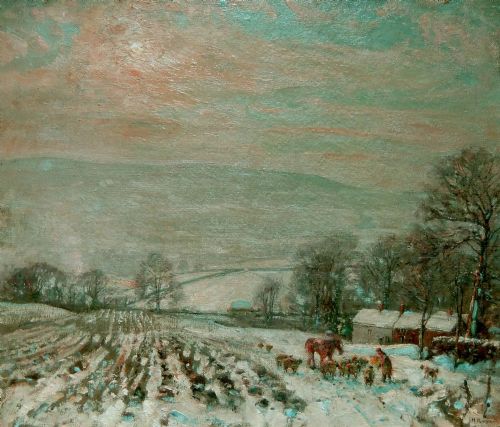
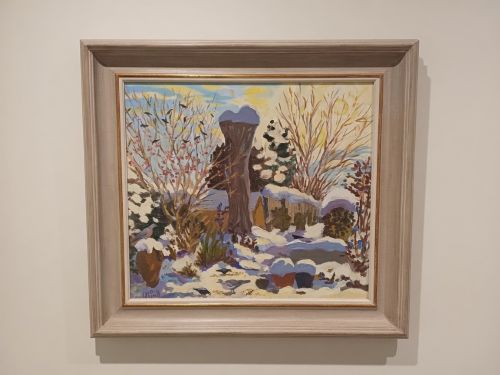
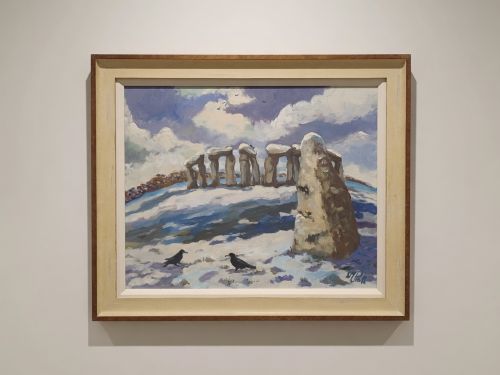
An oil canvas winter landscape brings seasonal chill indoors through depictions of frozen lakes, snow-draped villages, and wintry rural scenes. The selection spans the nineteenth century through the mid-twentieth century, encompassing British Impressionism, Dutch School compositions, Realism, and Modern British approaches.
The most common formats met here are framed fine art paintings on canvas, rendered by named artists and regional schools alike. Subjects range from coaching scenes in deep snow to quiet agricultural valleys and figures skating on ice.
Materials and technique
These works rely fundamentally upon oil paint spread across stretched canvas, sometimes supported by wood panels. Artists built up tactile layers of pigment to capture the crisp glare of snow and the heavy atmosphere of grey winter skies.
Many of the paintings are set within original gilt or giltwood frames that complement the tonal palette of the canvas.
Several canvases faithfully record hunting hounds plunging resolutely through deep winter snow.
Quality and execution
The strength of a winter landscape rests on the artist's handling of light against snow and the convincing perspective of frozen waterways or rural tracks. Stronger works demonstrate confident brushwork and atmospheric depth rather than mere mechanical recording of a snowy scene.
Condition plays a central role, distinguishing works with stable paint surfaces and minimal historical restoration from those showing heavy craquelure or clumsy overpainting.
Herbert Royle·John Charles Maggs·Ernest Higgins Rigg·Lucy Pratt·Thomas Hicks·Fannie Moody·Arthur Winter Shaw·Charles Jones·Sydney Kendrick·Pieter Cornelis Steenhouwer·Alexis De Leeuw·William Greaves·Ludwig Hermann·Louis Smets·Anthonij Mauve·James Fenton·William Ashton·David R Anderson·Charles Lenglet
The Oil Canvas Winter Landscape Glossary
- Canvas
- A heavy woven fabric stretched tightly across a wooden frame to serve as the primary foundation for oil painting. It provides a slightly textured surface that grips successive layers of pigment.
- Giltwood
- Timber carved and surfaced with a thin layer of gold leaf, commonly used for traditional picture framing. This finish enhances the warmth of darker winter tones.
- Impressionism
- A nineteenth-century painting style prioritising visible brushstrokes and the shifting qualities of natural light. In winter scenes, it captures the fleeting pinks and blues of cold daylight.
- Realism
- An artistic movement focused on depicting subjects truthfully and without idealisation. In winter landscapes, this approach renders rural labour, bare timber, and heavy snow with direct accuracy.
- Provenance
- The documented history of a painting's ownership and origin. A clear record supports the attribution to specific artists and periods.
Oil Canvas Winter Landscape: Frequently Asked Questions
How do I date a winter oil painting?
Dating relies on a combination of stylistic clues, artist signatures, and the physical composition of the canvas and stretcher frame. Historical details like horse-drawn stagecoaches or architectural styles also provide reliable chronological markers.
Examining the reverse of the canvas often reveals old exhibition labels, artist inscriptions, or stamps that help narrow down the period of creation.
Where should I hang a winter landscape?
These paintings suit rooms with moderate natural light, away from direct sunlight and heat sources that could dry out the oil paint or warp the canvas. Placing them above a mantelpiece or on a neutral wall allows the subdued palette of snow and ice to stand out.
Ensure the hanging height places the centre of the canvas at comfortable eye level for seated or standing viewpoints.
What distinguishes Dutch winter scenes?
Dutch winter landscapes frequently feature frozen canals, ice skaters, and low winter sun, a tradition stemming from earlier centuries of northern European painting. Artists working in this mode emphasise flat horizons and atmospheric ice.
These compositions often rely on subtle greys, blues, and pale yellows to evoke freezing weather.