


Original Watercolour Flowers
Original watercolour flowers capture the delicate forms of botanical studies and still life arrangements on paper from the nineteenth and twentieth centuries.
Original Watercolour Flowers
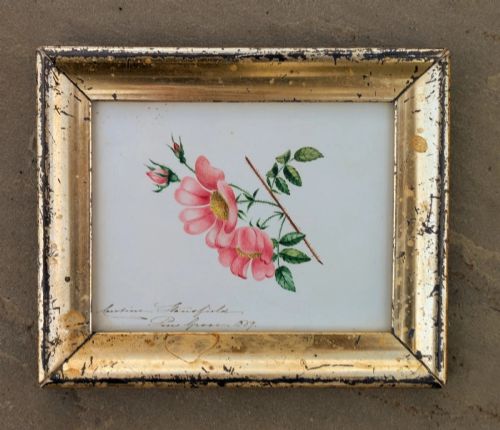
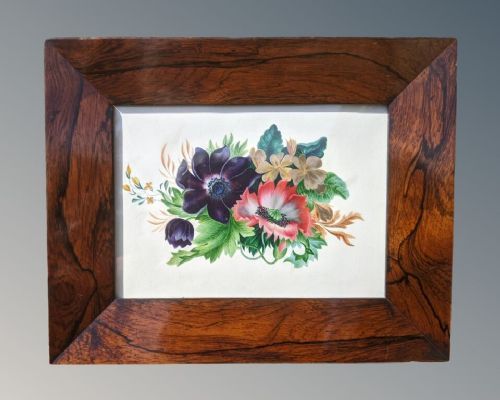
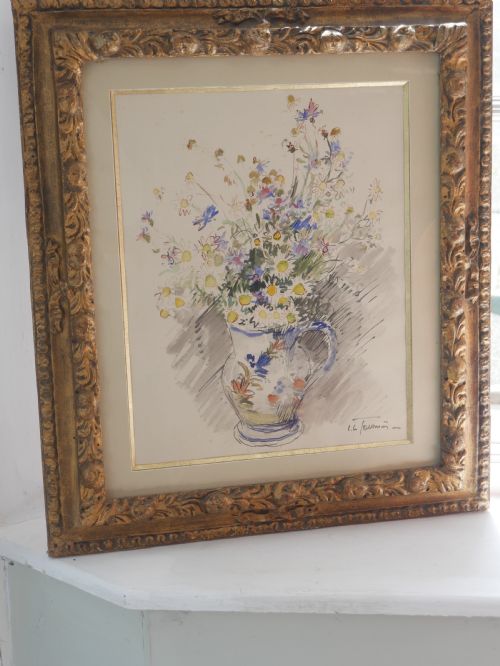
Original watercolour flowers comprise botanical studies, garden scenes, and still life compositions executed on paper. These works capture specific blooms such as roses, pansies, delphiniums, and gladioli arranged in jugs, vases, or growing in borders.
Makers recorded range from nineteenth century artists through to mid-twentieth century painters working in Britain and Europe. Pieces span Victorian botanical illustrations to modern British still life paintings.
Collectors encounter works dating from the eighteen-fifties through to nineteen-fifty, reflecting changing approaches to floral representation over a century.
Materials and technique
Pigments are applied in washes and fine details upon paper supports, occasionally incorporating ink for definition or gouache for opacity. Works are preserved behind glass within period frames of wood.
Artists utilise the translucent quality of watercolour paint to build luminous petal structures and foliage. The interaction between pigment and paper forms the foundation of each composition.
Several careful botanical studies include unexpected tiny snails and dragonflies resting quietly among the painted petals.
Assessing quality
Execution skill separates standard decorative sheets from works displaying precise botanical observation and confident brushwork. The handling of light, colour saturation, and composition determines the visual impact of a painting.
Condition of the paper surface and the presence of original framing contribute to the desirability of a piece. Works retaining strong pigment tones without excessive fading represent the upper tier of surviving examples.
James Tower·Harry Wanless·Henrietta Creswell·William Edward Fox·Theresa Stannard·Lester Sutcliffe·Lilian Stannard·Edith Barrow·Rowland Henry Hill·Grace Hastie·Margaret Laing·Phyllis I Hibbert·Marian Chase·Charlotte Isa James·Alice Macallan Swan·Beatrice Parsons·Marion Broom·Annie Mary Youngman·Edith Alice Andrews·M.K Rhodes·Owen Bowen·Minnie Smythe·Mary Stevens·E M Davies·M Clay
The Original Watercolour Flowers Glossary
- Watercolour paint
- A medium consisting of colour pigments suspended in a water-soluble vehicle, applied to paper to create translucent washes.
- Botanical study
- A detailed visual record of plant anatomy, flowers, or fungi, created for scientific accuracy or aesthetic appreciation.
- Still life
- An artwork depicting inanimate subject matter, typically including cut flowers in vases, jugs, or bowls alongside everyday objects.
- Gouache
- An opaque water-based paint often used alongside watercolour to add solid highlights and body to floral details.
Original Watercolour Flowers: Frequently Asked Questions
How should I frame and hang watercolour paintings?
Watercolours require framing behind glass with acid-free mounts to protect the paper from atmospheric pollutants and physical damage. Direct sunlight causes pigments to fade, so display them on interior walls away from direct windows.
Maintaining stable room temperature and humidity prevents the paper and wooden frames from warping or developing damp spots over time.
How do I identify the age of a floral watercolour?
Dating relies upon stylistic markers, artist signatures, framing materials, and inscriptions on the reverse of the paper. Victorian pieces often feature tight botanical precision, while mid-century works show freer brushwork and modernist influences.
Papers from the nineteenth century frequently carry watermarks that assist with establishing a period of manufacture.
What subjects are common in these paintings?
Common subjects include single stem studies, garden borders, and cut blooms arranged in ceramic jugs or glass vases. Artists frequently painted seasonal flowers such as roses, delphiniums, pansies, and wallflowers.
Some compositions incorporate insects like butterflies or snails alongside the botanical specimens, reflecting traditional Dutch still life conventions.
Where were these artists working?
Many recorded painters operated within British studios, botanical gardens, and rural localities, capturing domestic gardens and wildflowers. European artists also contributed continental studies of flora and fungi.
Works often reflect the specific regional plants and garden designs popular during their respective decades of creation.