


Original Victorian Etching
These original victorian etching works offer the tangible weight and authentic ink of nineteenth and early twentieth century printmaking.
Original Victorian Etching
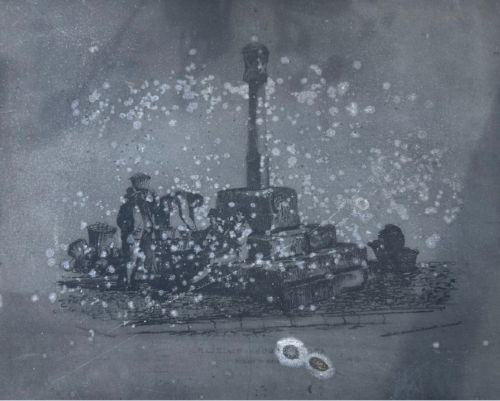
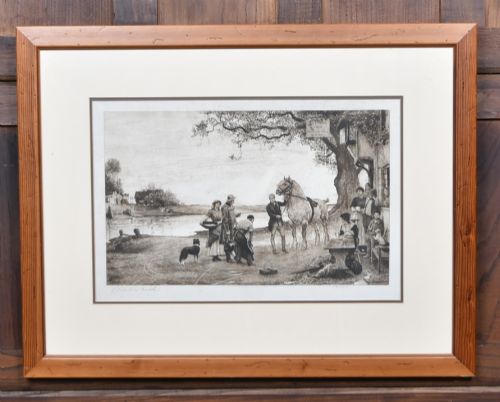
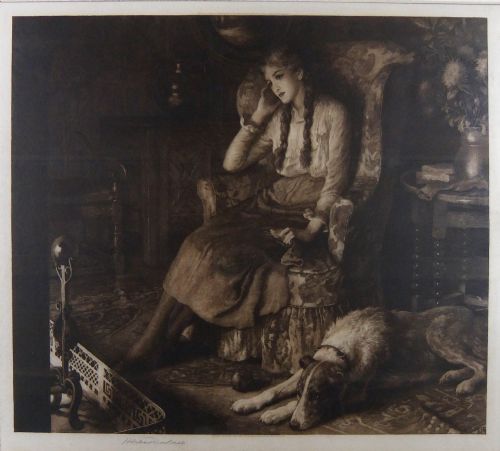
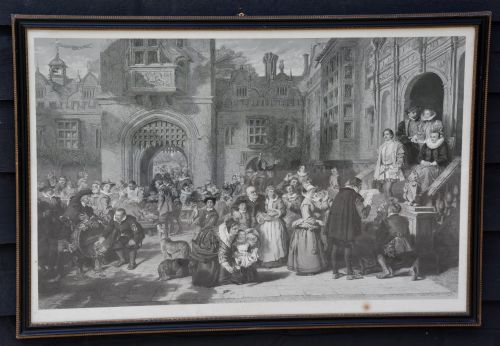
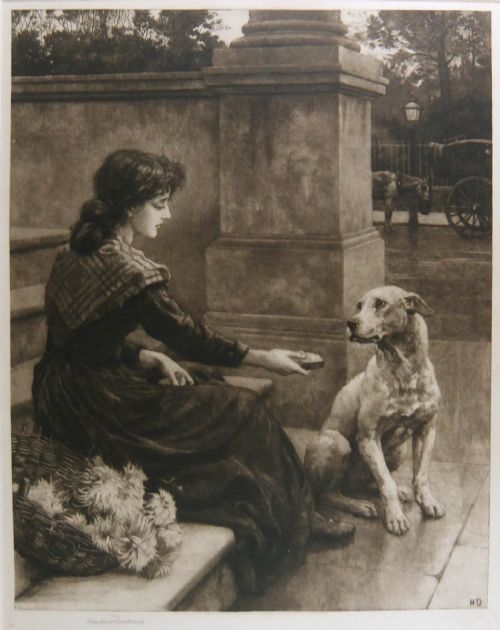
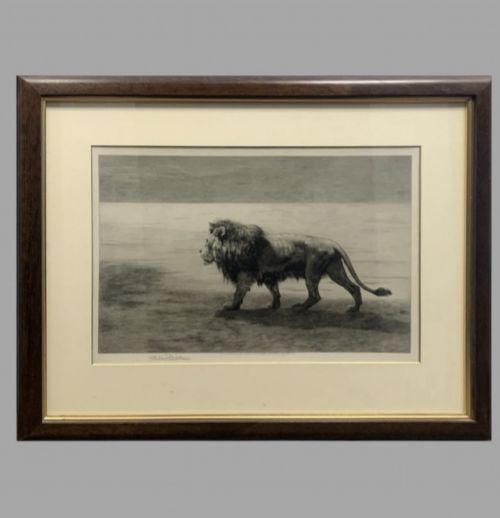
When you search for an original victorian etching, you examine works on paper spanning the nineteenth century and the Edwardian era, capturing rural scenes, animal studies, and narrative art. The pieces available here include atmospheric rural prints by Robert W. Macbeth and detailed canine subjects by Herbert Dicksee, alongside related items like printing plates and framed engravings.
The most frequently encountered versions on this page are hand-printed works on paper, often preserved in period wood or Hogarth frames. Subjects range from solitary dogs and brisk outdoor scenes to golf matches and domestic interiors, reflecting the varied print culture of the period.
Materials and Method
The foundational material is quality paper or vellum, upon which printers applied dark ink using etched metal plates, sometimes utilising copper or zinc. Artists worked the metal surface directly through acid biting or drypoint scratching to create the characteristic lines and tonal depth.
Framing utilised traditional timbers, creating protective housings with glass fronts that preserve the delicate ink work on paper from atmospheric damage over the decades.
Distinctions in Quality
Quality rests upon the crispness of the plate impression and the skill of the artist's line work, distinguishing a robust artist's proof from a weaker impression. Works bearing a signature or designation as an artist's proof demonstrate superior collector interest and print fidelity.
The preservation of the paper support and the integrity of the original frame also influence the overall character of the piece, as age-related toning interacts with the ink.
John Horner Halifax Pontifex and Stiles·Robert W. Macbeth·Herbert Dicksee·James Dobie·W. Dendy Sadler
The Original Victorian Etching Glossary
- Etching
- A printmaking method where acid bites lines into a metal plate to hold ink. This technique allows for fine detail and varied tonal depth.
- Drypoint
- A printmaking process where the artist scratches directly into the metal plate with a sharp needle. This raises a burr of metal that gives the printed lines a rich, velvety appearance.
- Artist's Proof
- A trial impression printed for the artist to review before the main edition is produced. These are often prized for their sharpness and direct association with the creator.
- Vellum
- A fine parchment made from prepared calfskin used as a durable printing surface. It provides a smooth, creamy texture that absorbs ink distinctively.
- Hogarth Frame
- A distinctive wooden picture frame featuring a stepped or ogee profile, often finished with dark lacquer or gilding. They are frequently found housing nineteenth-century works.
Original Victorian Etching: Frequently Asked Questions
How do I care for an antique etching?
Keep the piece away from direct sunlight to prevent the paper from yellowing and the ink from fading. Display it in a stable environment with moderate humidity.
Ensure the backing board and framing materials are acid-free to protect the paper over time.
What is the difference between an etching and an engraving?
An etching uses acid to bite lines into a metal plate, creating a freer and more painterly line. An engraving relies entirely on a sharp tool called a burin to cut lines directly into the metal.
Etchings often display softer tonal variations, while engravings feature precise, sharp lines.
Are all these prints signed by the artist?
Not every piece carries a visible signature, though many notable works include pencil signatures by the printmaker or artist. Unsigned prints were often issued as part of standard published editions.
Signatures or artist's proof markings generally indicate a closer connection to the creator.
How do I identify a Victorian print?
Look for clues in the paper quality, framing style, and the subject matter typical of nineteenth-century artistic tastes. Many pieces carry dates or stylistic markers consistent with the Victorian and Edwardian periods.
Examining the margins can also reveal publisher details or period inscriptions.