




Original Snow Scene Art
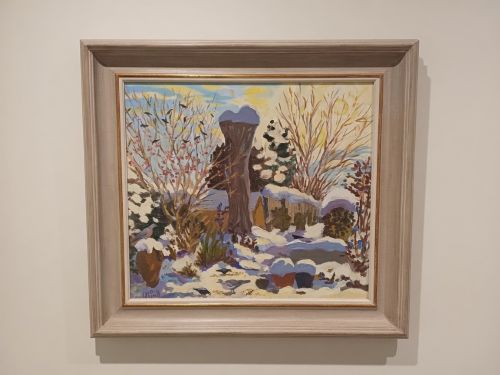
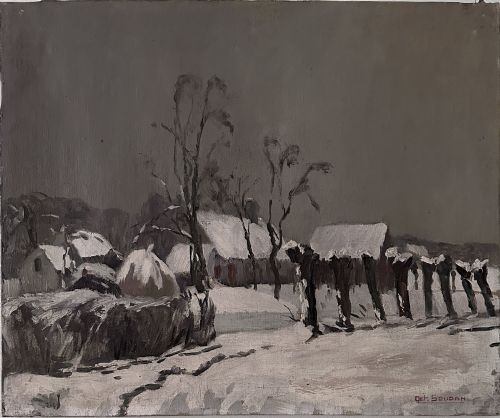
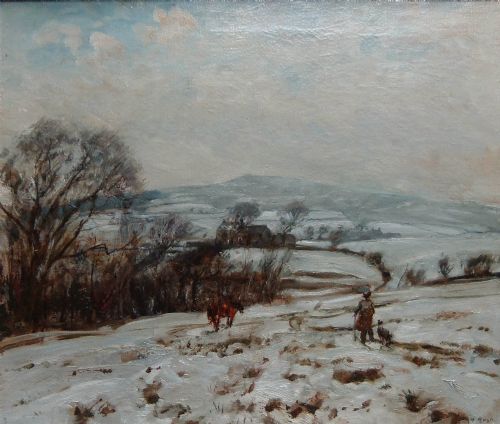
Original snow scene art captures the quiet stillness of winter through paintings and watercolours.
Original Snow Scene Art
When you search for original snow scene art, you encounter a selection of landscape paintings and watercolours depicting winter conditions. These works record frozen rivers, snow-covered villages, and figures gathering fuel in cold weather.
The pieces on this page span from the early twentieth century through to later contemporary periods. You find British Impressionism, Impressionism, Realism, and German Expressionism among the stylistic approaches.
Oil paint on canvas and watercolour on paper form the primary mediums for these winter scenes. A small number of decorative objects also appear, including a glass jug with a winter landscape.
How these pieces were made
Artists apply oil paint to canvas or wood panels, building up texture to render the depth of winter snow. Others work in watercolour and gouache on paper, capturing light on white landscapes through transparent washes.
Framing often preserves these works, with watercolours protected behind glass. The physical construction combines traditional stretched canvases with mounted paper supports.
Listings feature works from the 1900s to the 1960s and beyond, executed in oil paint, watercolour, and glass.
What varies in quality
The skill of the brushwork and the handling of light distinguish individual paintings. Stronger pieces convey the specific atmosphere of a frosty morning or a heavy snowfall.
The distinction also lies in the strength of the composition and the artist's ability to render distance and form within a muted winter palette.
Lucy Pratt·A. McDonald·Gaston Cornil·Ernest Uden·John Smith Atherton·Herbert Royle·George Graham·Ernest Higgins Rigg·Fred Lawson·William Cave Day
The Original Snow Scene Art Glossary
- Watercolour
- A paint consisting of pigment suspended in a water-based solution. It is typically applied to paper to create translucent layers of colour.
- Gouache
- An opaque water-based paint that includes a white pigment to create density. It often appears alongside watercolour in mixed media works.
- Impressionism
- A nineteenth-century art movement focused on the accurate depiction of light and its shifting qualities. Artists using this approach prioritise visible brushstrokes and open compositions.
- Canvas
- A heavy woven fabric used as a surface for oil painting. It is stretched over a wooden frame before work begins.
Original Snow Scene Art: Frequently Asked Questions
What periods do these snow scenes cover?
The works span from the early twentieth century, including pieces from the nineteen-tens and nineteen-twenties, up to later periods beyond nineteen sixty.
This range encompasses various twentieth-century movements from traditional landscapes to expressionism.
Are these works painted on canvas?
Many of the pieces utilise oil paint on canvas as their primary medium. Other works employ watercolour and gouache on paper.
Canvas works are typically stretched over wooden frames, while paper pieces are usually framed under glass.
Who painted these winter landscapes?
The selection includes works by named artists such as Herbert Royle, Ernest Higgins Rigg, and Fred Lawson. Some pieces are by lesser-known or signed painters.
Each artist brings a distinct regional focus, particularly capturing northern English landscapes in winter.
How do I hang a watercolour painting?
Watercolours on paper require protection from direct sunlight to prevent the pigments from fading over time. They should be framed behind glass with acid-free mounts.
Keep them away from damp environments to preserve the integrity of the paper.