


Snowy Countryside Oil Painting
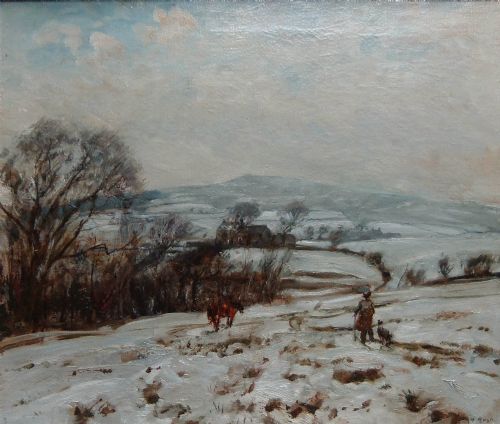
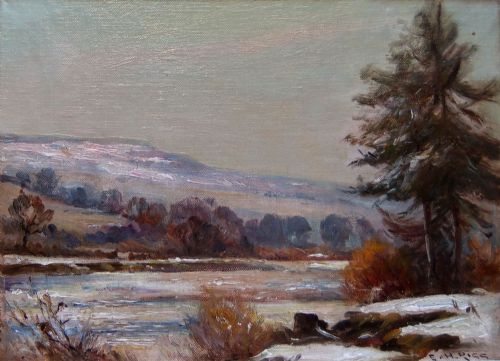
These snowy countryside oil painting works capture frozen fields and winter light across canvas and wood panels.
Snowy Countryside Oil Painting
A snowy countryside oil painting brings the crisp stillness of winter into a room through layered brushwork and muted pigments. You find these works in styles ranging from Impressionism and British Impressionism to Traditional Pastoral and Hague School.
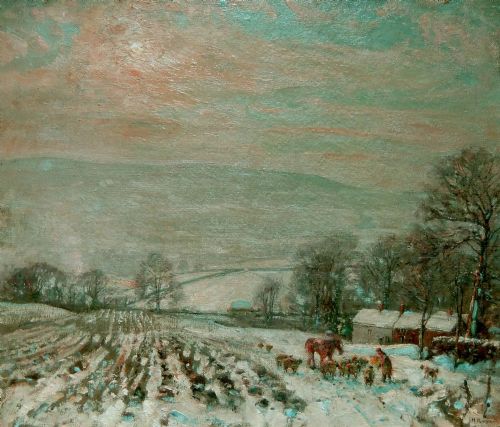
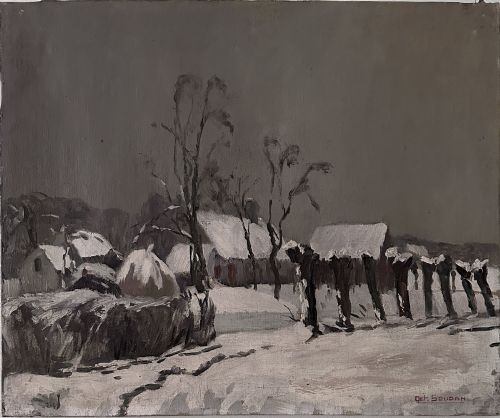
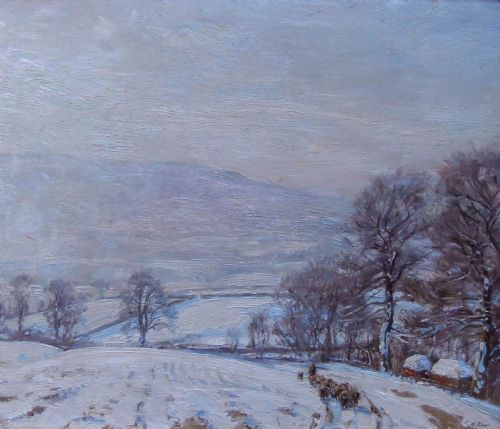
The subjects span quiet village streets, sheep droving scenes, and Yorkshire dales rendered on canvas or wood. Pieces on this page date from the nineteenth century through the 1920s, 1930s, 1950s, and later than 1960.
Most examples concentrate on rural British locations like Wharfedale and Swaledale, alongside pastoral Dutch winter scenes. Collectors seek out these rural landscapes for their atmospheric depiction of snow and seasonal weather.
Materials and construction
These works are painted in oil paint directly onto stretched canvas or wooden panels using traditional brush techniques. The application varies from the thick, textured impasto of Impressionist snow scenes to smoother, blended pastoral depictions.
Many of the canvases are housed within their original wooden frames, often finished with gilded wood or gilt detailing. The combination of oil paint and textured frames protects the edges of the canvas while framing the winter scene.
Listings feature canvases and wood panels painted in oil, spanning British Impressionism, the Hague School, and Traditional Pastoral styles.
Judging quality in winter landscapes
Quality rests in the artist's handling of light and shadow across white snow rather than the mere presence of winter motifs. Stronger examples use varied tones of blue, grey, and cream to convey cold air, avoiding flat white paint.
The integration of the painted surface with the wooden frame also dictates the overall standard of the piece. Well-preserved frames complement the depth of the oil paint without distracting from the pastoral subject matter.
Herbert Royle·Lucy Pratt·John Richard Worsdale·Anthonij Anton Mauve·Ernest Higgins Rigg
The Snowy Countryside Oil Painting Glossary
- Oil paint
- A slow-drying paint made of pigment particles suspended in a drying oil, typically linseed oil. This medium allows for rich texture and subtle colour blending.
- Gilt
- A thin layer of gold leaf or gold paint applied to wood frames. This finish adds a reflective border that contrasts with the muted tones of a winter scene.
- Pastoral
- A genre of art that idealises rural life and countryside scenery. These works typically depict shepherds, cottages, and agricultural landscapes.
Snowy Countryside Oil Painting: Frequently Asked Questions
What periods do these winter paintings cover?
The selection includes works from the nineteenth century, the 1920s, the 1930s, the 1950s, and pieces created later than 1960.
These periods encompass several distinct artistic movements, including British Impressionism and the Hague School.
Which materials were used for these artworks?
Artists used oil paint applied to either canvas or wood panels to create these scenes.
Many of the finished works are displayed within their original wooden frames, which frequently feature gilded wood or gilt surfaces.
Where do the landscape scenes take place?
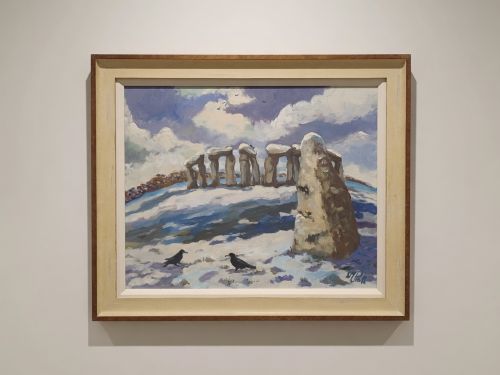
The locations depicted include rural British settings such as Wharfedale and Swaledale, alongside historic landmarks like Stonehenge.
Other compositions show traditional village streets, farmyards with sheep and shepherds, and rural stagecoach routes.
How do I care for an oil painting on canvas?
Keep the artwork away from direct sunlight and sudden shifts in temperature or humidity to protect the canvas and oil paint.
Dust the surface and the wooden frame gently with a dry, soft cloth without using liquid cleaners.