


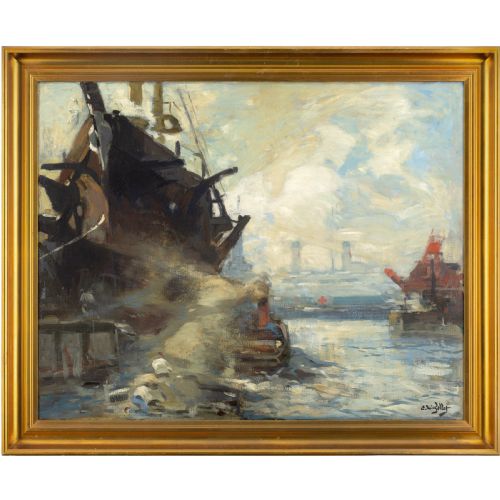
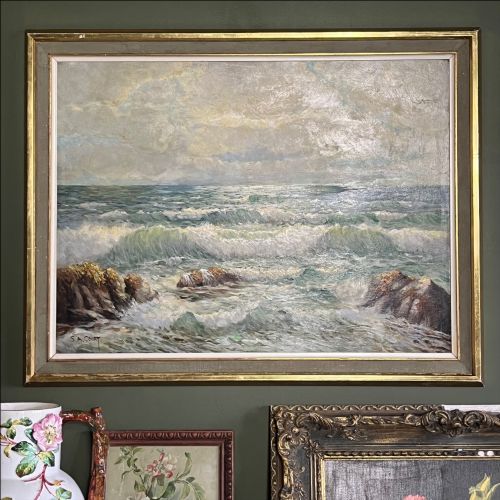
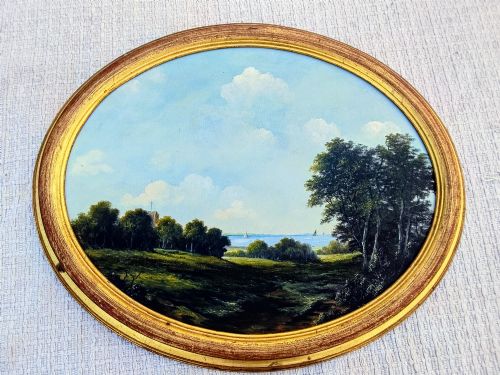
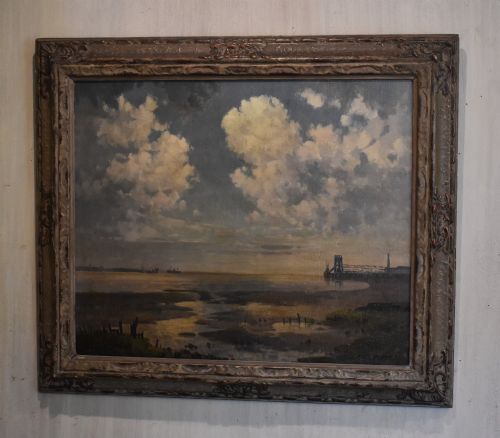
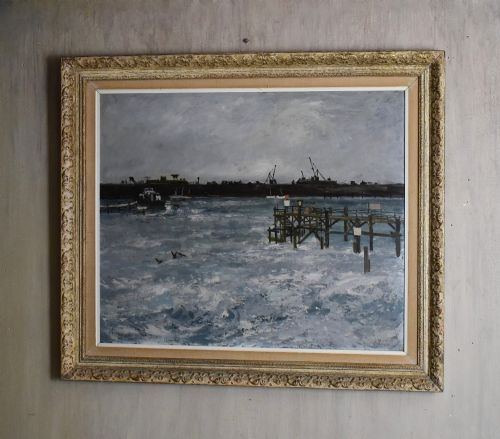
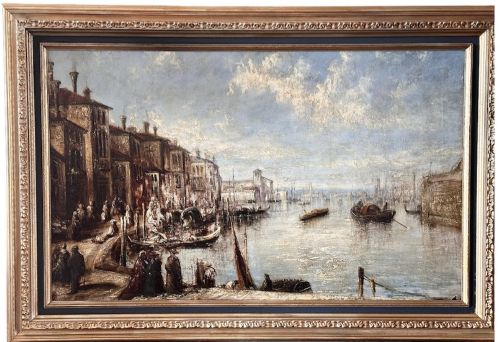
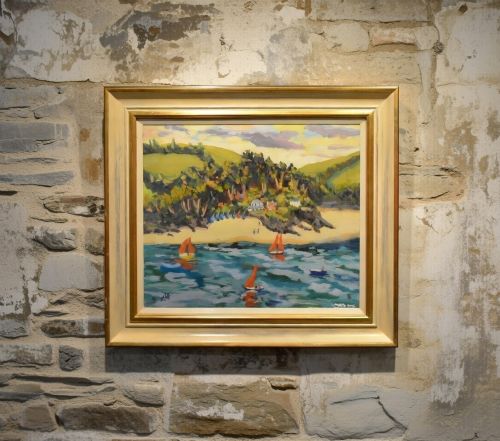
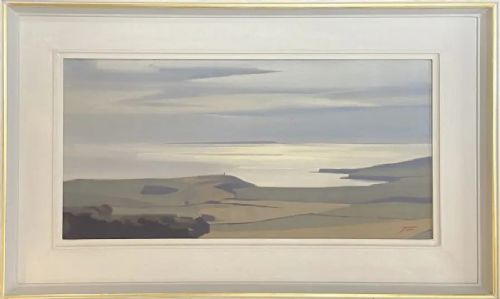
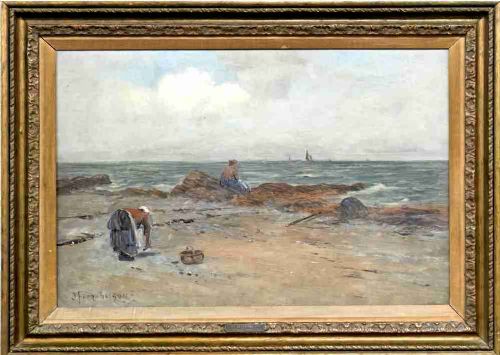
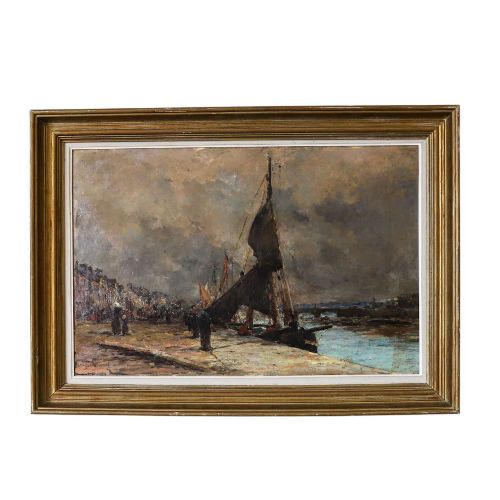
Original Oil Seascape Framed
An original oil seascape framed brings the unpredictable movement of open water and coastal air directly indoors.
Original Oil Seascape Framed
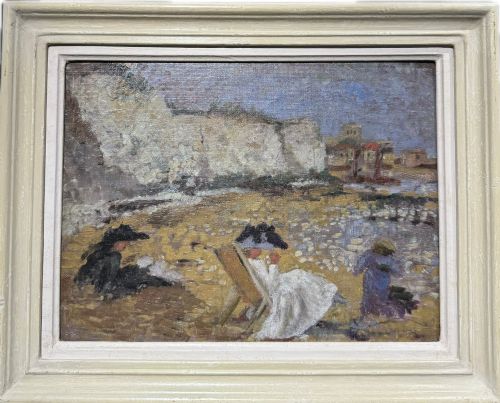
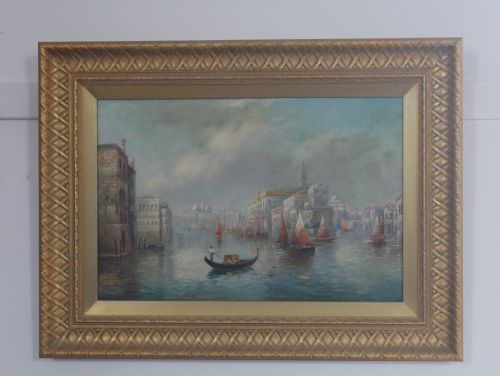
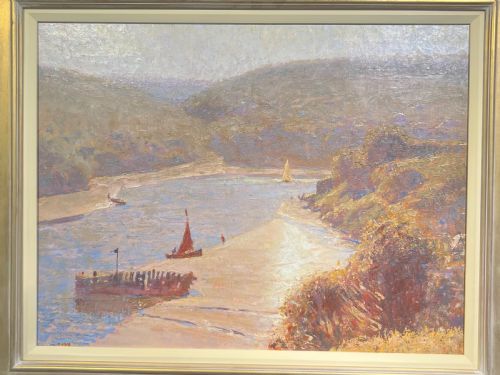
An original oil seascape framed captures coastal harbours, open oceans and shorelines through oil paint applied to canvas, wood panel or board. These works range from calm nineteenth-century Venetian canals to mid-twentieth-century Cornish coves and French maritime views.
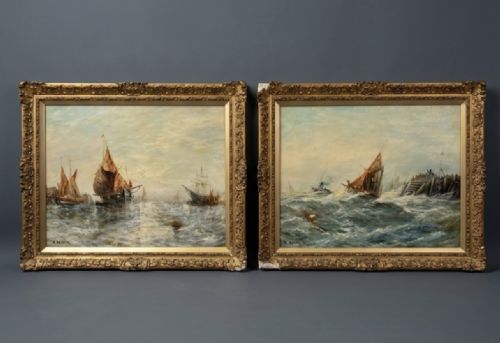
The selections span periods from the nineteenth century through the 1960s, encompassing British Impressionism, Victorian maritime art and Post-Impressionist styles. Buyers encounter both expansive harbour scenes populated by fishing boats and intimate studies of waves breaking along the shore.
Framing is an integral component of these pieces, often featuring period gilt wood that complements the maritime subject matter. Whether depicting stormy seas or sunlit estuaries, each painting records a distinct topographical location and a specific moment in marine history.
How they were made
Artists built these coastal compositions using oil paint on supports of canvas, wood or board, frequently working en plein air to capture transient light on the water. The medium allowed for layered brushwork, ranging from smooth glazes in calm nineteenth-century water to thick impasto depicting turbulent waves.
Gilt wood frames house the majority of these works, serving to isolate and enhance the maritime palette of deep blues, greys and warm coastal light. The combination of oil pigments and robust wooden supports ensures the survival of these delicate coastal records across changing decades.
Listings feature works executed on canvas, wood panel and board across the nineteenth and twentieth centuries.
What varies in quality
The distinction between standard works and finer examples lies in the artist's handling of atmosphere, light and coastal topography. Superior pieces convey the specific weight of salt air and the convincing movement of tides through assured brushwork rather than formulaic repetition.
Compositional balance and the harmony between the painting and its original gilt frame also dictate standing. Works that capture a defined location with distinct tonal nuance command greater interest than generic maritime studies.
Clifford Hanney·Eugène-Louis Gillot·Sidney A. Court·Clive Browne·Peter Brannan·Francis Moltino·Lucy Pratt·James Fry·Ethel Sands·Cecil Allan Mould·Joseph Farquharson·Thomas Hodgson Liddell·Bernard Benedict Hemy·Walter Goodin·Abraham Hulk I·Edward Matthew Elliott·Charles Napier Hemy·Louis Suire·Helen Layfield Bradley·Gustave Vidal·Gyrth Russell·Jean-Baptiste Olive·George Turland Goosey·Norman Lloyd·Gustave De Bréanski
The Original Oil Seascape Framed Glossary
- En plein air
- Painting outdoors to directly capture the changing effects of light and weather on the sea. This approach became central to nineteenth and twentieth-century landscape practice.
- Impasto
- Paint applied thickly to a canvas or board, leaving visible brush or palette knife strokes. It is frequently utilised to render the heavy texture of crashing waves.
- Gilt wood
- Wood coated with a thin layer of gold leaf or metallic gilt. It forms the traditional framing material for maritime paintings from the Victorian era onwards.
- Maritime
- Pertaining to the sea, ships and coastal navigation. This term encompasses both calm harbour scenes and dramatic storms at sea.
Original Oil Seascape Framed: Frequently Asked Questions
What periods do these seascapes come from?
The works span from the nineteenth century through the 1960s, reflecting shifts in marine painting from traditional Victorian realism to mid-century impressionist approaches.
Dates are determined by artist biographies and stylistic evidence recorded within each individual listing.
Are the frames original to the paintings?
Many pieces retain their period gilt wood frames, which were selected to complement the tonal qualities of the maritime subject matter.
Framing styles vary according to the decade of creation, ranging from ornate Victorian moulding to simpler mid-century profiles.
How do I identify a coastal location?
Many listings identify specific locations in their titles, such as St Ives, Cornwall, Venice or the French coastline.
Artists often inscribed titles or locations on the reverse of the canvas or board during the painting process.
How should I hang an oil seascape?
These framed works require standard picture wire and wall fixings suited to the combined weight of the wooden support and gilt frame.
Placement should avoid direct sunlight to protect oil pigments and the integrity of the canvas over time.