





18th Century Maritime Artwork
These 18th century maritime artwork pieces capture the power of historic seascapes and naval portraits on canvas, paper, and enamel.
18th Century Maritime Artwork
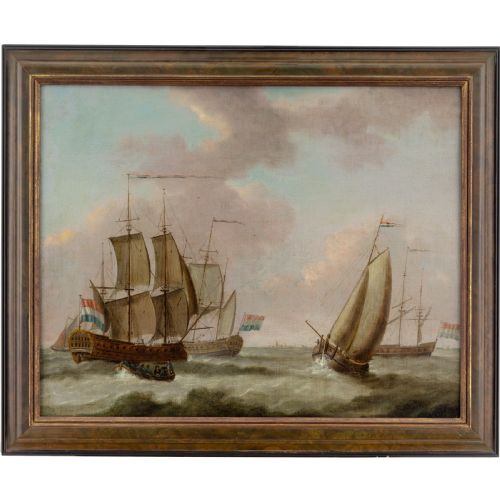
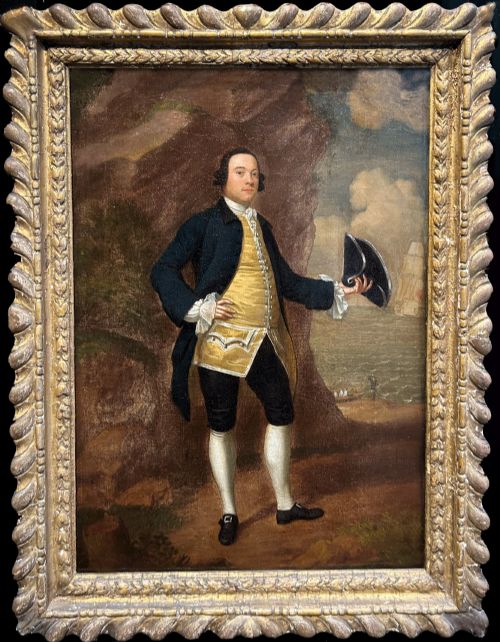
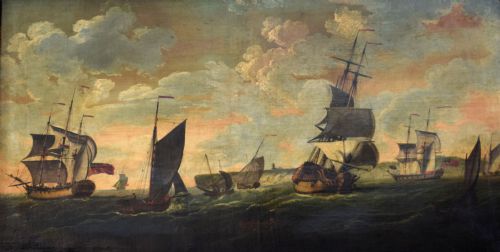
Collectors seeking 18th century maritime artwork encounter oil paintings, prints, engravings, watercolour paintings, and enamel plaques. These pieces record naval engagements, coastal shipping, and individual captains from the Georgian era.
Most examples originate from the 18th century, drawing upon Georgian styles that celebrate Britain's maritime history. Frames in giltwood often complement the scale of these country house paintings.
Materials and Techniques
Artists painted primarily with oil paint on canvas, applying pigments to build deep seas and detailed rigging. Enamel plaques offered an alternative medium for figurative scenes with bright surfaces.
Framing utilised carved wood finished in gilt, providing substantial borders for large canvas works. Paper served as the base for delicate prints and engravings depicting naval officers.
18th Century Maritime Artwork Retail Price Guide 2026
Typical asking prices for 18th century maritime artwork among the pieces listed under this phrase on Sellingantiques today, from the lower quarter to the upper quarter. They describe what is for sale here now, not the wider market.
Warships proudly raise their cannon and sails across these canvases, ready for an eternal naval engagement on the drawing room wall.
Assessing Quality
The skill of the brushwork defines the success of a seascape, particularly in the rendering of choppy water and billowing sails. Strong anatomical proportions in portraits of captains and privateers separate accomplished compositions from rigid ones.
Original frames in giltwood add considerable presence to large oil paintings, while the clarity of line in engravings dictates their visual impact. Attribution to documented hands elevates historical interest significantly.
Francis Hayman·John Simmons·George Morland·Francis Holman·R I Barrow
The 18th Century Maritime Artwork Glossary
- Giltwood
- Wood carved and coated with gold leaf or a gold-coloured preparation. It provides ornate framing for large oil paintings.
- Privateer
- A privately owned armed ship commissioned by government licence to fight enemy shipping. Portraits often recorded these commanders.
- Enamel
- A glassy substance fused to a metal substrate through firing. Enamel plaques display smooth, glossy pictorial scenes.
- Seascape
- A work of art depicting the sea, ships, or coastal views. These form the core of maritime artwork collections.
- Georgian
- Pertaining to the reigns of the four British monarchs named George spanning the eighteenth and early nineteenth centuries. This period defines the predominant style of the works.
18th Century Maritime Artwork: Frequently Asked Questions
What subjects appear in these works?
The compositions include naval engagements, warships with raised sails, and coastal shipping near land. Portraits of naval officers and privateers also feature strongly.
Scenes range from stormy seas and naval battles to calm views with fishing boats heading out in brisk winds.
How were these pieces framed?
Many large canvas works are housed in massive giltwood frames typical of country house collections. These decorative borders enhance the visual weight of the paintings.
Other works on paper or enamel appear in simpler formats suited to domestic display.
What periods do the pieces represent?
The listings span the eighteenth century and the Georgian era, with dates stretching from the mid-1700s to around eighteen hundred. A few items extend into the mid-nineteenth century.
Stylistic elements closely mirror the dominant artistic conventions of the Georgian period.
What materials make up the collection?
Painters utilised oil paint on canvas as the primary medium for large seascapes and portraits. Other works employ paper, enamel plaques, and carved wood.
Gilt wood provides the structural material for decorative antique frames.